Buying guide
Best Nonstick Induction Cookware: Easy-Clean Pans and Sets for Induction Cooktops
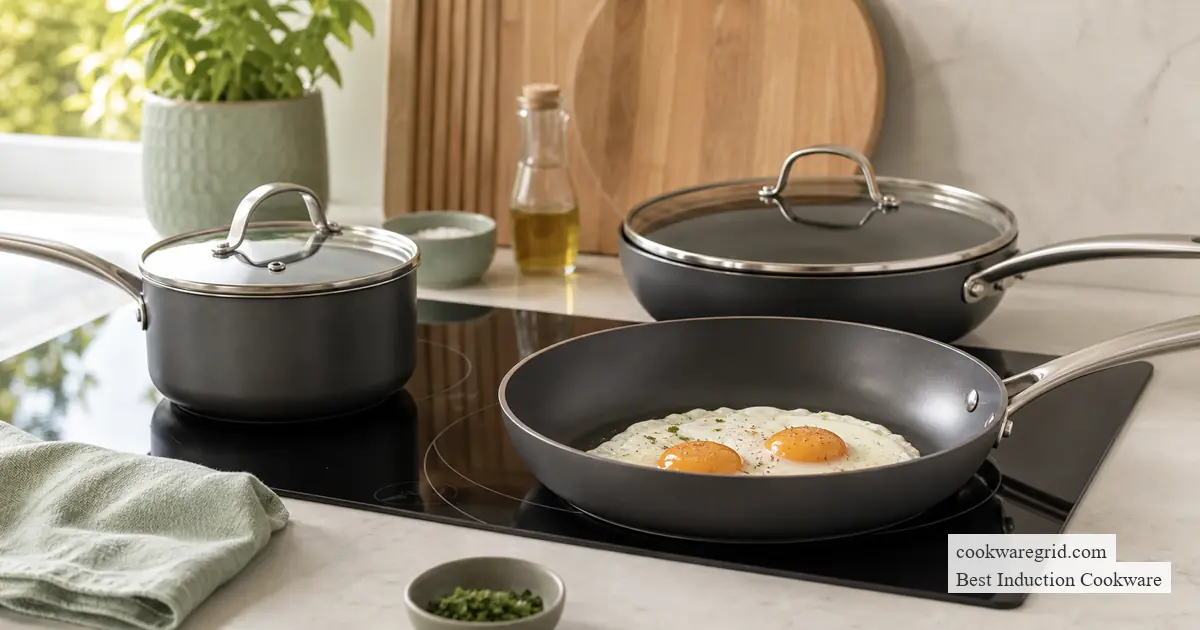
The best nonstick induction cookware is not simply the slickest pan on the shelf. It needs a magnetic base that the cooktop can detect, a flat bottom that resists rocking, and a coating strategy that matches how you actually cook eggs, fish, sauces, pancakes, and weeknight dinners.

As an Amazon Associate, CookwareGrid earns from qualifying purchases. That support helps fund our editorial research and testing.
The best nonstick induction cookware reviewed by CookwareGrid
Retailer availability checked July 29, 2026. Use the retailer button for the latest live pricing and availability.
Best ceramic nonstick line
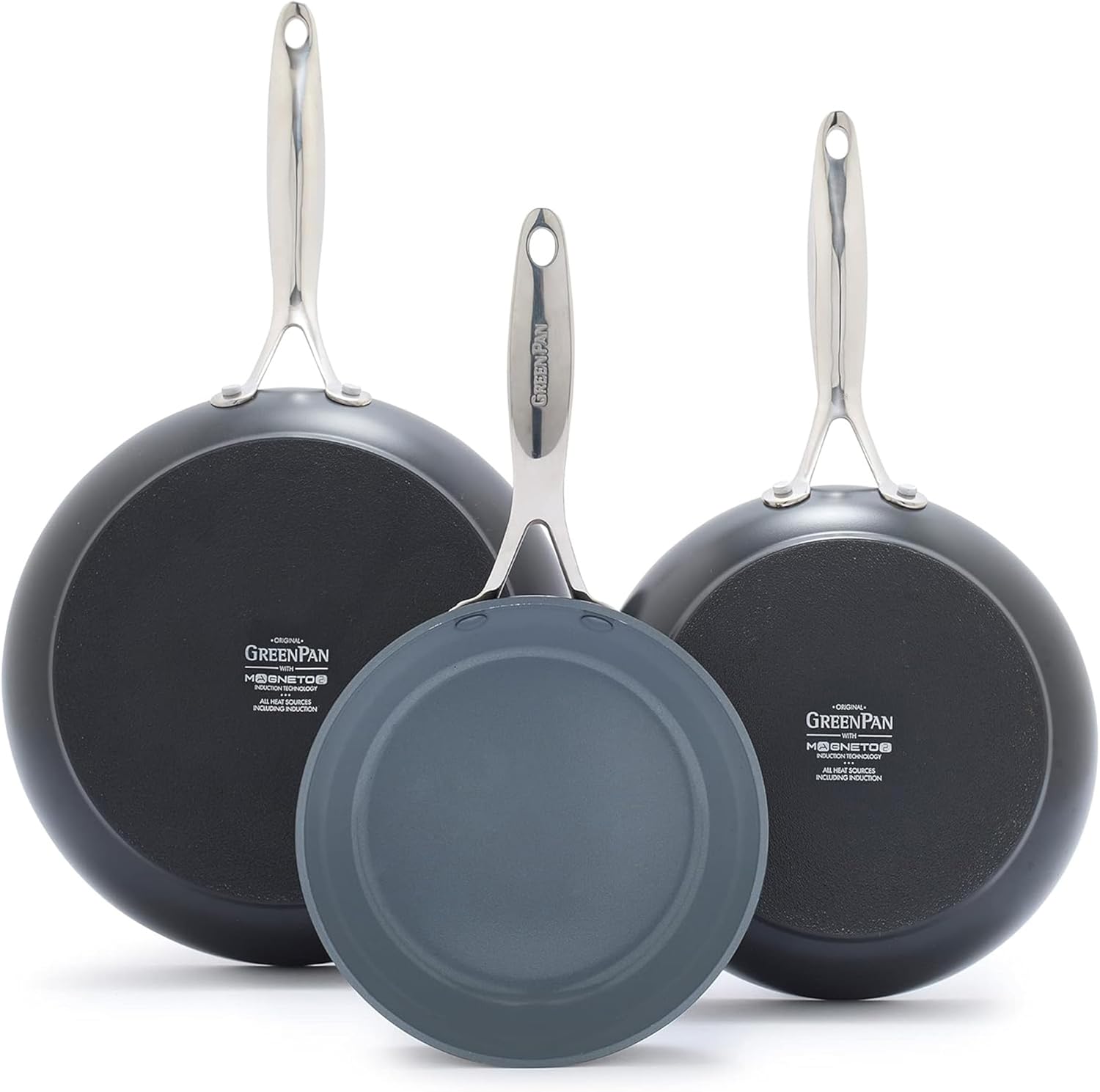
1. GreenPan Valencia Pro
Ceramic nonstick cookware with a magnetic base and strong low-to-medium heat usability.
Read more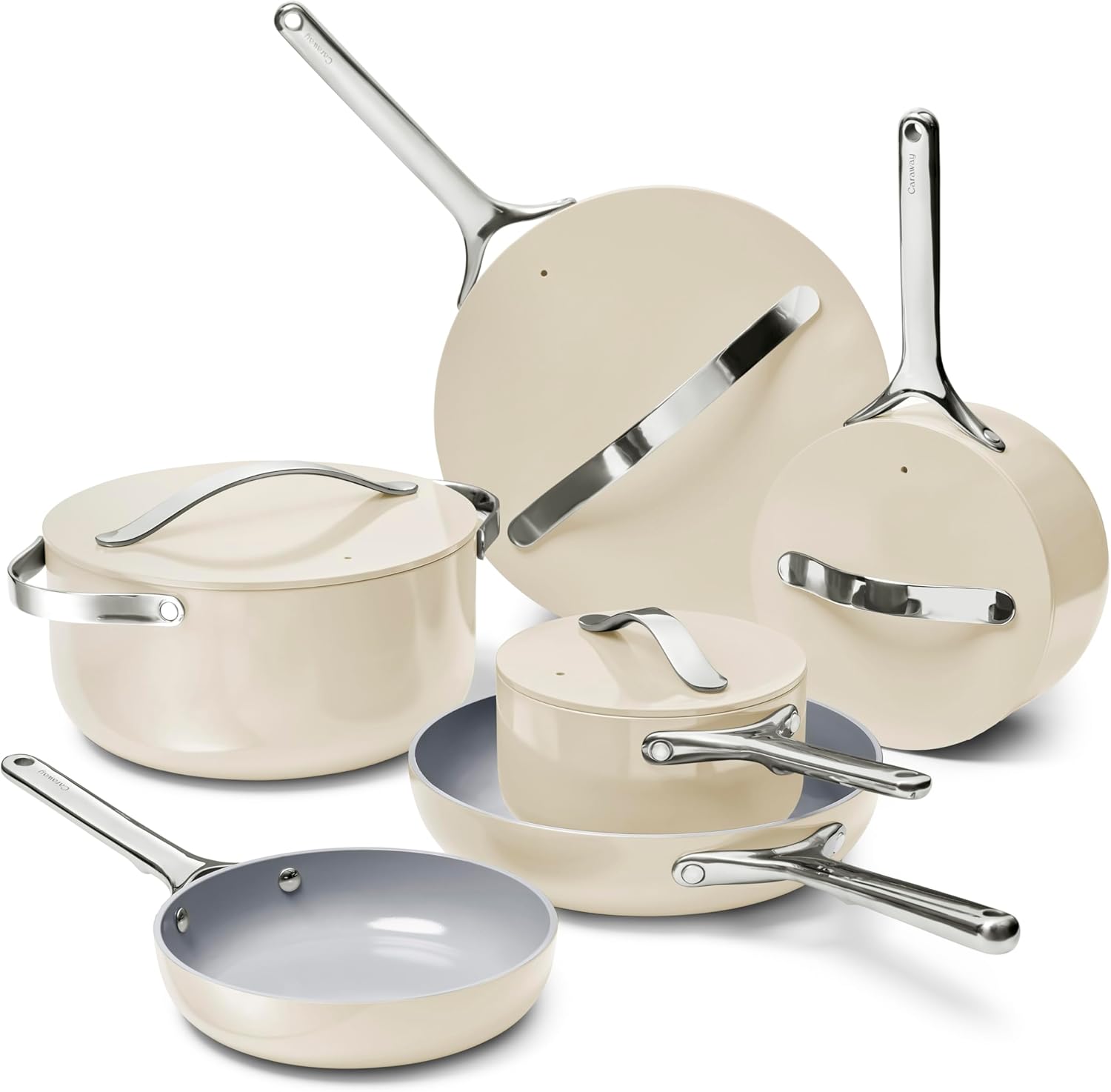
Best design-forward set
2. Caraway Ceramic Set
A coordinated ceramic nonstick set with induction compatibility and useful storage-minded pieces.
Read more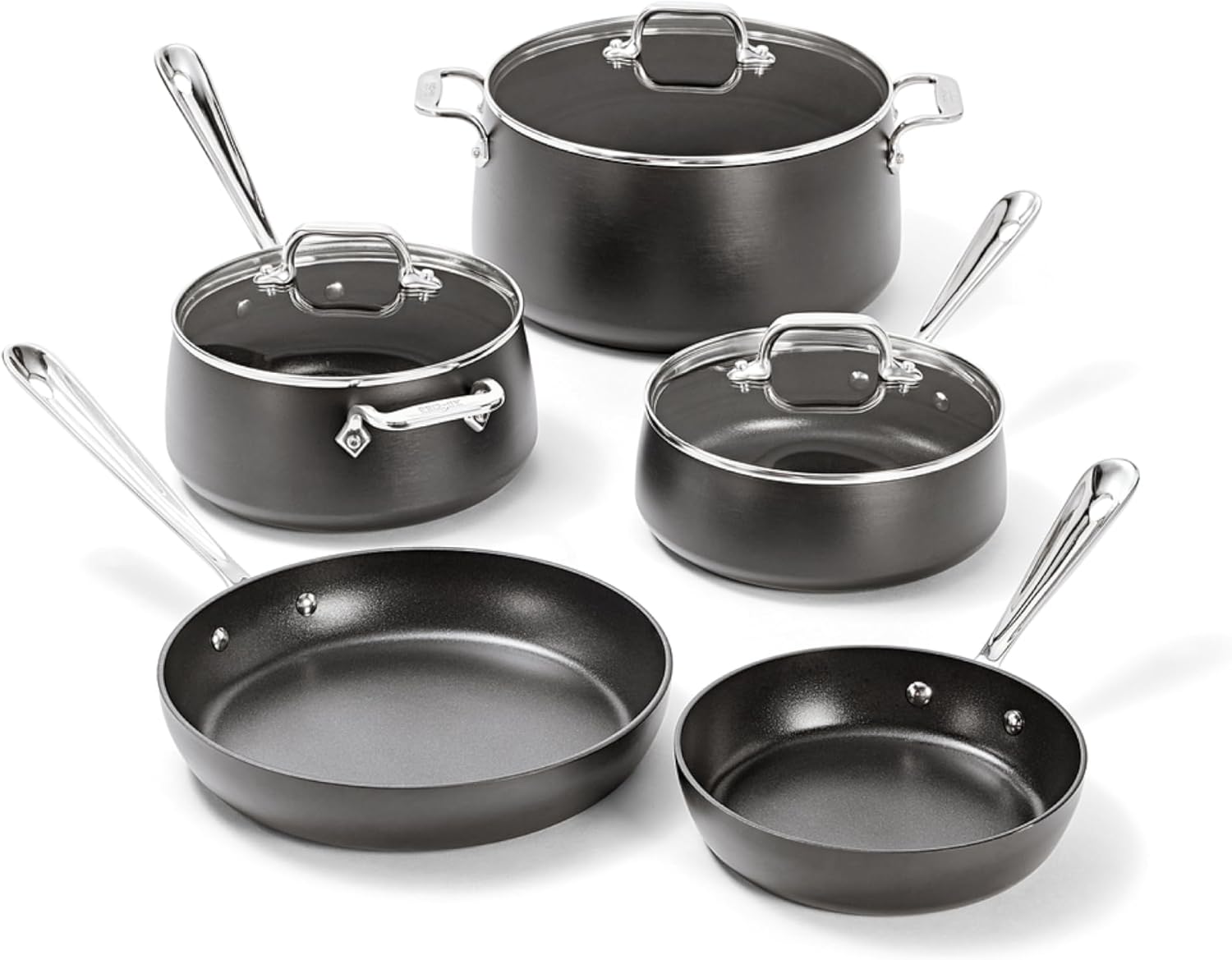
Best traditional nonstick
3. All-Clad HA1
Hard-anodized nonstick with a magnetic base and slicker release than most ceramic options.
Read more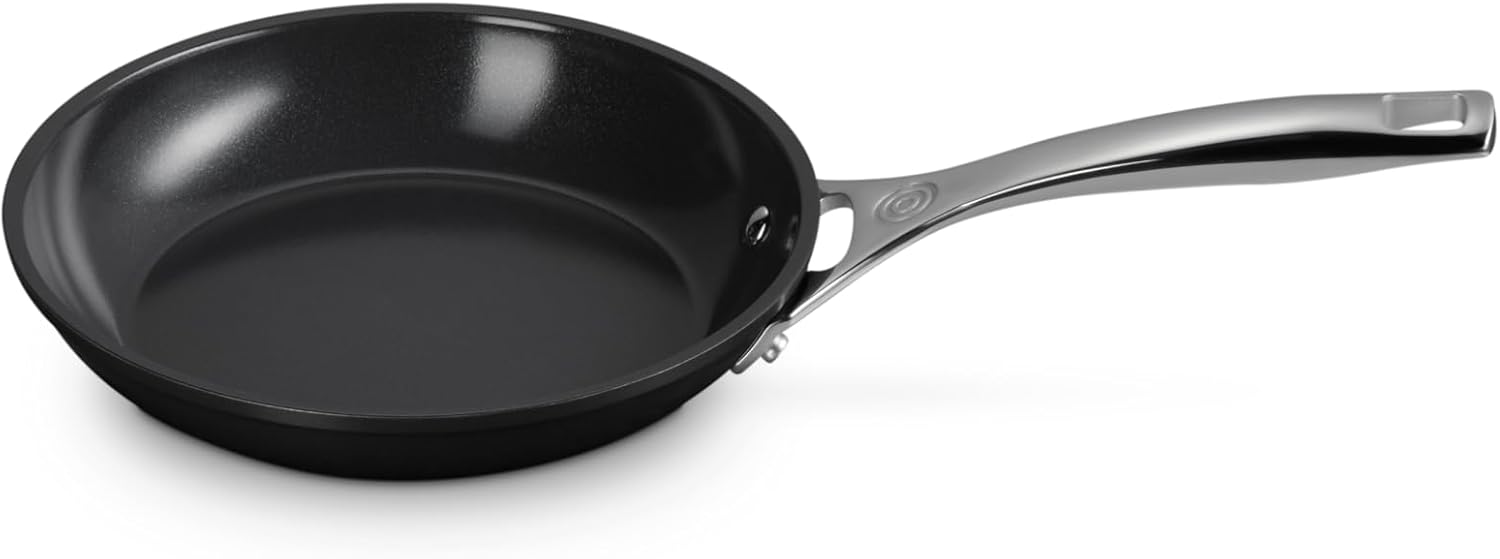
Best premium add-on skillet
4. Le Creuset Ceramic Fry Pan
Refined ceramic nonstick for eggs, fish, pancakes, and easy-release everyday cooking.
Read more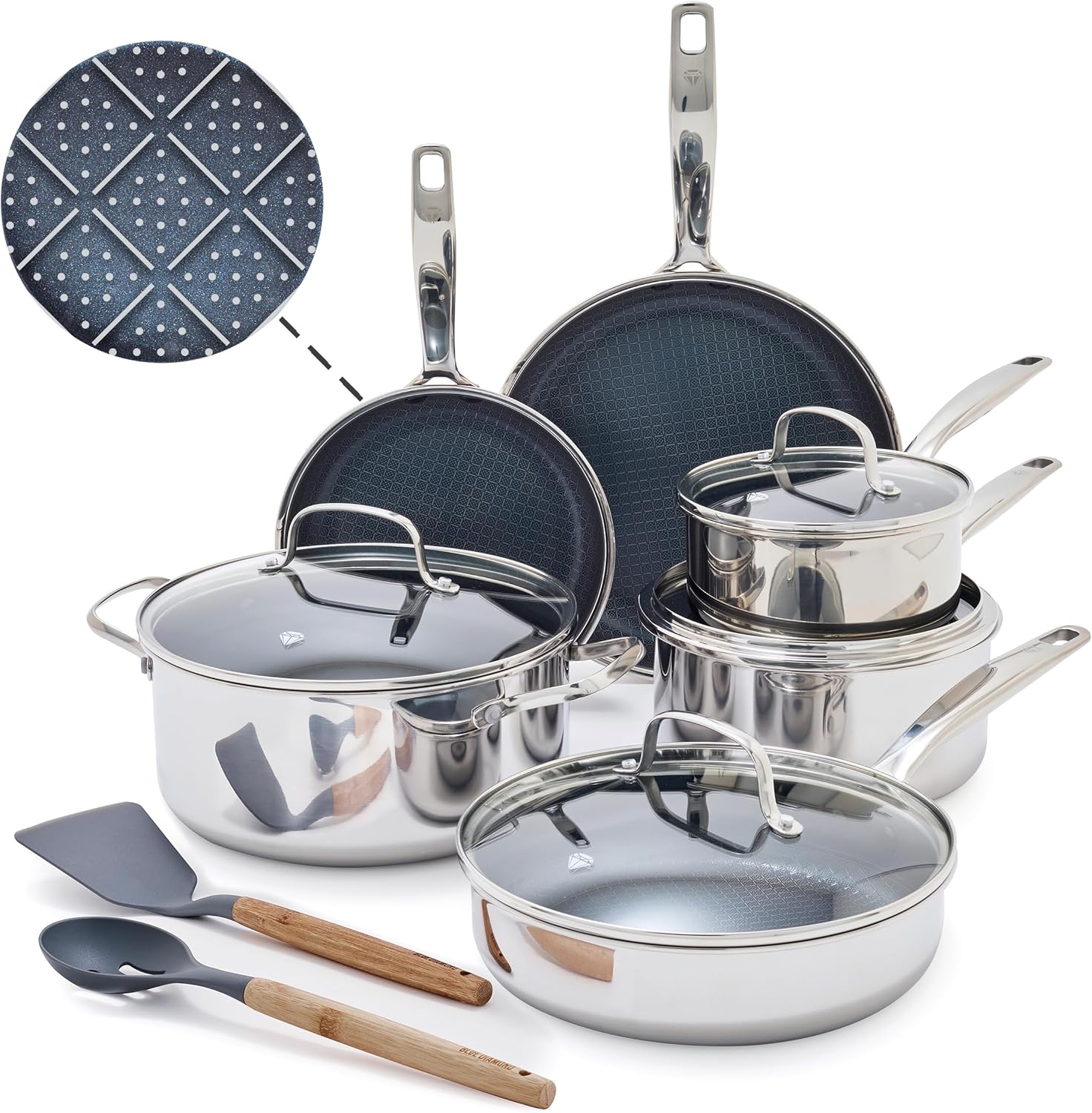
Best hybrid option
5. Hybrid Nonstick
Textured hybrid cookware that offers easier release than stainless and better browning than smooth nonstick.
Read moreFor most induction kitchens, the best nonstick strategy is not a giant matching set. It is one or two excellent easy-release pieces paired with stainless steel, cast iron, or carbon steel for high-heat work. If you do want a full set, choose ceramic nonstick or traditional nonstick only if you are committed to low-to-medium heat and gentle cleaning.
The Best induction cookware Nonstick choice is usually a flat-bottom pan or set with a magnetic stainless steel base, a durable coating, and clear induction compatibility from the manufacturer. That last detail matters because many nonstick pans are aluminum under the coating, and aluminum will not activate an induction burner unless the maker adds magnetic steel to the base.
This guide is broader than a frying pan roundup. We are looking at complete cookware sets, skillets, saucepans, saute pans, ceramic nonstick, PFAS-free options, hybrid designs, and the cooks who should avoid nonstick entirely. If you only need one egg pan, start with our focused guide to the best nonstick induction pan. If you are choosing a whole nonstick system for an induction cooktop, keep reading.
Shortlist
Best Nonstick Induction Cookware at a Glance
These picks cover the main buying lanes: ceramic nonstick sets, design-forward PFAS-free cookware, traditional slick nonstick, premium add-on skillets, and hybrid cookware for cooks who still want some browning.
1GreenPan Valencia Pro
Best ceramic nonstick line for induction shoppers who want PFAS-free positioning, broad piece options, and strong low-to-medium heat usability.
2Caraway Ceramic Set
Best design-forward set with a fry pan, saucepan, saute pan, Dutch oven, lids, storage pieces, and induction compatibility.
3All-Clad HA1
Best traditional nonstick induction choice for cooks who want a slicker release surface and a sturdy hard-anodized build.
4Le Creuset Essential Ceramic
Best premium add-on skillet for eggs, fish, pancakes, and cooks who want PFAS-free ceramic in a refined pan.
5Hybrid Nonstick
Best for cooks who want easier release than stainless and more texture for browning than smooth ceramic nonstick provides.
Safety first
Before buying any coated cookware, read our guide: is induction cookware safe?
Specs
Nonstick Induction Cookware Comparison Table
Induction compatibility, coating type, and heat discipline are the real buying questions. A beautiful nonstick set is frustrating if the base is weak, the pan rocks, or the coating cannot handle your cooking style.
| Rank | Cookware Type | Coating / Surface | Induction Requirement | Best Use | Watchout |
|---|---|---|---|---|---|
| 1 | GreenPan Valencia Pro ceramic nonstick | Ceramic nonstick with PFAS-free positioning | Magnetic induction base | Eggs, fish, pancakes, vegetables, low-oil everyday cooking | Ceramic coatings can lose slickness if overheated or scrubbed hard |
| 2 | Caraway Nonstick Ceramic Cookware Set | Ceramic-coated aluminum cookware | Induction-compatible base under each pot or pan | Coordinated set buyers who want a saucepan, saute pan, fry pan, Dutch oven, and storage | Pretty coatings need careful handwashing and lower heat |
| 3 | All-Clad HA1 hard-anodized nonstick | Traditional slick nonstick surface | Stainless steel induction base | Omelettes, pancakes, grilled cheese, delicate proteins | Not the PFAS-free ceramic route; avoid overheating |
| 4 | Le Creuset Essential Nonstick Ceramic | PFAS-free ceramic nonstick skillet | Induction-compatible stainless/aluminum body | Premium add-on pan for eggs, crepes, fish, and quick reheats | A skillet is not a full cookware system |
| 5 | Hybrid nonstick induction cookware | Textured stainless surface with easier-release valleys | Magnetic stainless body or base | Cooks who want more browning and utensil flexibility than smooth nonstick | Not as slick as true nonstick and not always PFAS-free |
Reviews
Full Reviews of the Best Nonstick Induction Cookware
These reviews focus on induction-specific behavior: magnetic base quality, flatness, coating durability, heat limits, ease of cleaning, and whether the cookware makes sense as a set or only as a specialty piece.
Best ceramic nonstick line
1. GreenPan Valencia Pro Ceramic Nonstick Cookware
GreenPan Valencia Pro is the kind of nonstick induction cookware that makes sense for everyday low-to-medium heat cooking. The line is widely known for ceramic nonstick and induction-ready base technology, which matters because most nonstick cookware starts as aluminum. Without a magnetic layer, that aluminum body would not heat on induction.
The best use cases are eggs, fish, quesadillas, pancakes, quick vegetables, and sticky sauces where stainless steel would ask for more fat and technique. It is not the pan I would choose for steakhouse searing or broiler work. Ceramic nonstick rewards gentler heat, soft utensils, and handwashing. Treat it as a controlled convenience surface, not a stainless replacement.
Best for: PFAS-conscious shoppers who want ceramic nonstick across skillets, saucepans, and everyday pieces.
Skip if: You regularly cook on high heat or expect nonstick cookware to last like stainless steel.
Best design-forward set
2. Caraway Nonstick Ceramic Cookware Set
Caraway is the pick for shoppers who want a coordinated nonstick induction set rather than one loose skillet. The set approach is useful if your actual cooking pattern is mostly eggs, reheating, lower-heat sauces, oatmeal, sauteed vegetables, rice, and one-pot weeknight meals. It usually includes a fry pan, saucepan, saute pan, Dutch oven, lids, and storage accessories, which makes it feel more like a kitchen system than a single specialty pan.
The tradeoff is durability. Ceramic nonstick tends to be slickest early in its life and less forgiving than stainless if you stack, scrape, overheat, or dishwasher it. Current testing coverage around Caraway is mixed in a useful way: the design and initial release are strong, while long-term coating care is the real caveat. Buy it if you like the look and cook gently. Do not buy it as your only cookware if you regularly sear hard.
Best for: Small households, design-focused kitchens, and cooks who want easy-clean nonstick saucepans and saute pans too.
Skip if: You use metal utensils, stack pans bare, or want one set to handle every high-heat task.
Best traditional nonstick
3. All-Clad HA1 Hard Anodized Nonstick Cookware
All-Clad HA1 is the traditional nonstick route: a sturdy hard-anodized body with a slicker release surface than many ceramic pans. That makes it appealing for omelettes, soft scrambled eggs, pancakes, grilled cheese, and delicate fish. It is also a useful choice if your priority is release performance rather than ceramic or PFAS-free positioning.
The most important care rule is heat discipline. Traditional nonstick should not be blasted empty on an induction cooktop, because induction can put heat into a pan very quickly. Stay in the low-to-medium range, preheat briefly, use silicone or wood tools, and handwash even when a maker says dishwasher use is technically possible. That is how you keep the coating useful for longer.
Best for: Cooks who want the easiest egg release and a more substantial build than bargain nonstick pans.
Skip if: You specifically want PFAS-free ceramic, coating-free titanium, stainless steel, or cast iron.
Best premium add-on skillet
4. Le Creuset Essential Nonstick Ceramic Fry Pan
Le Creuset's ceramic nonstick skillet is not a full set solution, but it is a strong add-on for cooks who already own stainless steel or cast iron. That is often the smarter way to buy nonstick: keep durable cookware for most jobs, then use one refined easy-release pan for eggs, fish, crepes, pancakes, and quick leftovers.
Its appeal is that it combines a premium body with PFAS-free ceramic positioning and induction compatibility. Still, no ceramic nonstick pan is magic. It needs moderate heat and gentle cleaning. If you want a full set, look elsewhere. If you want one polished nonstick skillet to sit beside your stainless saucepan and cast iron skillet, this category makes sense.
Best for: One-pan buyers who want a refined ceramic nonstick skillet rather than a full set.
Skip if: You need nonstick saucepans, saute pans, and multiple skillet sizes from one collection.
Best hybrid option
5. Hybrid Nonstick Induction Cookware
Hybrid nonstick cookware is for cooks who are frustrated by both extremes. Smooth ceramic nonstick can be easy to clean but poor at browning. Stainless steel can brown beautifully but asks for technique. Hybrid cookware tries to sit between them with a textured stainless surface and easier-release valleys.
The strength is versatility: you can usually push browning harder than you would with smooth ceramic. The weakness is that hybrid cookware is not as slick as a true nonstick egg pan, and not every hybrid surface is PFAS-free. Read the coating disclosure closely. If your priority is avoiding PFAS, do not assume a stainless-looking pattern answers the question.
Best for: Cooks who want more browning and utensil confidence than smooth nonstick offers.
Skip if: You want the slickest egg pan or a clearly PFAS-free ceramic surface.
Buying guide
How to Choose the Best Nonstick Induction Cookware
First, confirm the magnetic base
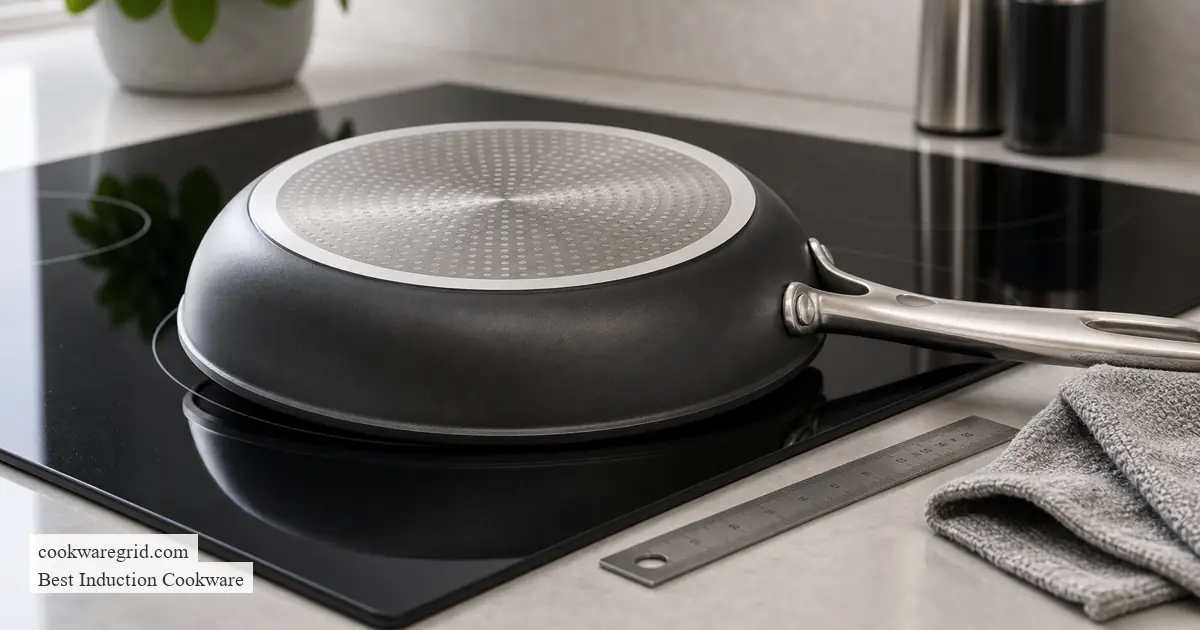
Nonstick cookware is often aluminum under the coating because aluminum heats quickly and keeps weight manageable. But aluminum is not magnetic. For induction, the pan needs a magnetic stainless steel base, magnetic plate, or fully clad magnetic layer that the cooktop can detect. If the manufacturer does not clearly say induction compatible, do not assume the pan will work.
Base flatness is just as important. A warped nonstick pan can rock, buzz, heat unevenly, or trigger pan-detection issues. Thin pans are especially vulnerable because induction can heat the base very quickly. For more detail on prevention, read why induction cookware warps.
Ceramic, traditional nonstick, PFAS-free, or hybrid?
Ceramic nonstick is popular because many brands position it as PFAS-free. It is a strong fit for eggs, pancakes, fish, and low-oil vegetables, but it can lose slickness faster if overheated, scratched, or scrubbed aggressively. Traditional nonstick can release food beautifully, but it requires strict heat discipline and may not meet a buyer's PFAS-free preference. Hybrid cookware can brown better than smooth nonstick, but it usually is not as slick.
If you are choosing between ceramic and stainless, read ceramic nonstick vs stainless steel for induction. The short version: ceramic is easier for delicate release, while stainless is better for browning, fond, durability, and high-heat cooking.
Sets vs single pans
A full nonstick set makes sense only when most of your cooking is gentle: eggs, oatmeal, rice, soups, reheating, low-oil vegetables, and simple sauces. A nonstick saucepan is useful for sticky oatmeal or cheese sauce, but it will not outlive a stainless saucepan. A nonstick Dutch oven can be pleasant for cleanup, but it is not the right choice for hard browning or decades of service.
Many cooks should buy one or two nonstick pieces instead: a 10-inch or 12-inch skillet, maybe a small saucepan, then use stainless steel, cast iron, or carbon steel for the jobs that punish coatings.
- Best full set buyer: low-to-medium heat cook who values easy cleanup across every meal.
- Best single-pan buyer: stainless or cast iron owner who only needs eggs and fish insurance.
- Best PFAS-free buyer: ceramic or coating-free cookware shopper who reads chemical disclosures.
- Best durability buyer: stainless steel, carbon steel, or cast iron shopper who should avoid full nonstick sets.
Fit check
Who Should Avoid Nonstick Induction Cookware?
High-heat cooks should buy stainless, cast iron, or carbon steel first
Avoid full nonstick sets if you regularly sear steak, use high-output boost mode, broil, cook with metal utensils, or expect your cookware to last for decades. Nonstick coatings are consumable surfaces. Even the better ones wear down. If you cook aggressively, your money is better spent on a clad stainless skillet, carbon steel pan, or cast iron workhorse.
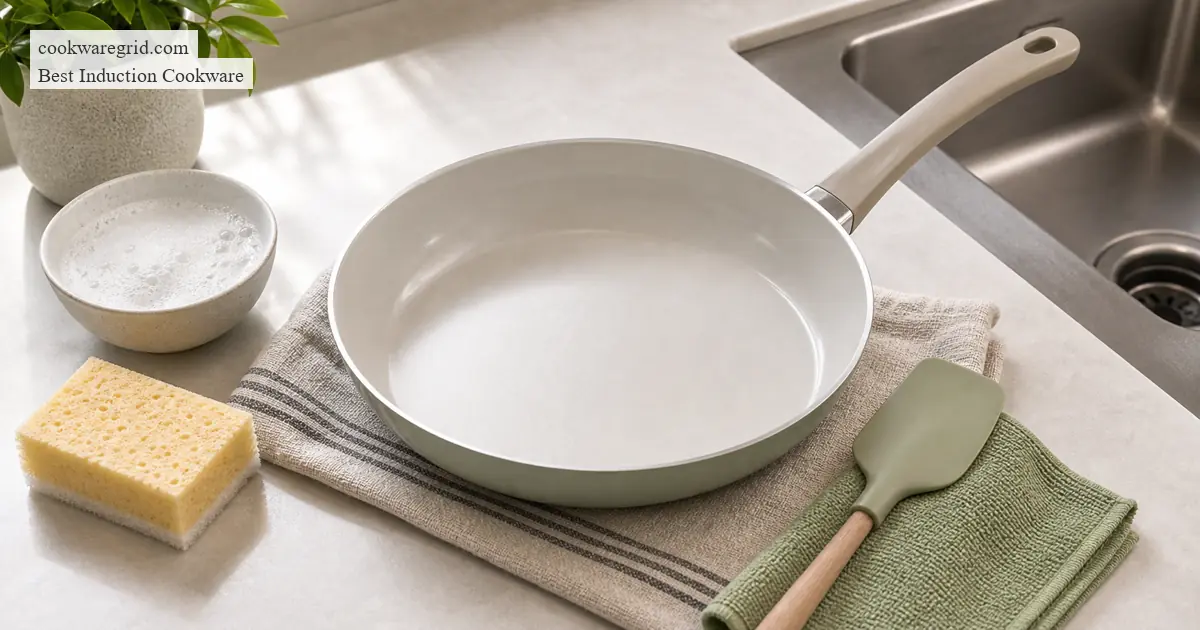
Nonstick also asks for a different cleaning routine. If you prefer abrasive pads, dishwasher cycles, stacking pans without protectors, or scraping with metal spatulas, the coating will age quickly. Use our material-by-material guide to how to clean induction cookware before choosing a set.
Safety and coating claims need sober reading
PFAS-free, PTFE-free, PFOA-free, non-toxic, ceramic, mineral, titanium, and hybrid are not interchangeable claims. Some are about chemistry, some are about marketing language, and some are about the cooking surface structure. Look for specific disclosure language, not just a big badge on the front of the box.
The safest practical habit is simple: do not overheat coated cookware empty, stay under the manufacturer's temperature limits, use ventilation, replace badly scratched coated pans, and diversify your cookware so nonstick is not forced to do everything. A coated pan that is used gently for eggs can be a joy. A coated pan used like cast iron will disappoint you quickly.
- Use low-to-medium heat for most nonstick cooking.
- Avoid long empty preheats on induction.
- Use silicone, nylon, or wood tools unless the maker clearly allows metal.
- Replace peeling, flaking, deeply scratched, or warped nonstick cookware.
FAQ
Best Nonstick Induction Cookware FAQ
Short answers for choosing easy-clean induction cookware without ignoring magnetic compatibility, coating care, or safety limits.
What is the best nonstick cookware for induction cooktops?
The best nonstick induction cookware has a flat magnetic base, clear induction compatibility, a durable coating, and realistic heat limits. Ceramic nonstick is popular for PFAS-free shoppers, while traditional nonstick is often slicker for eggs.
Should I buy nonstick induction cookware as a full set?
Buy a full set only if most of your cooking is gentle and easy-clean focused. Many cooks are better served by one nonstick skillet and one nonstick saucepan alongside stainless steel or cast iron.
Is ceramic nonstick cookware safer than traditional nonstick?
Ceramic nonstick is often chosen by shoppers avoiding PFAS, but safety depends on the specific disclosure and proper use. Traditional nonstick can be safe when used within temperature limits, but it is not the same as PFAS-free ceramic.
Why does my nonstick induction pan warp?
Warping usually comes from thin bases, empty boost preheats, sudden thermal shock, or mismatched burner size. Let coated pans heat gradually and cool before washing.
Specification and Research Sources
CookwareGrid reviews current cookware testing, manufacturer positioning, and safety guidance, then interprets those details through an induction-specific lens: magnetic base quality, flatness, heat limits, coating durability, and real-world cleanup.
About Leamon Warner
Leamon Warner is a kitchen expert, researcher, and founder of CookwareGrid with more than 25 years of experience in the kitchen and home-goods industry. His background includes work with LG, Lamacom Group, and Fleur Metal, alongside cookware research, product testing, and conversations with industry experts. He created CookwareGrid to turn that experience into clear, practical advice for home cooks.