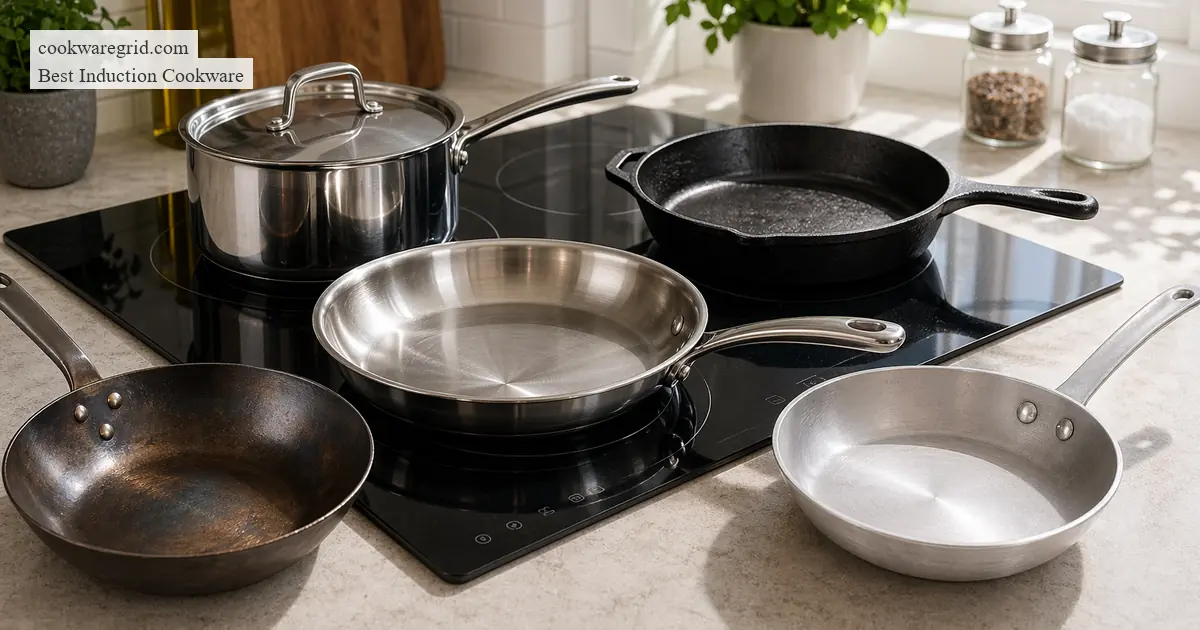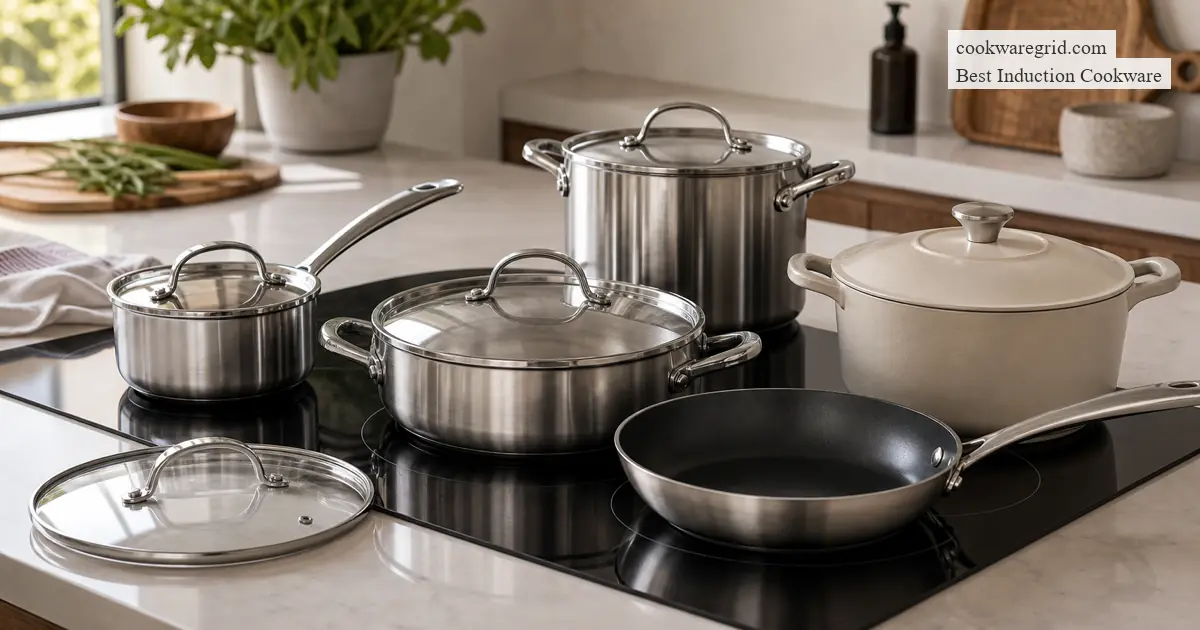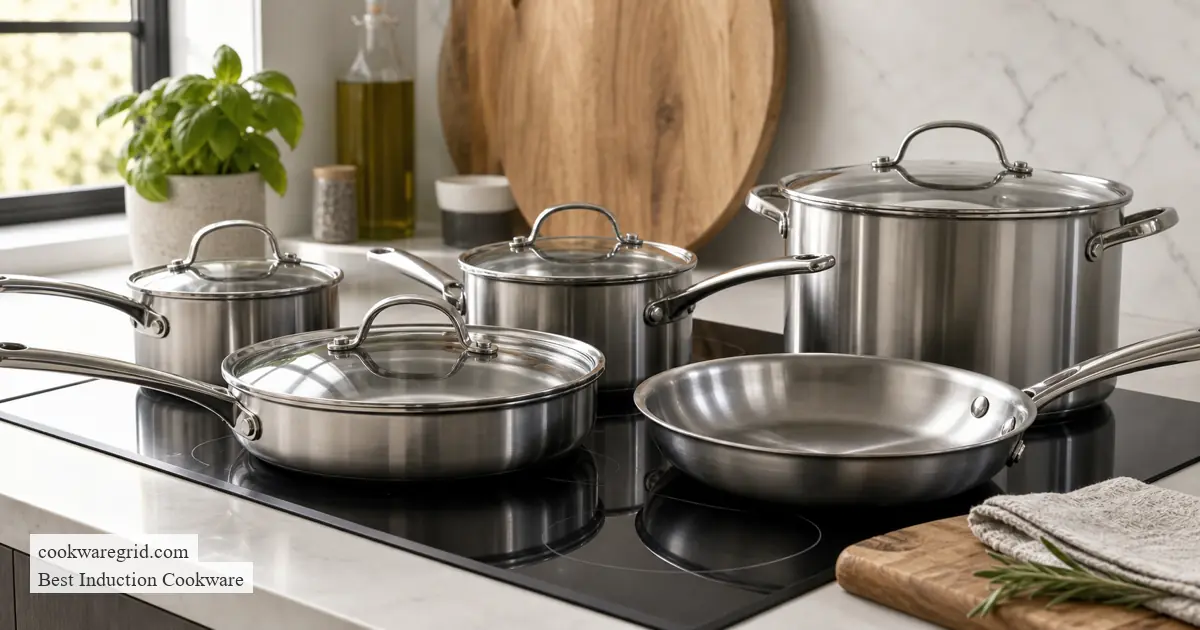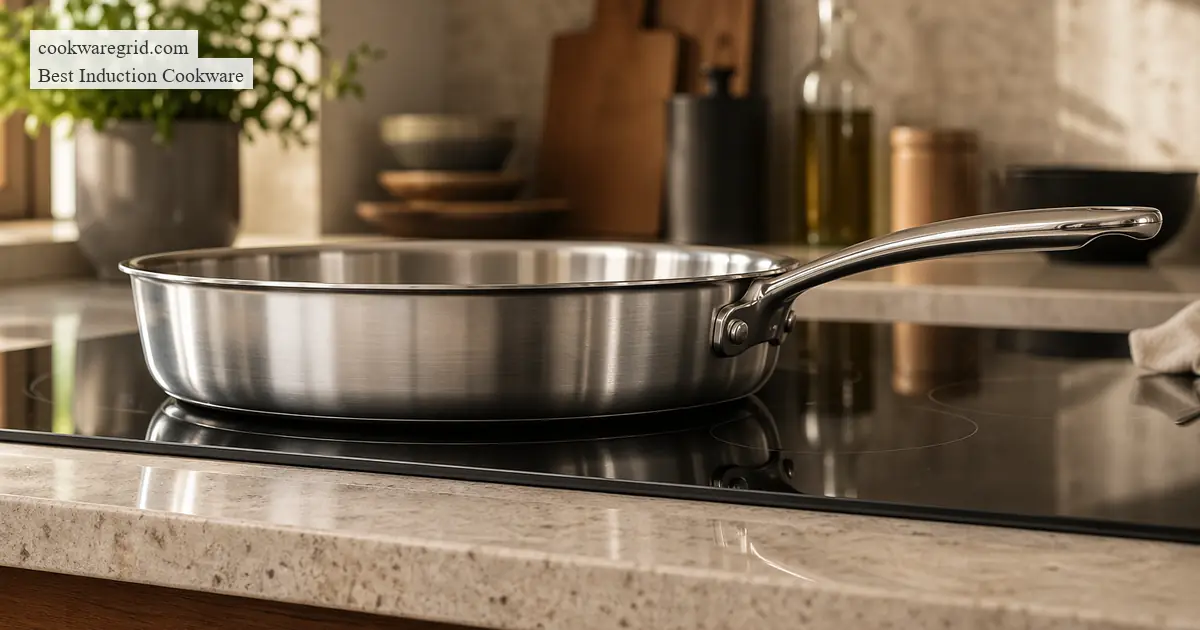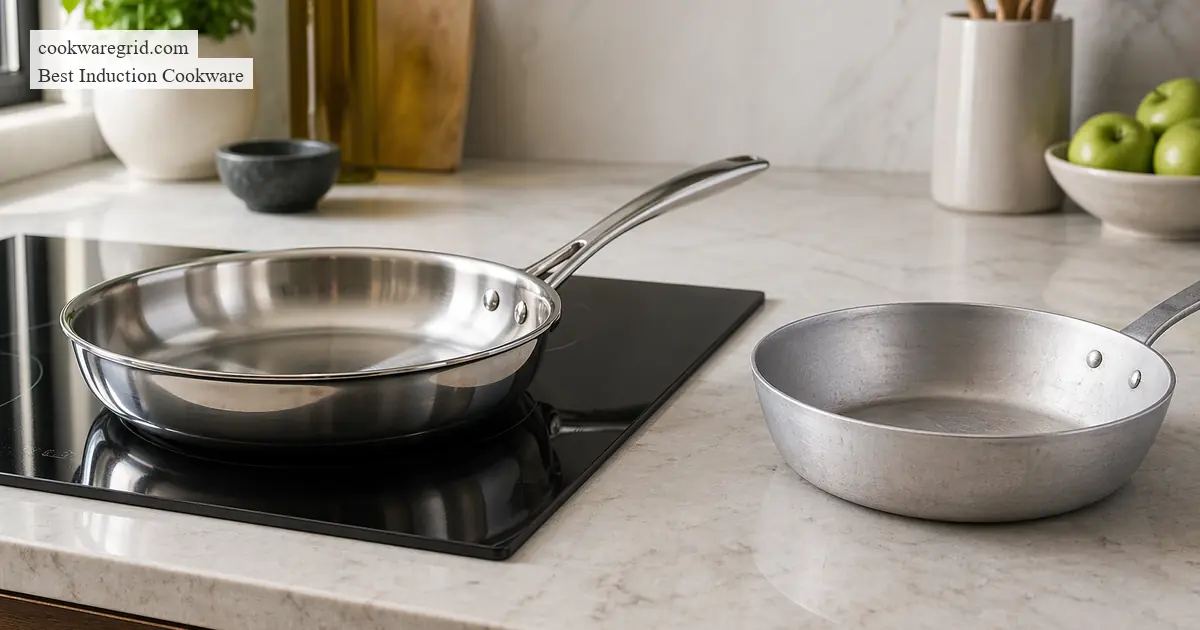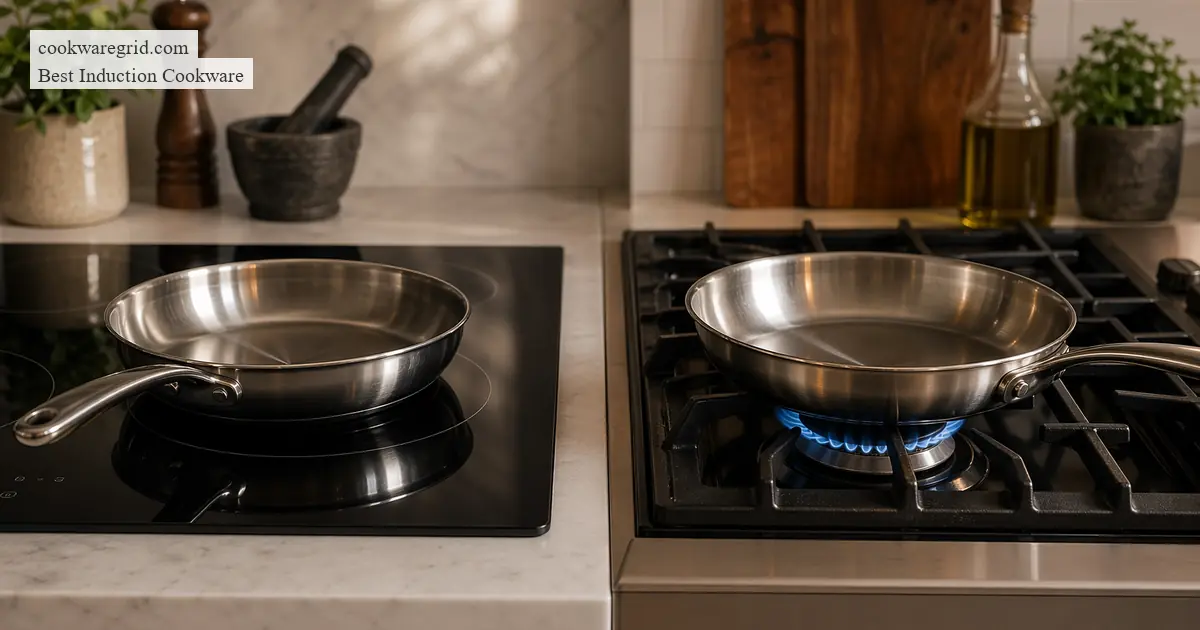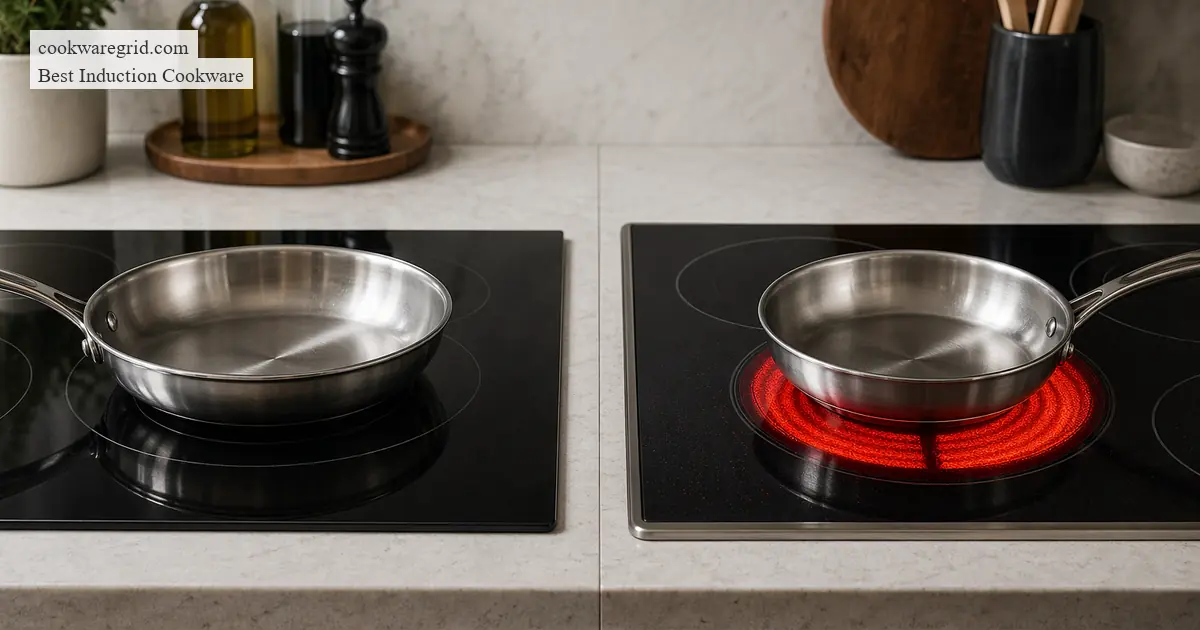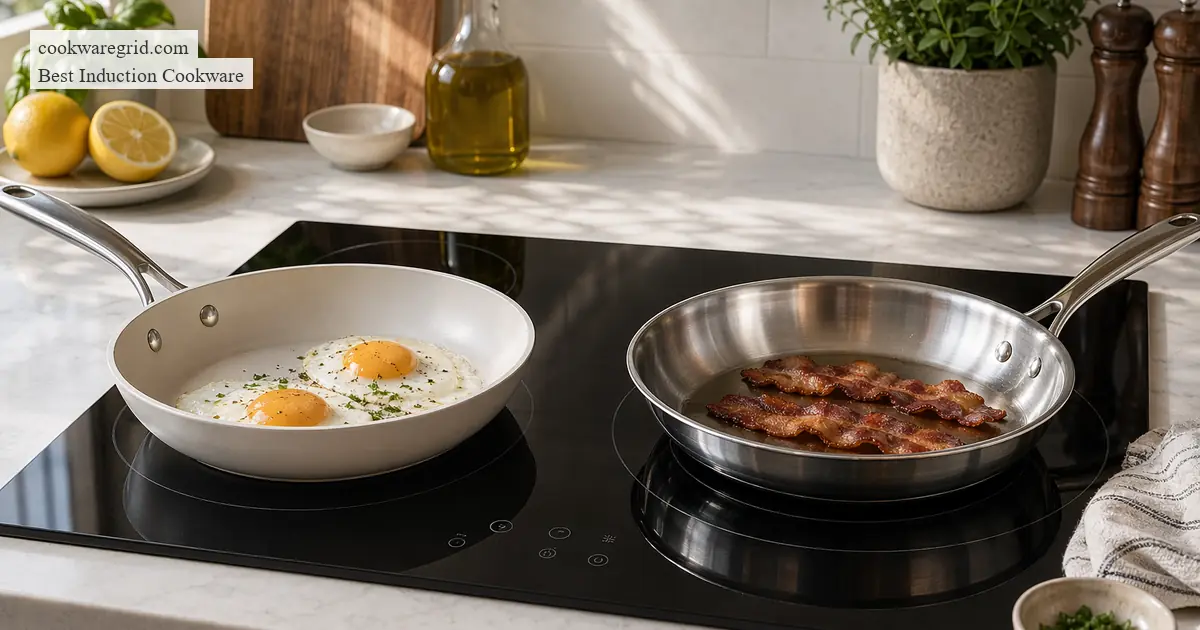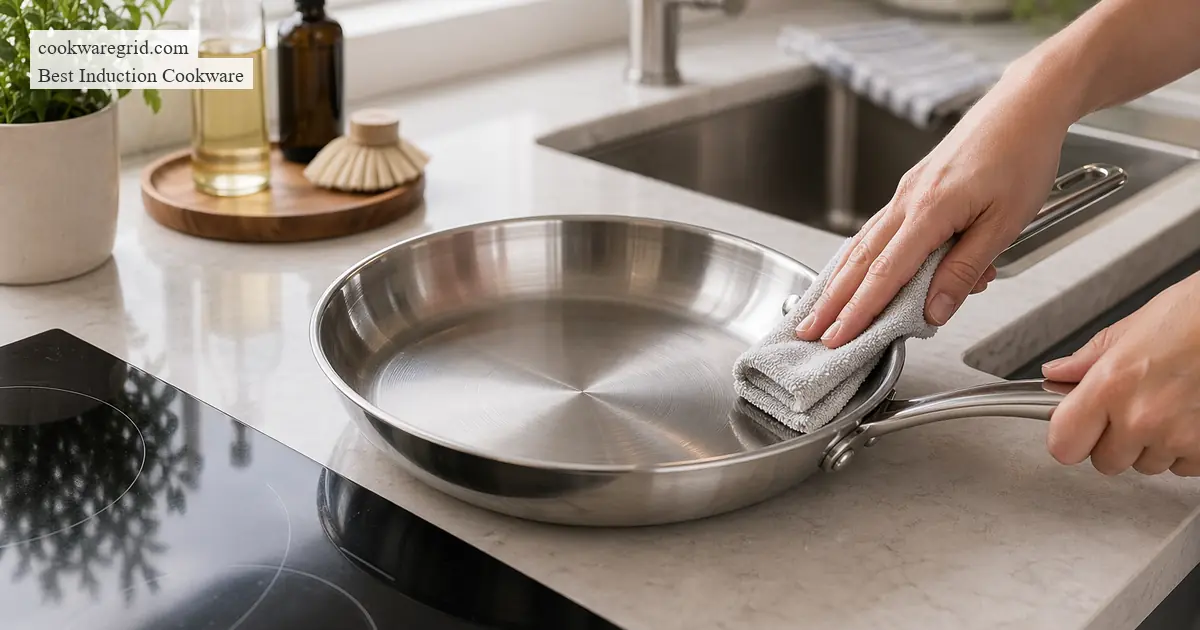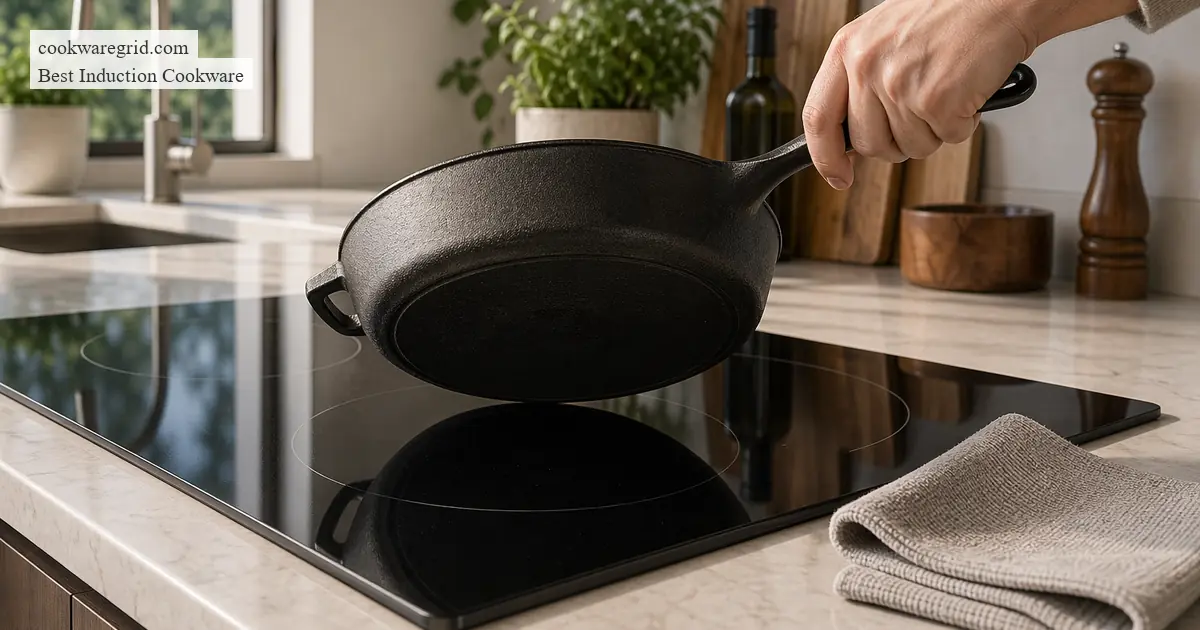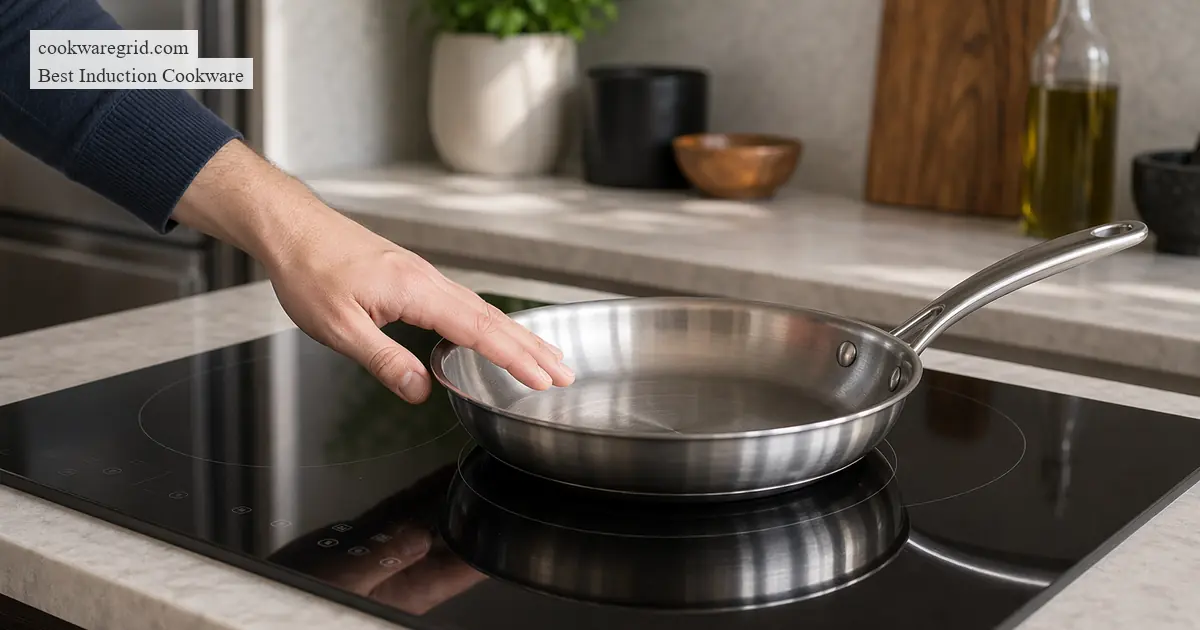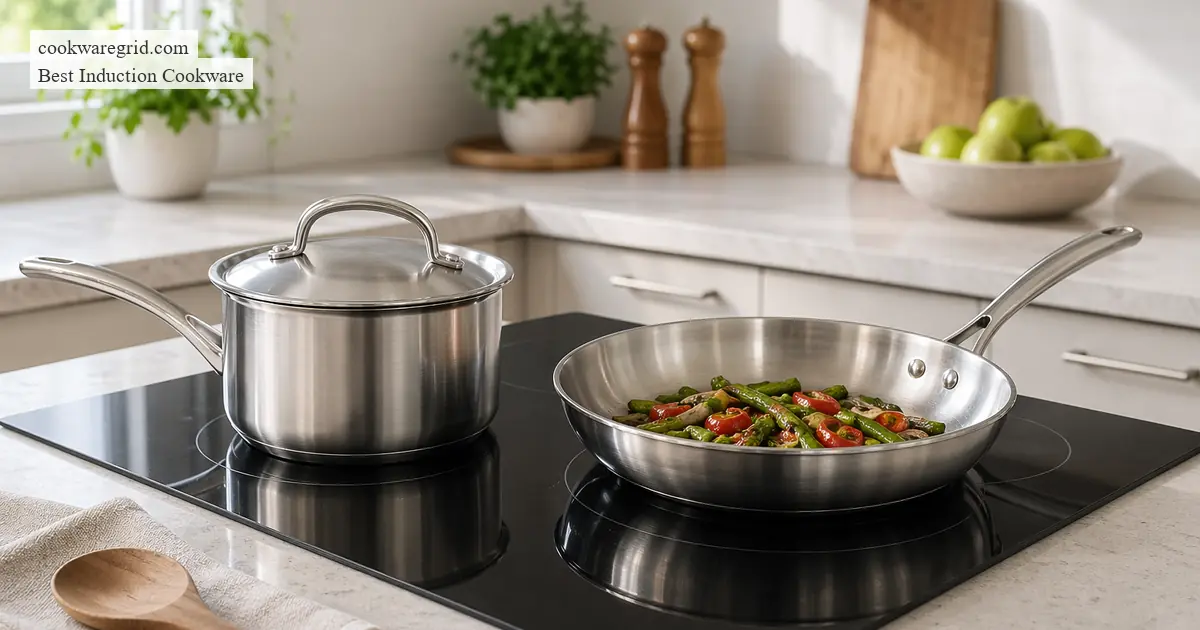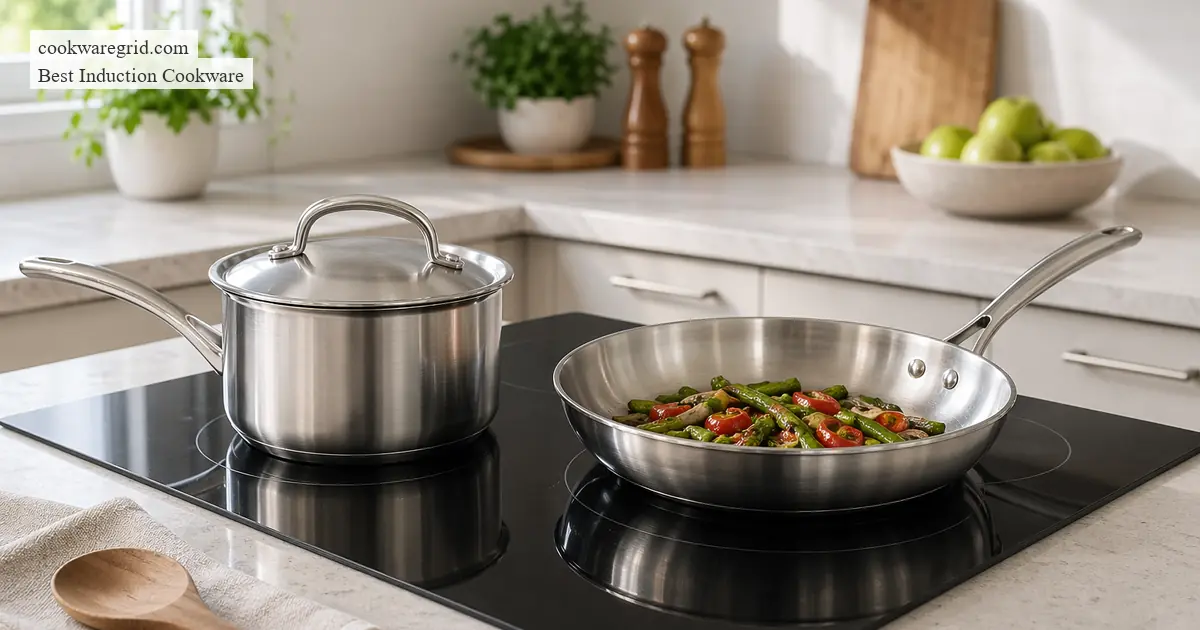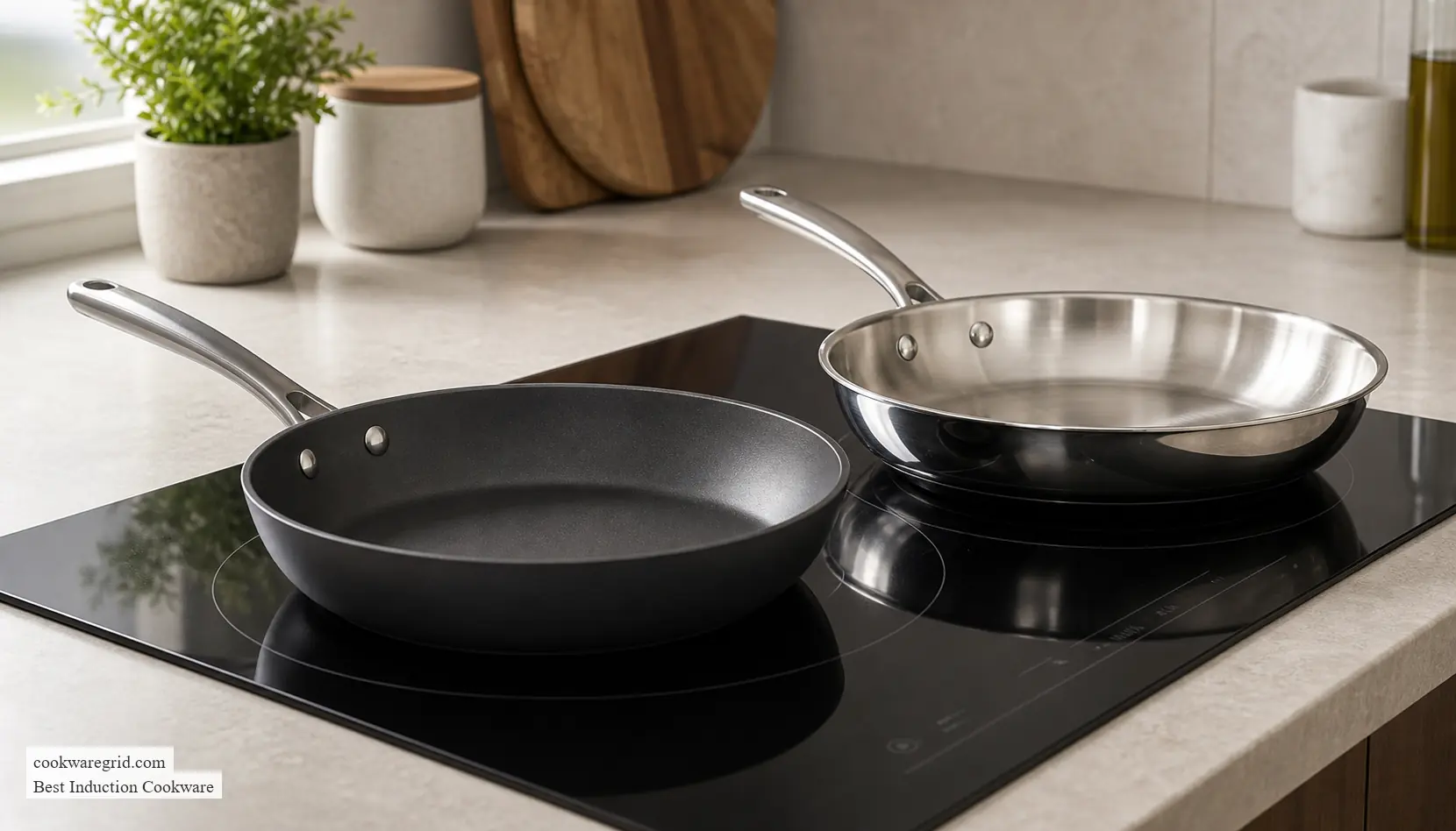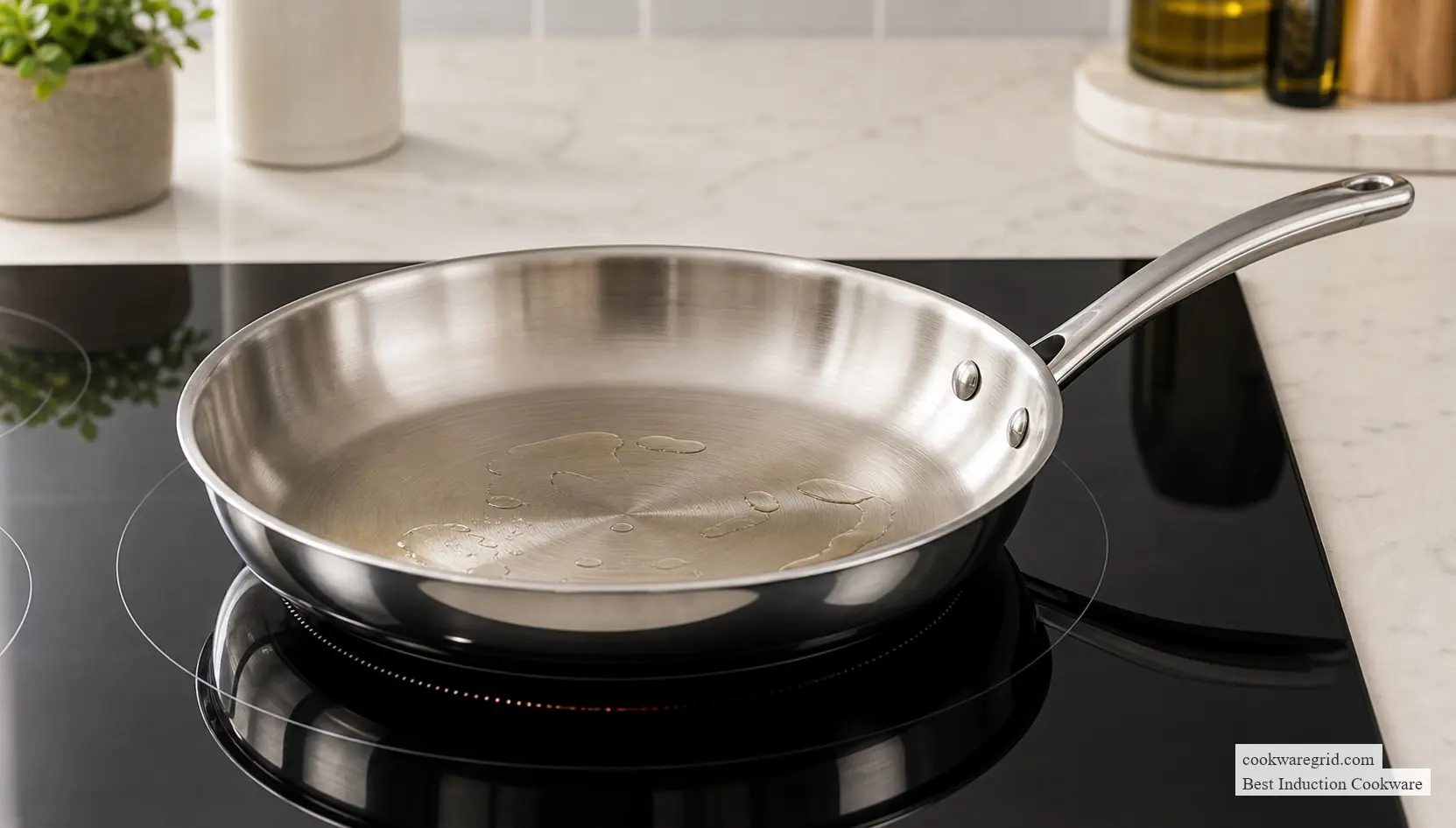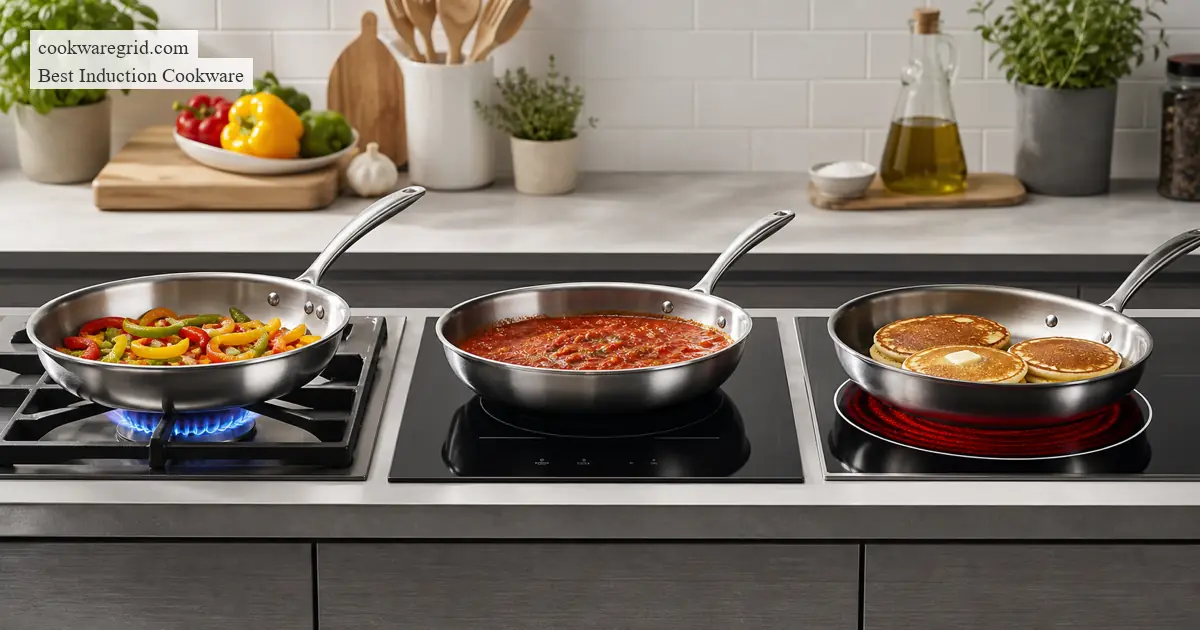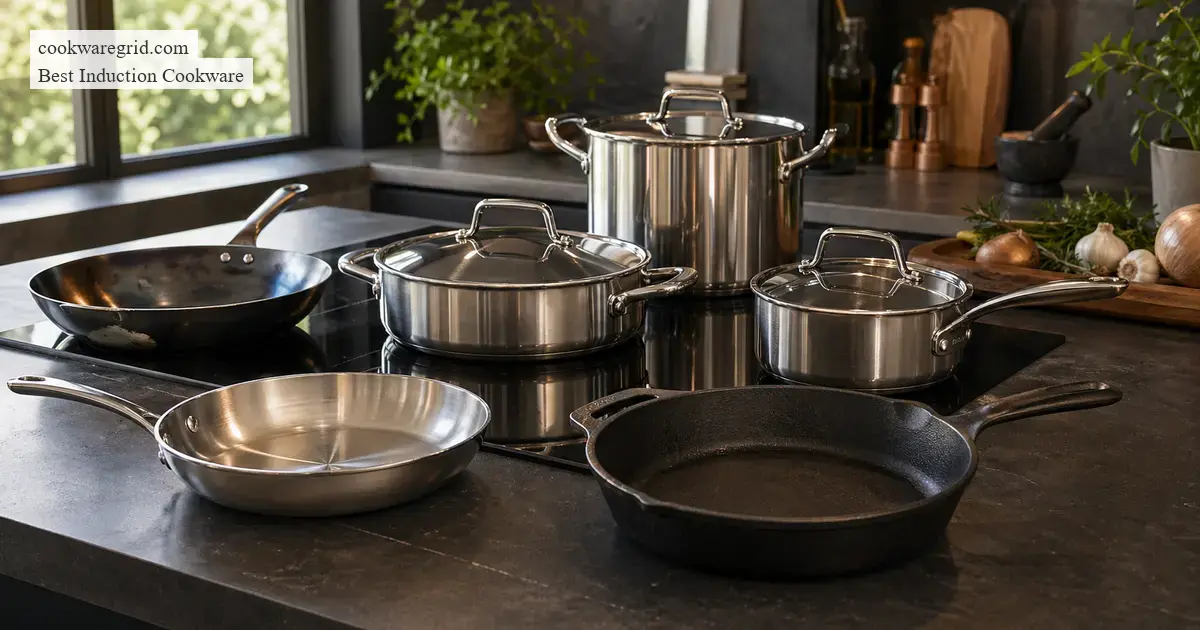
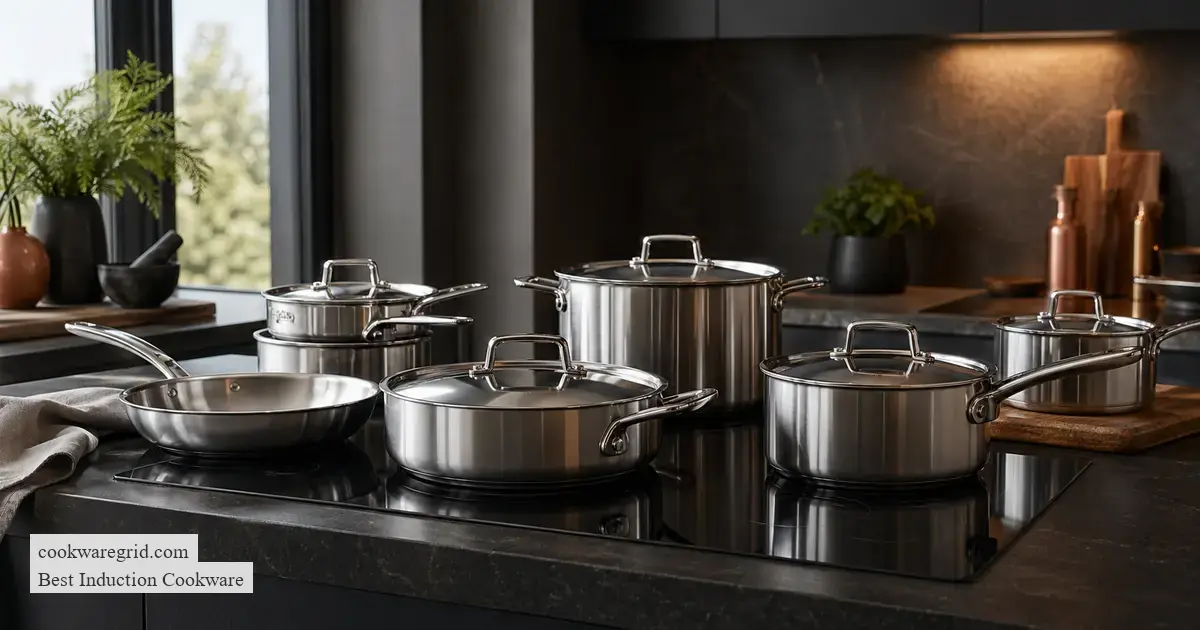
A collection of stainless steel cookware arranged on a modern kitchen counter

Induction cookware testing hub

CookwareGrid Tests the Gear Behind Better Induction Cooking

Clear buying advice for magnetic cookware, flat-bottomed pans, clad stainless steel, carbon steel, cast iron, thermal conductivity, and the small details that decide whether an induction cooktop feels precise or frustrating.
  • Magnet test guidance
  • Induction noise troubleshooting
  • Real cookware specifications
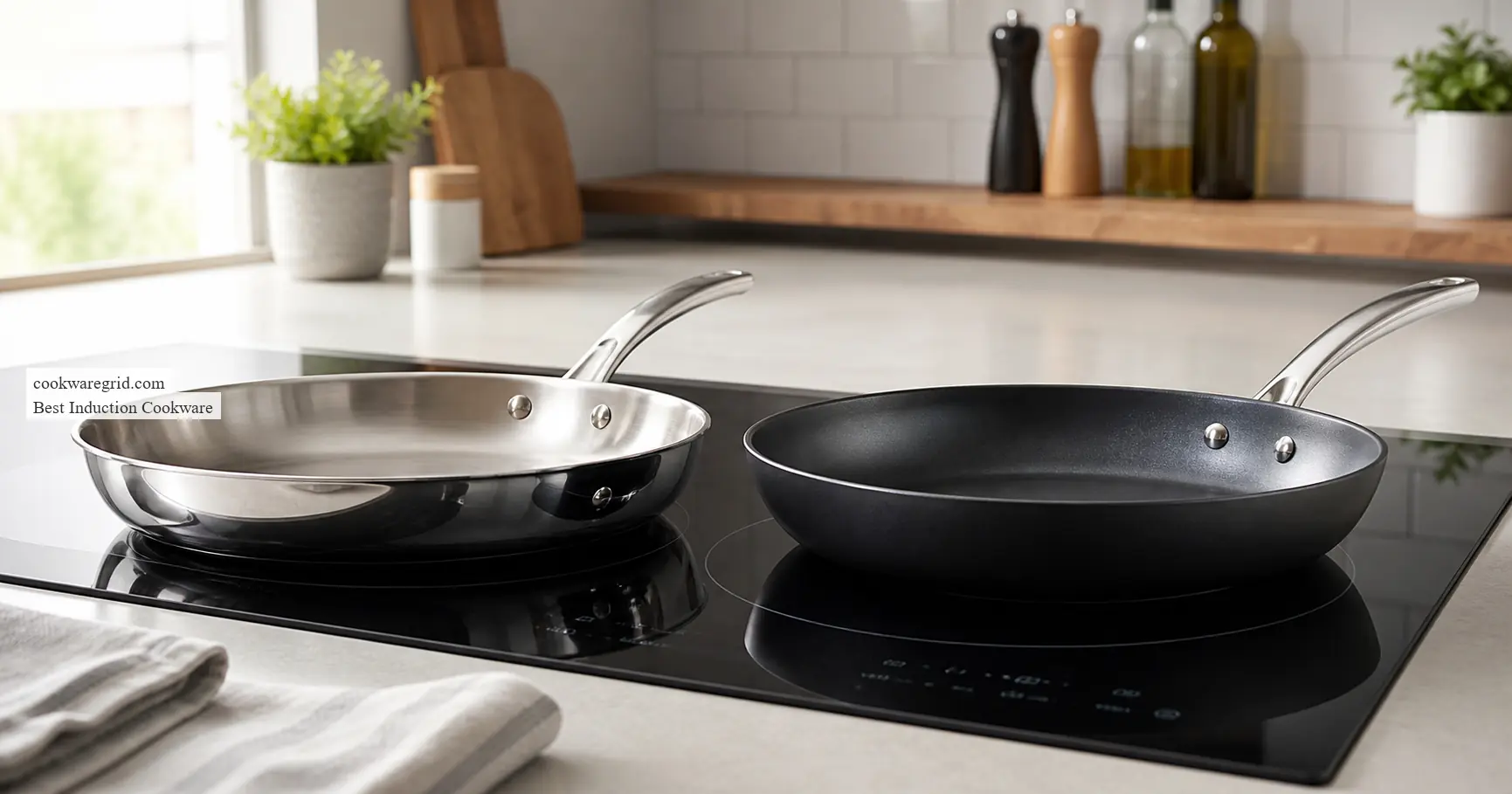
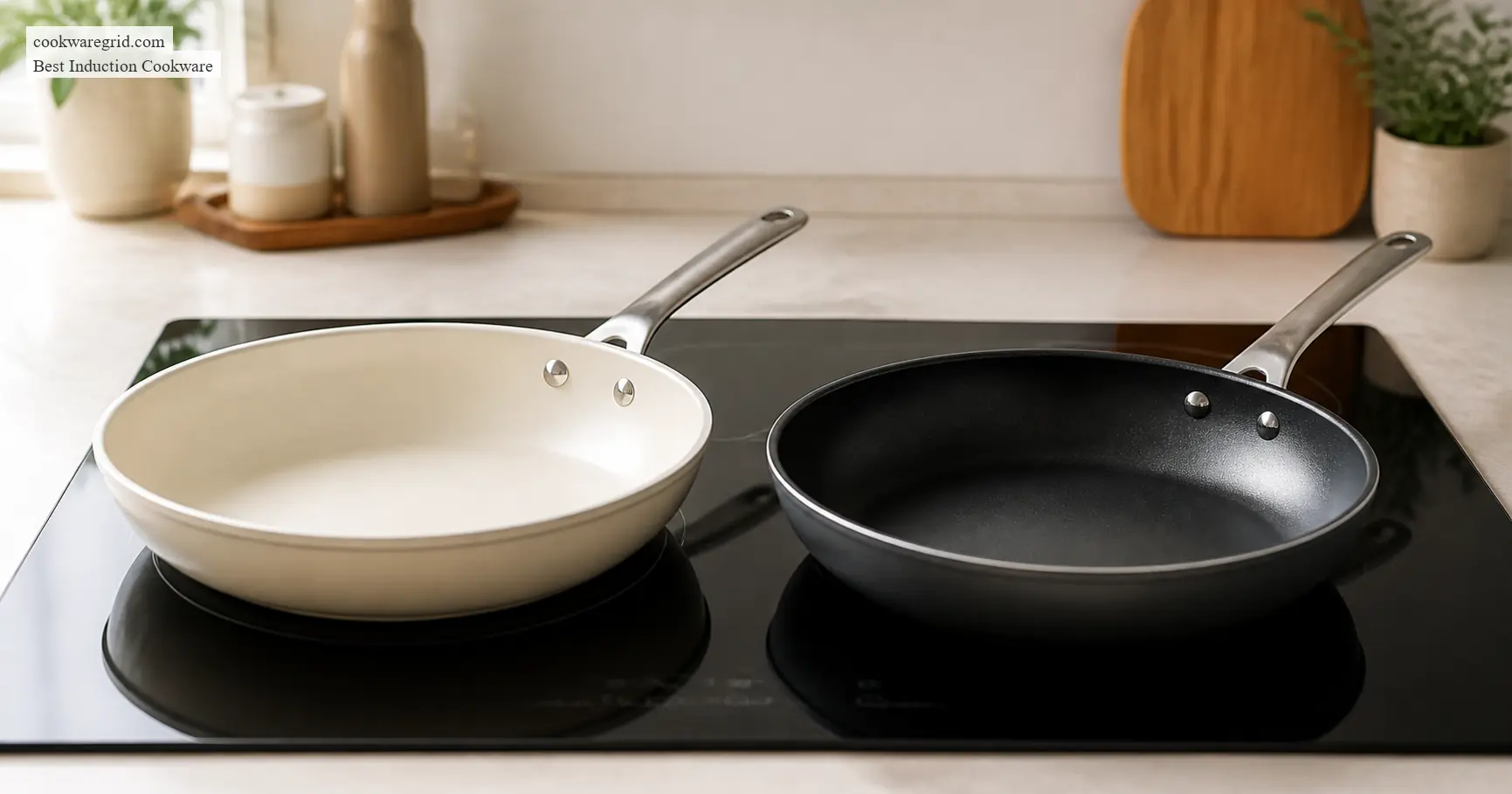
  • Warp resistance and PTFE-free options

Cookware guides

Induction Cookware Guides

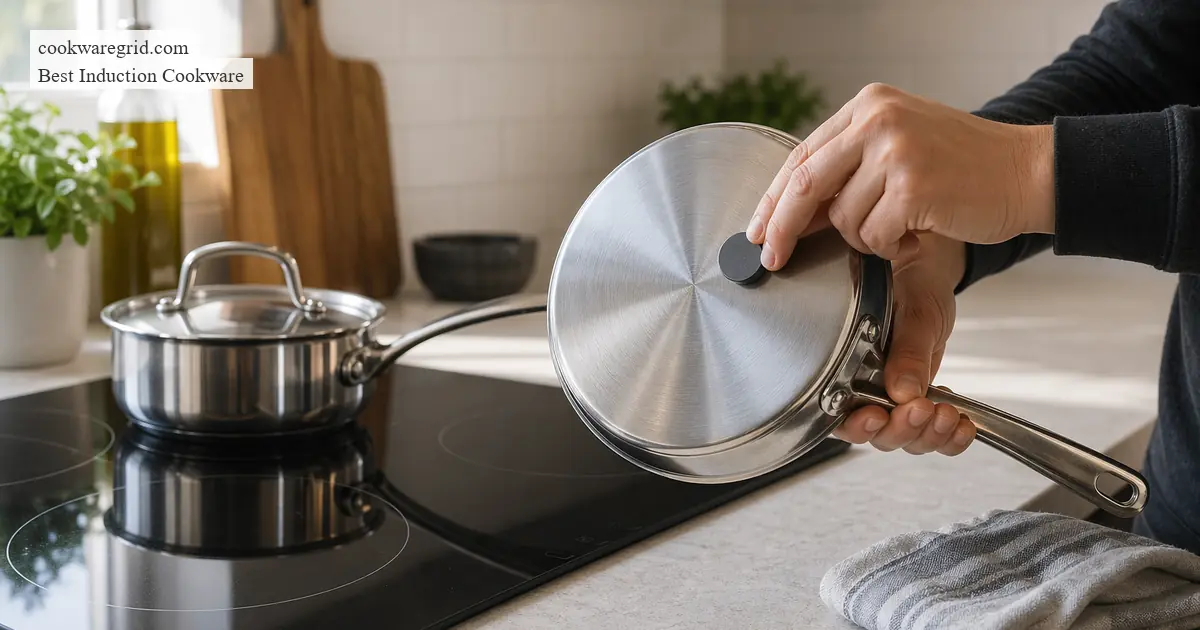
Start with our main buying guide, then use the expert explainers to verify cookware compatibility and diagnose buzzing, humming, or uneven pan contact.

Editorial method

What CookwareGrid Measures for Even Heat Distribution

Induction cookware is not judged by marketing claims alone. The important questions are whether the pan activates reliably, sits flat, distributes heat beyond the coil, resists warping, and stays useful after repeated high-output cooking.

Magnetic Response

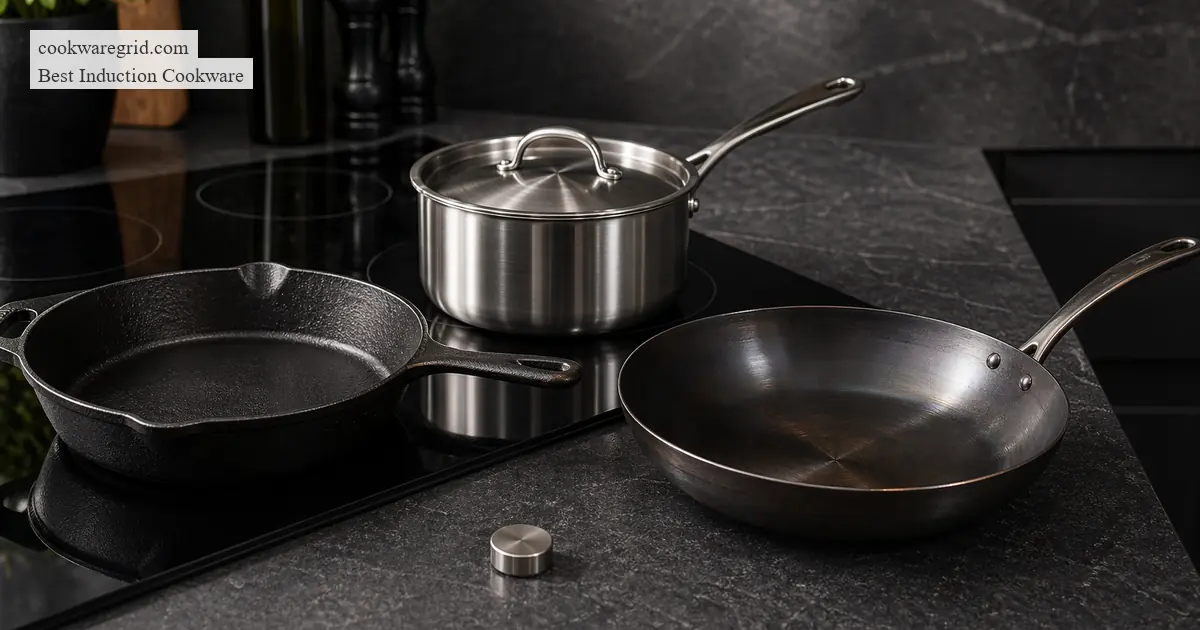
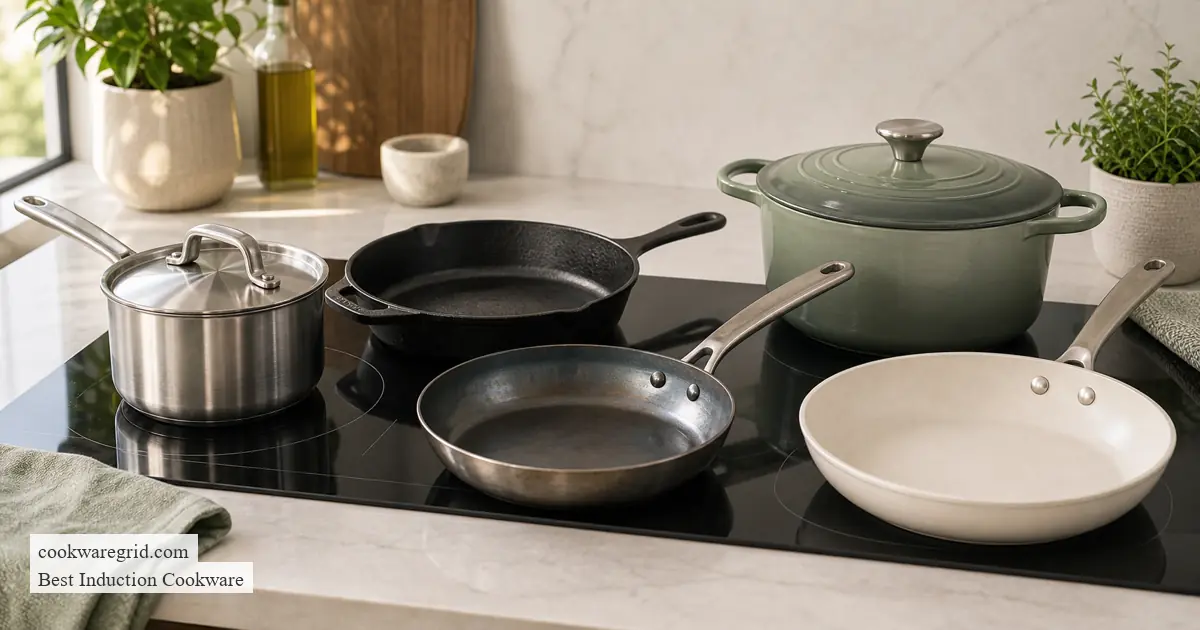
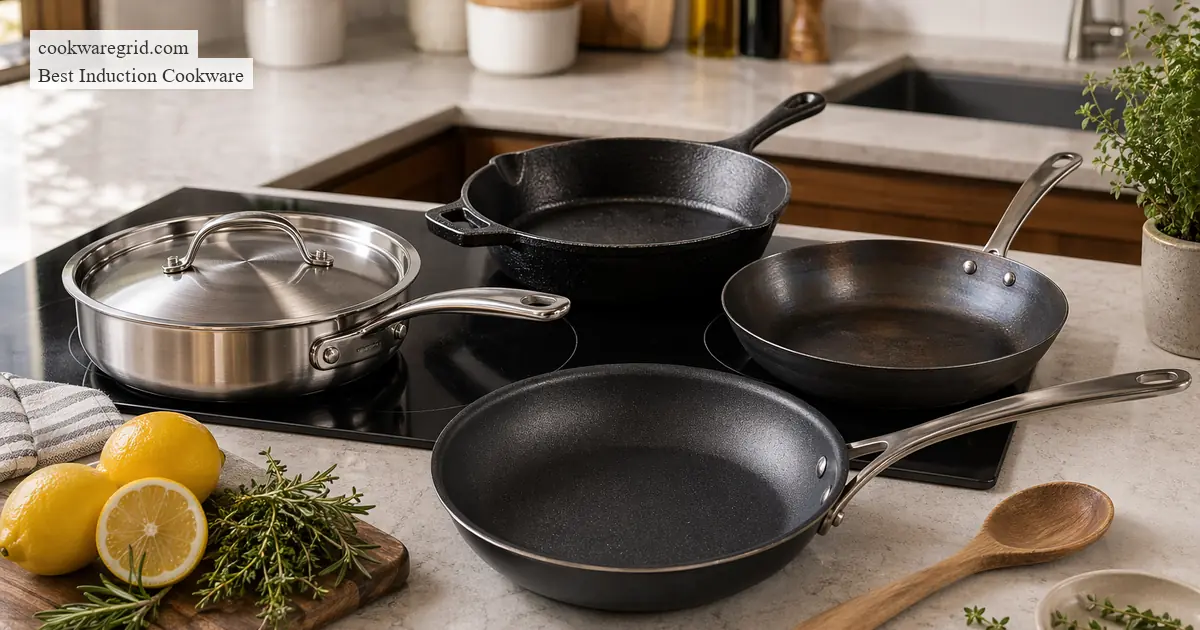
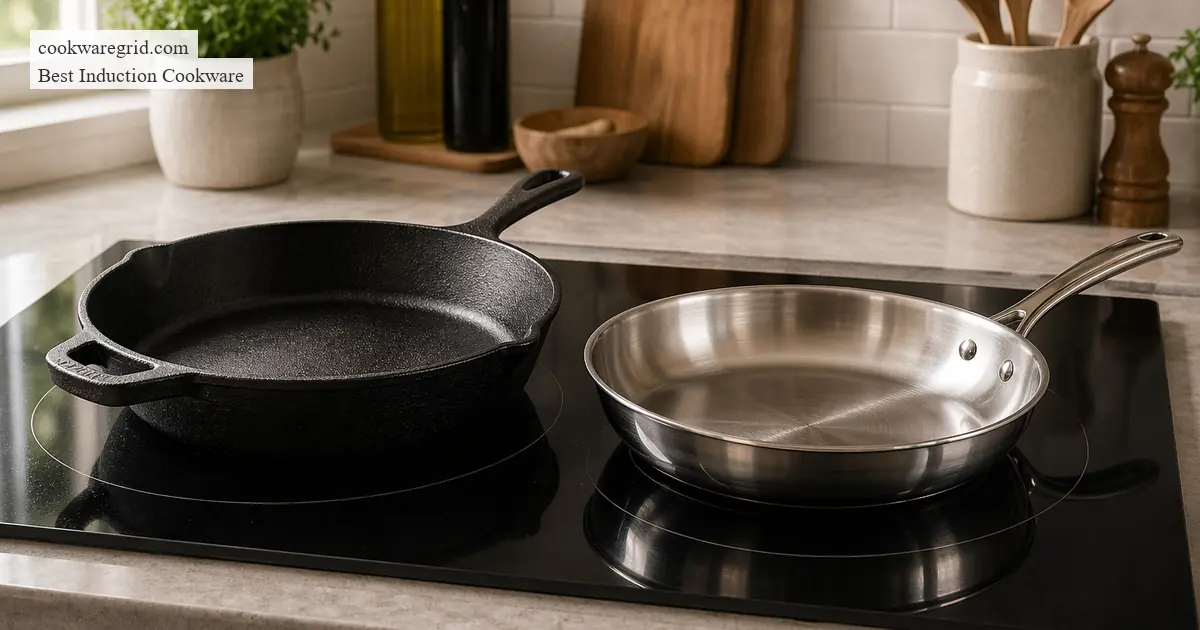
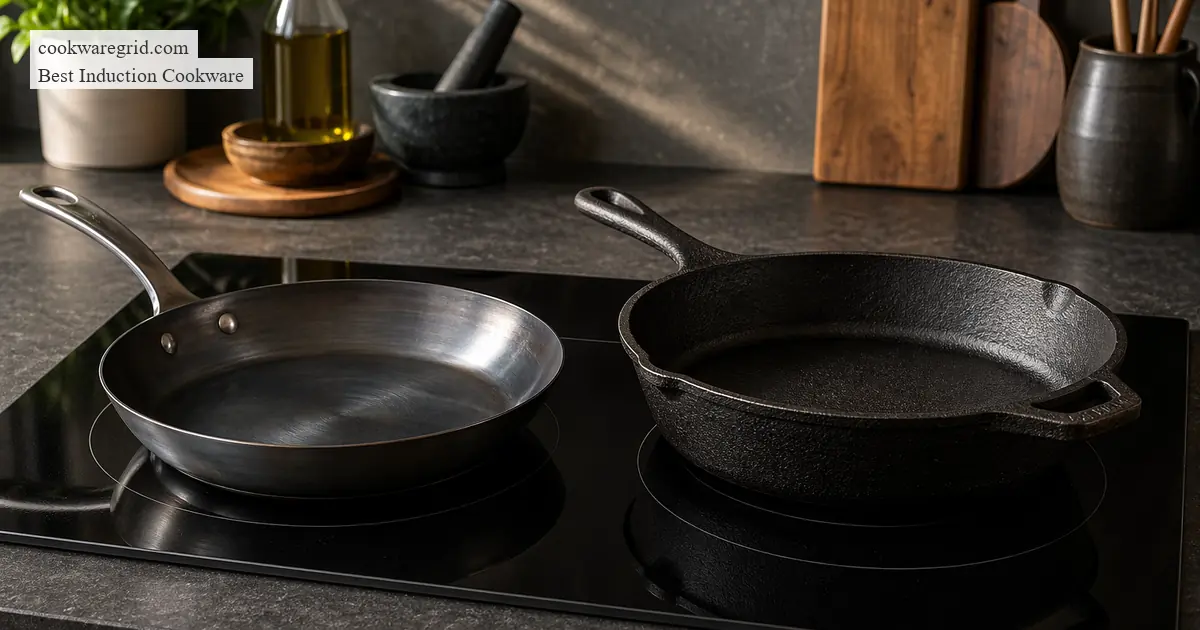
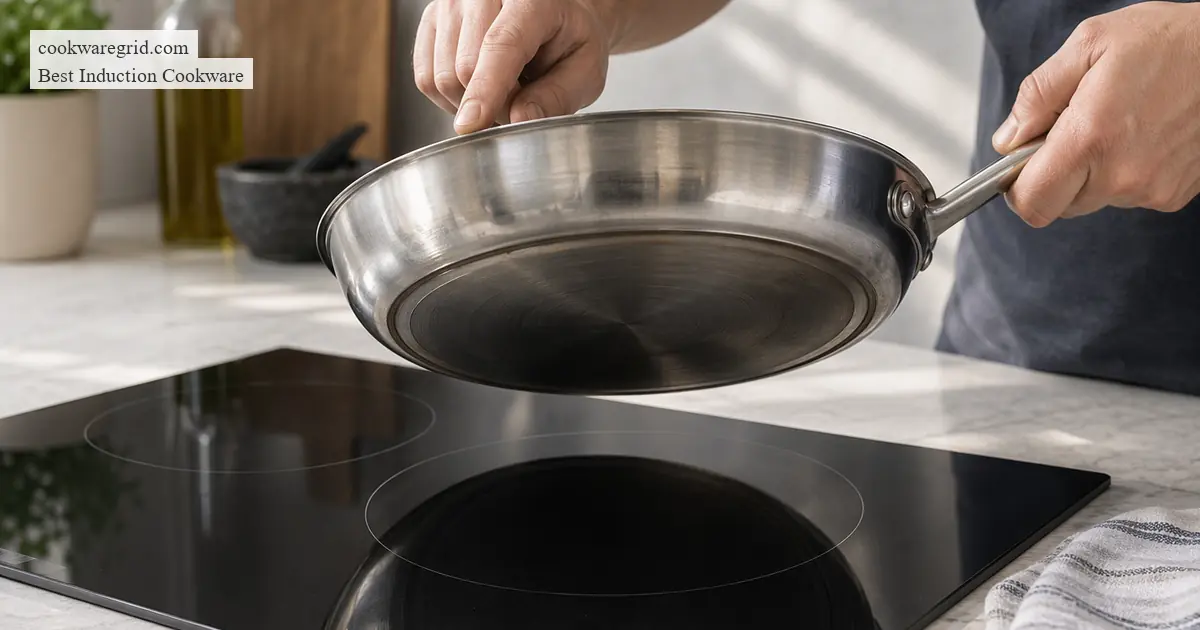
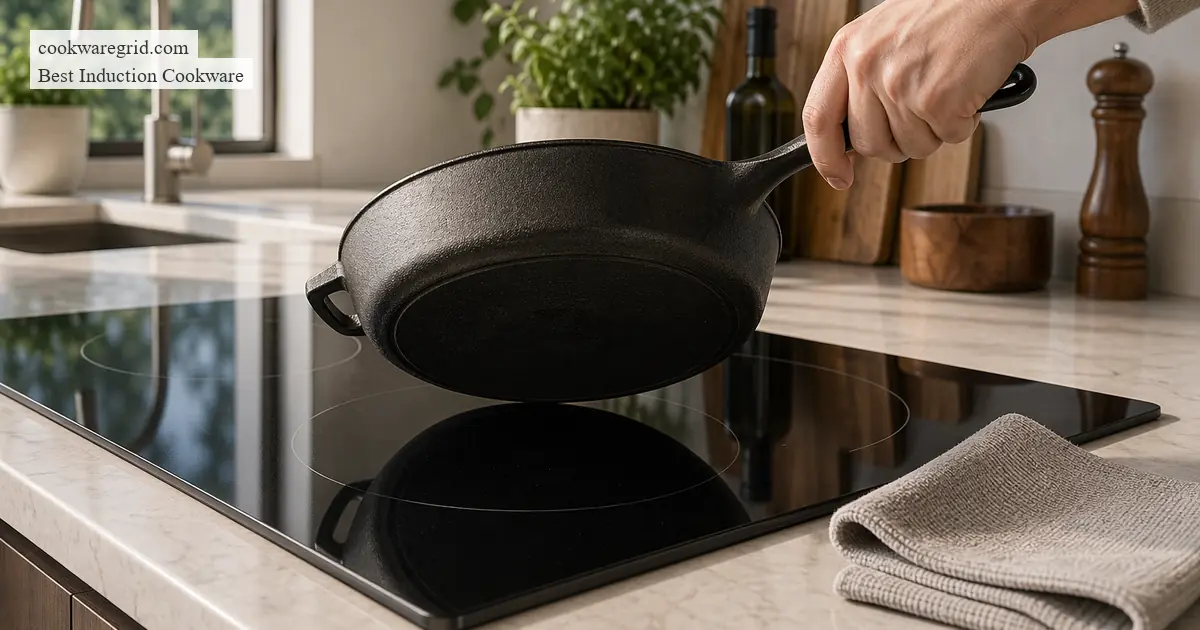
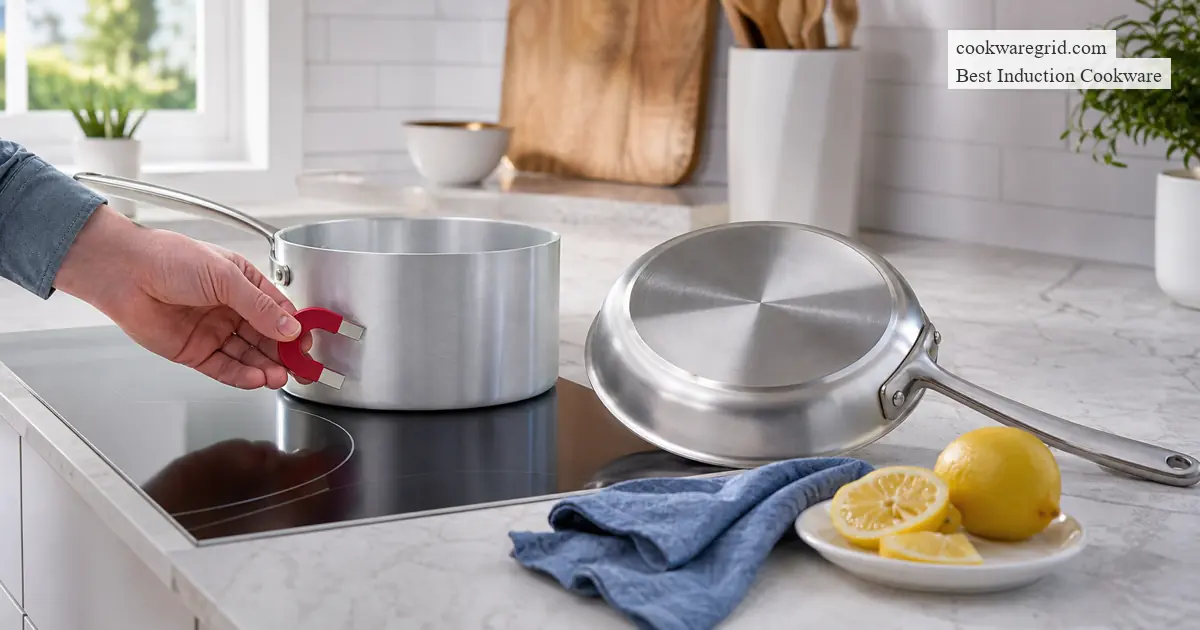
We prioritize cookware with magnetic stainless steel, carbon steel, cast iron, or an induction-ready base that passes a firm magnet test.

Heat Distribution

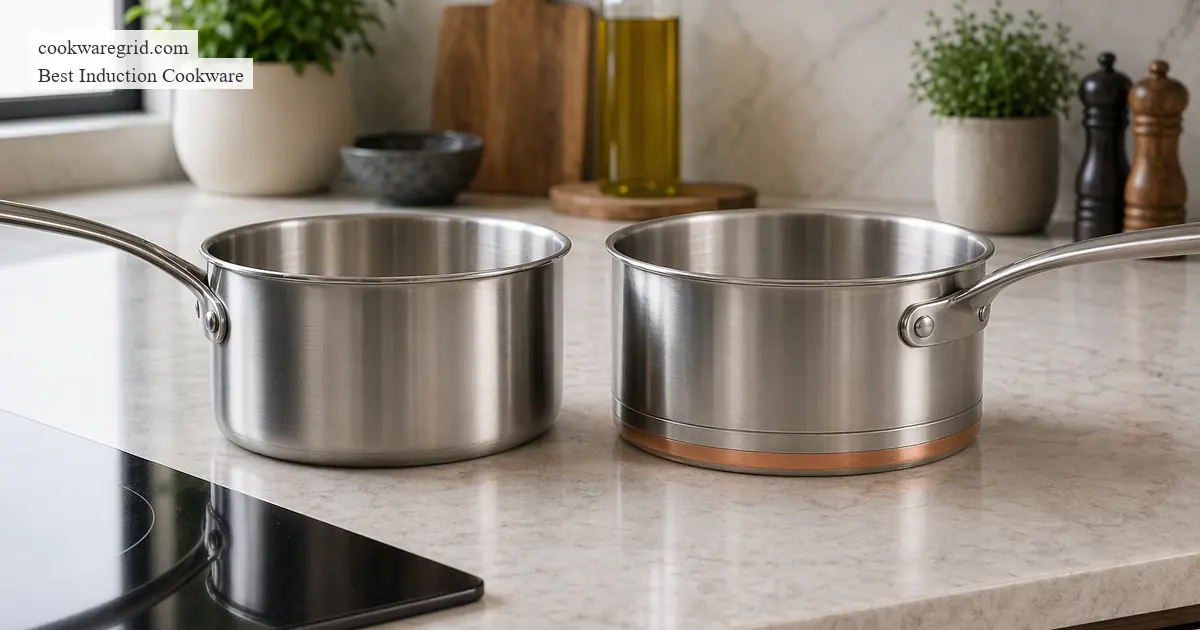
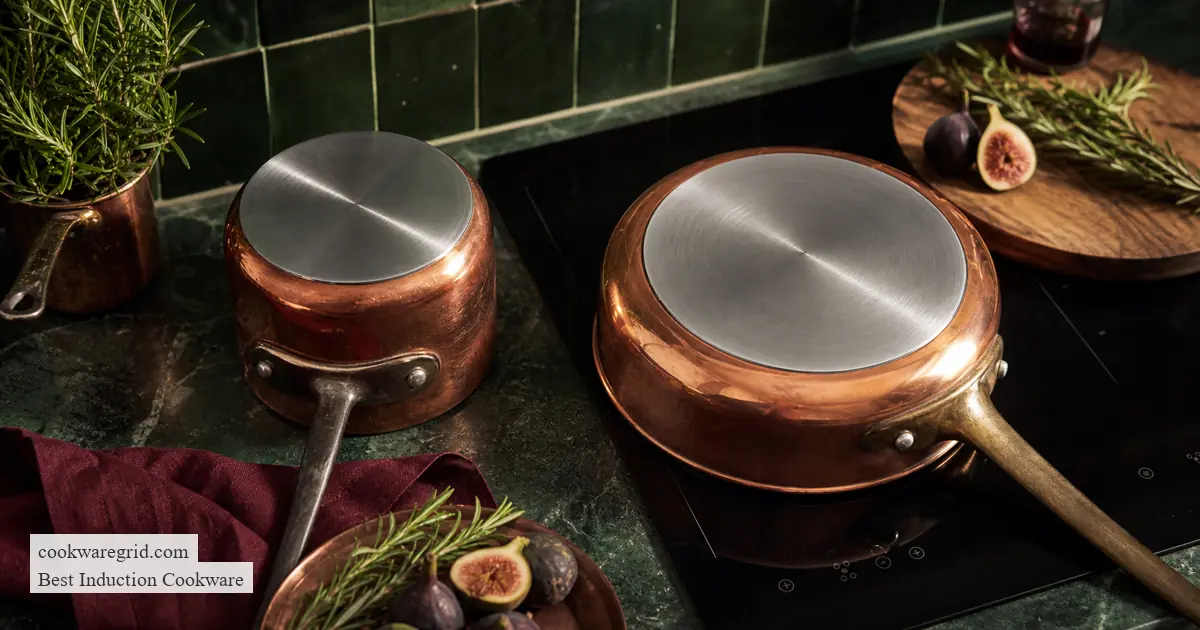
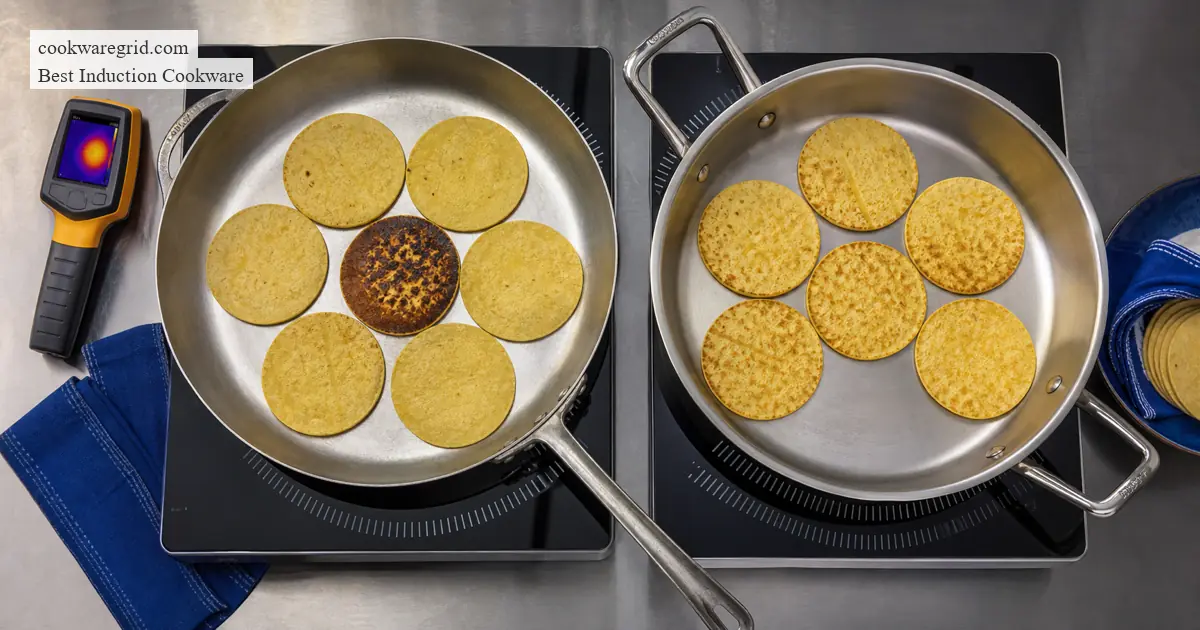
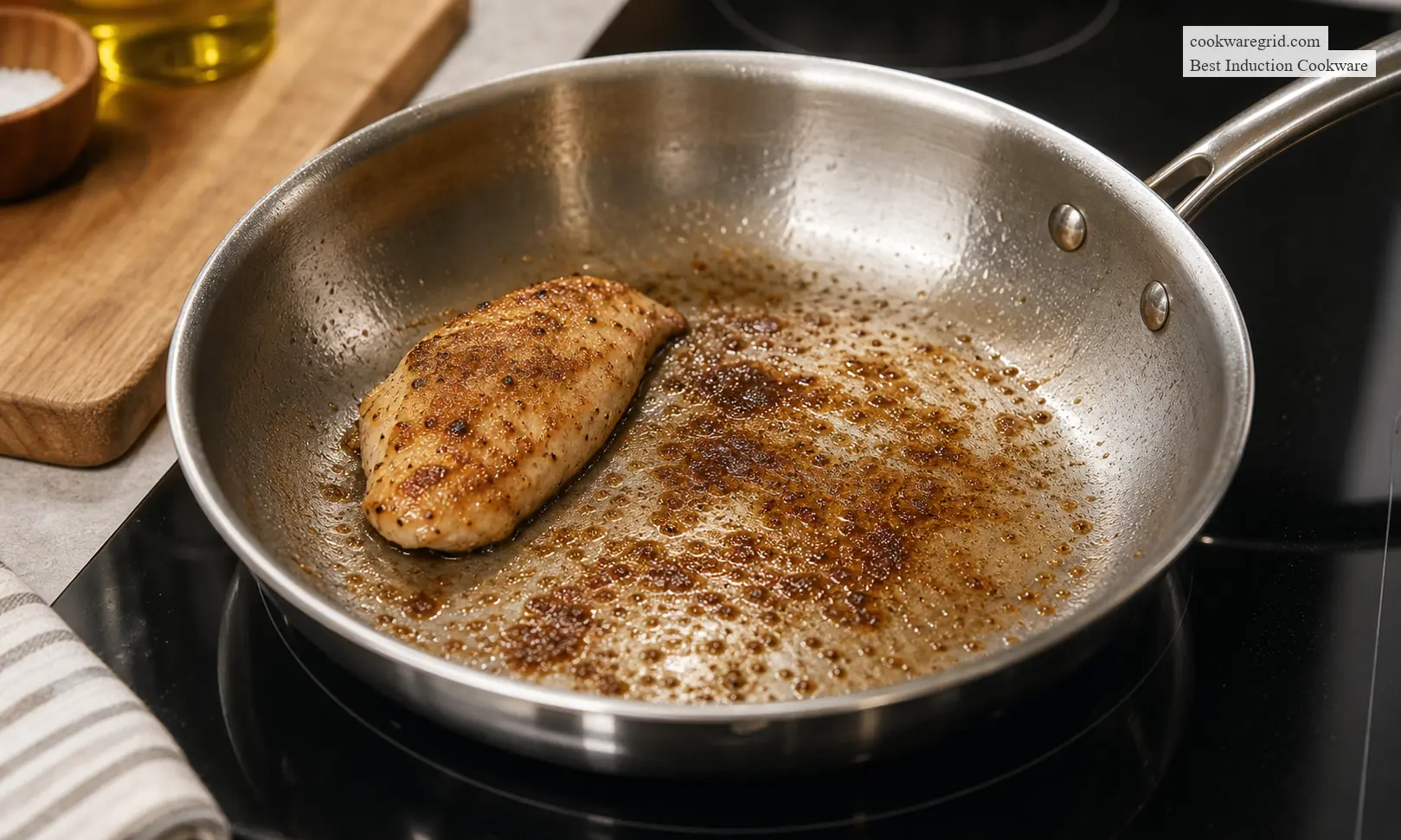
Tri-ply, 5-ply, 7-ply, aluminum cores, copper cores, and thick bases are evaluated for how evenly they spread heat from the induction coil.

Flatness and Noise

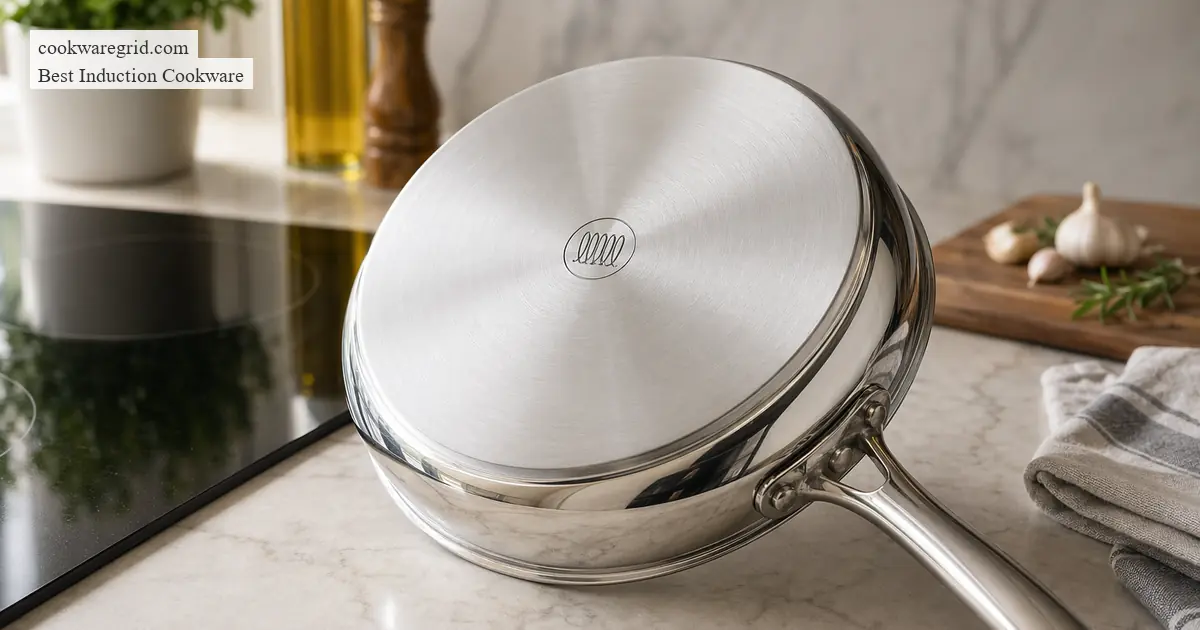
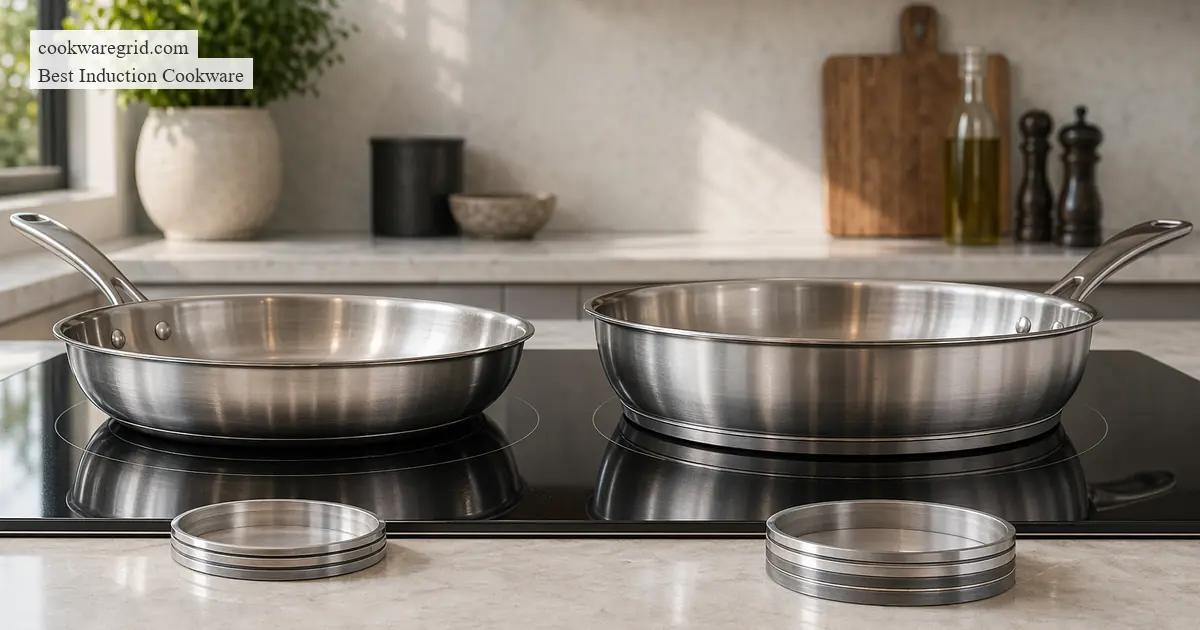
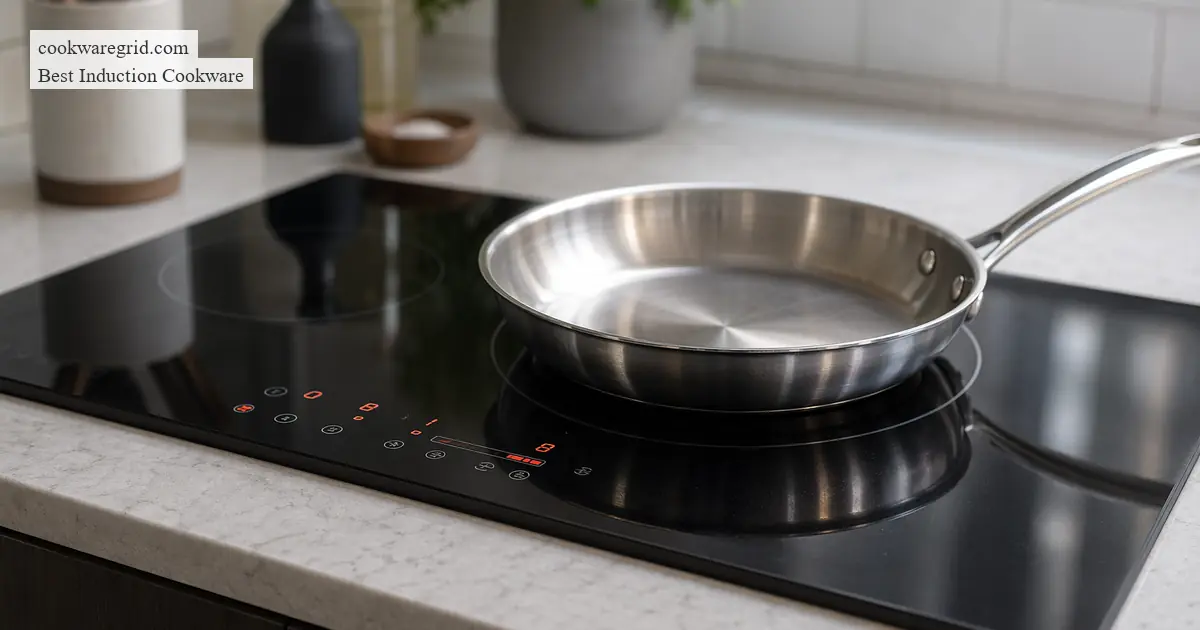
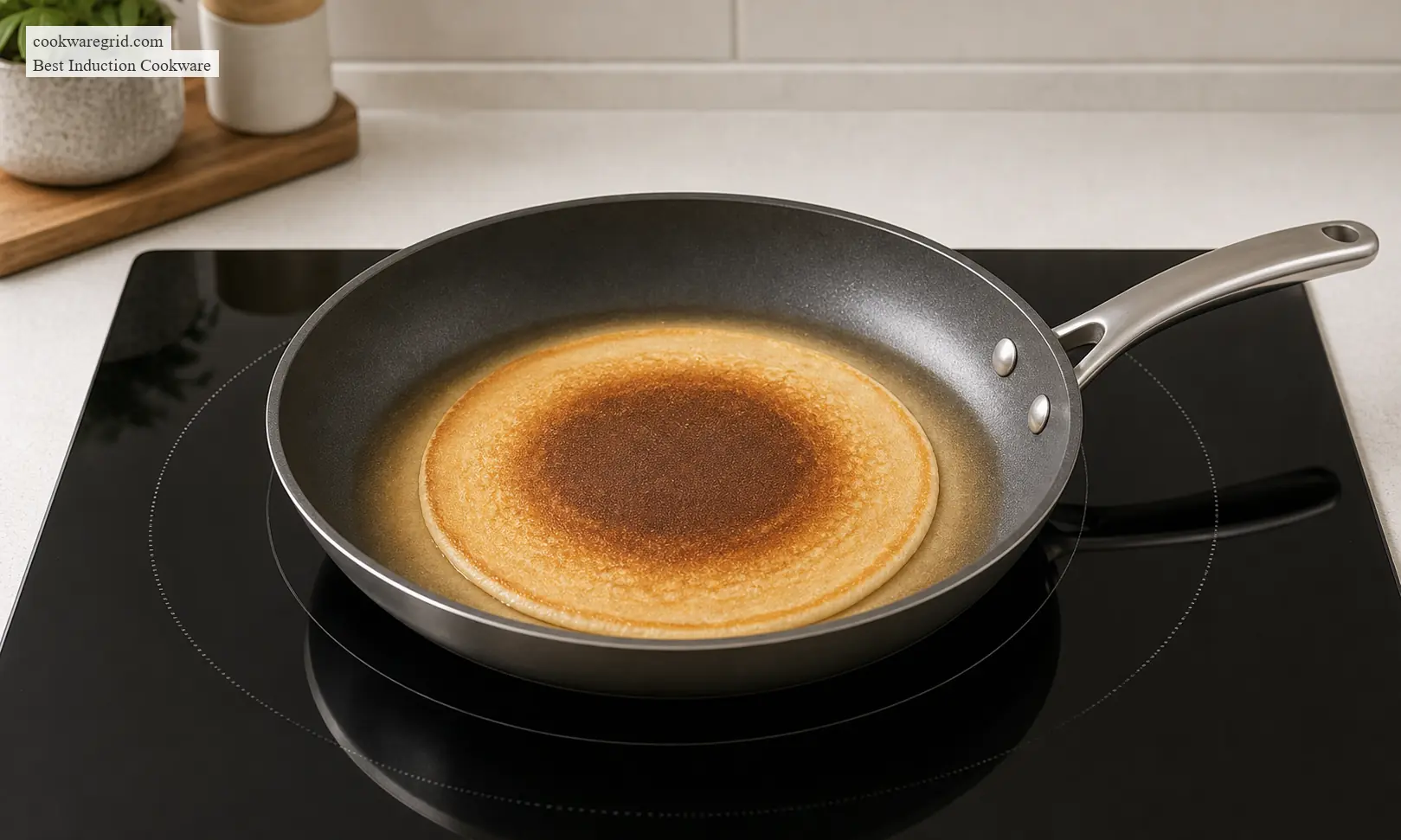
Flat bases matter because poor contact can cause uneven heating, pan detection errors, buzzing, whining, and a less stable cooking experience.

Cookware guides

Explore the Kitchen

Master your induction cooktop with expert guides, troubleshooting tips, and in-depth cookware comparisons.