Troubleshooting guide
Why Is My Induction Cookware Buzzing? Normal Sounds vs Warning Signs
Why Is My Induction Cookware Buzzing is a practical question because induction cooking changes how cookware performs. The cooktop does not simply heat a burner and wait for the pan to catch up. It uses magnetic energy, so the material, base shape, thickness, and construction of the cookware decide whether the cooking experience feels precise or frustrating.

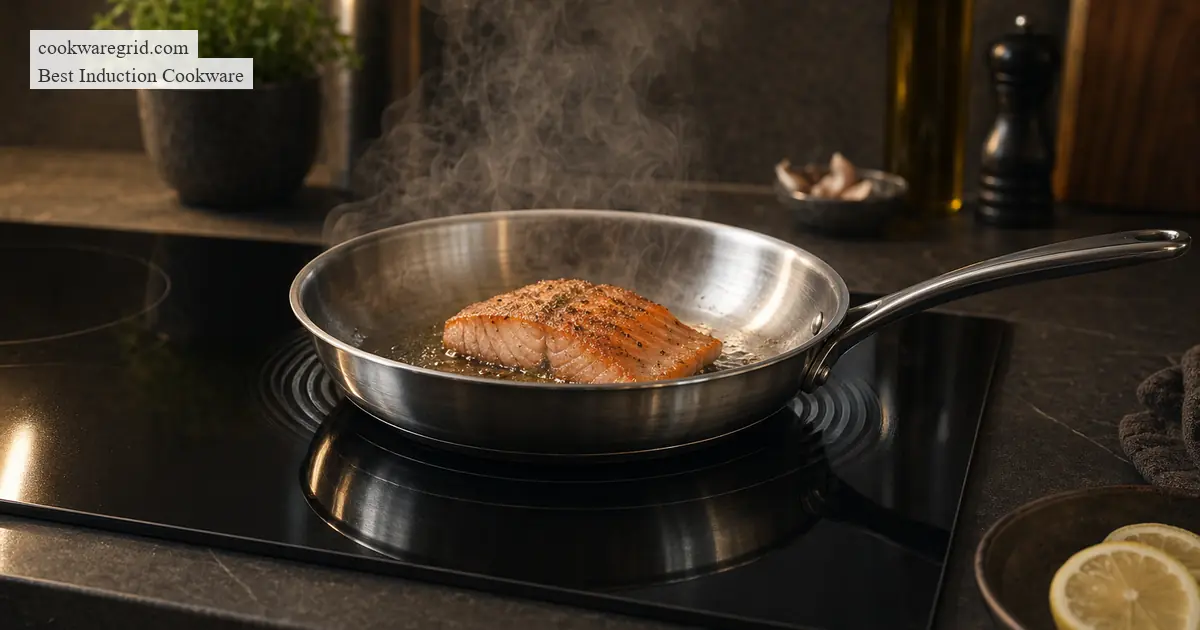
Why Is My Induction Cookware Buzzing is a practical question because induction cooking changes how cookware performs. The cooktop does not simply heat a burner and wait for the pan to catch up. It uses magnetic energy, so the material, base shape, thickness, and construction of the cookware decide whether the cooking experience feels precise or frustrating.
This guide answers the search intent behind "induction cookware buzzing noise" with a cookware-first lens. It focuses on ferromagnetic response, thermal conductivity, even heat distribution, warp resistance, PTFE-free or coated surfaces where relevant, and the real kitchen details that affect searing, simmering, cleaning, and glass-cooktop safety. Buzzing comes from magnetic vibration, layered metal resonance, cooling fans, or unstable pan contact.
For a broader look at complete sets, compare our guide to the best induction cookware. The goal is not to chase marketing labels; it is to understand which cookware traits actually matter on induction and how to make a smarter purchase or troubleshooting decision.
Care & Troubleshooting
Why Is My Induction Cookware Buzzing: What Is Usually Happening
Start With the Cookware
Most searches for "induction cookware buzzing noise" come from a real kitchen problem: a pan will not heat, a glass top is scuffed, a skillet buzzes, or cookware suddenly looks stained. The fastest path is to diagnose cookware first before assuming the cooktop is defective. The sound often changes when food is added, power is lowered, or a heavier pan is used.
Induction cooking is sensitive to magnetic response, base diameter, flatness, and construction. A weak magnetic base can cause detection failures. A warped pan can buzz or heat unevenly. Thin stainless can discolor from high heat. Rough cast iron can scratch glass if dragged across debris.
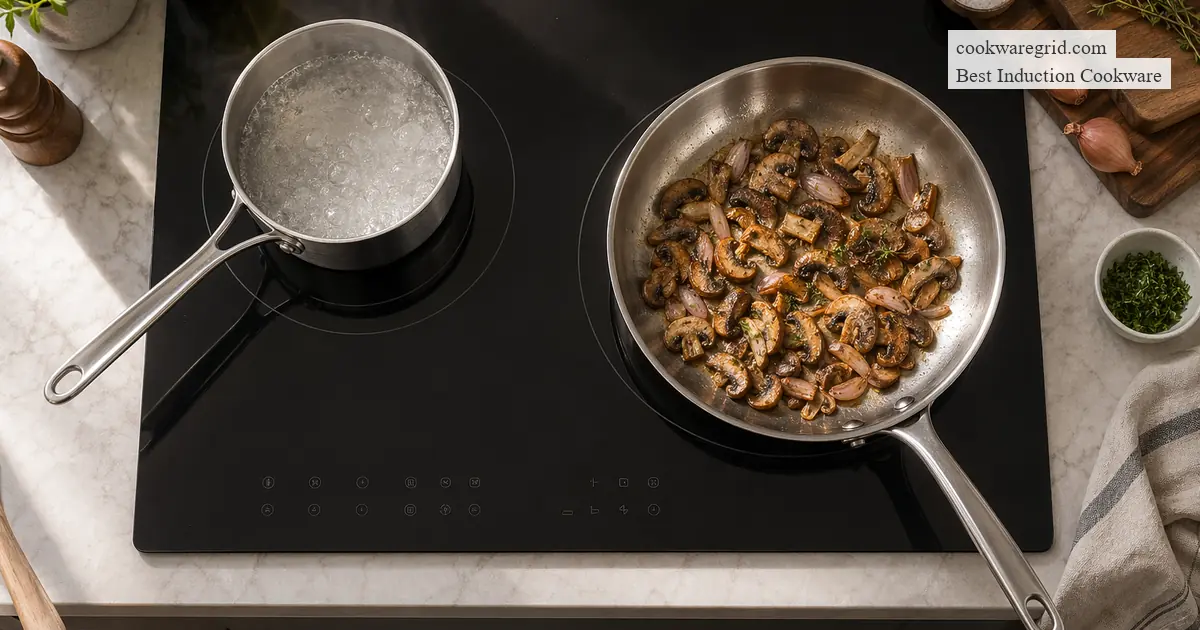
Separate Normal Behavior From Problems
The good news is that many problems are preventable. Better cookware selection, correct burner matching, gradual preheating, and careful cleaning habits solve most day-to-day induction complaints.
- Check magnetic compatibility first.
- Inspect the base for warping or roughness.
- Match pan size to the burner zone.
- Change power settings before assuming failure.
Care & Troubleshooting
Step-by-Step Diagnosis for Why Is My Induction Cookware Buzzing
The Magnet, Flatness, and Diameter Check
Begin with the magnet test. Place a magnet on the bottom of the pan where it contacts the cooktop. It should stick firmly across the base. If it sticks only weakly or only in a tiny center area, the pan may be a poor induction match even if it sometimes works.
Next, check flatness. Set the cool pan on a flat counter or the cool cooktop and press gently on the rim. Rocking indicates warp or poor base geometry. A warped pan can reduce magnetic coupling, create hot spots, and increase vibration. Then compare the pan's magnetic base diameter with the burner size. A large rim with a small base is a common cause of uneven cooking. A loud rattle from one pan is different from a normal low hum at high power.
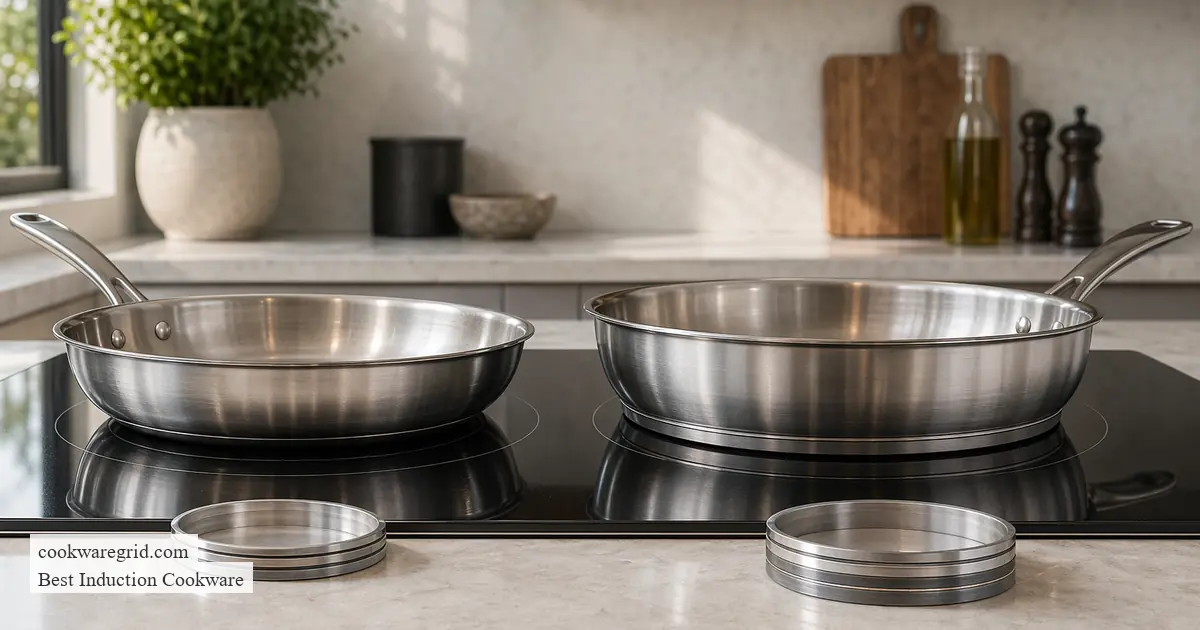
The Heat and Sound Check
Finally, run a controlled heat test. Add water or a thin film of oil and heat gradually. Watch for hot rings, pulsing, clicking, harsh buzzing, or delayed detection. Note whether the issue appears with one pan or every pan. If one pan misbehaves, cookware is the likely cause.
- One bad pan usually means cookware trouble.
- All pans failing on one zone may indicate appliance trouble.
- High power exaggerates weak cookware problems.
- Food or liquid often dampens normal vibration.
Care & Troubleshooting
How to Prevent the Problem From Coming Back
Preheat With Control
Induction is powerful enough to overheat an empty pan quickly. Avoid long boost preheats, especially with nonstick, ceramic, or thin stainless cookware. Start lower, give the pan time to equalize, and increase power once food or liquid is present. This protects coatings, reduces discoloration, and improves warp resistance.
Cleaning should match the material. Stainless steel can usually handle more aggressive cleaning than coated pans. Cast iron and carbon steel need drying and seasoning care. PTFE-free ceramic nonstick should be cleaned gently with soft tools. Glass cooktops should be wiped before cooking so salt, sugar, or grit does not get trapped under a pan.
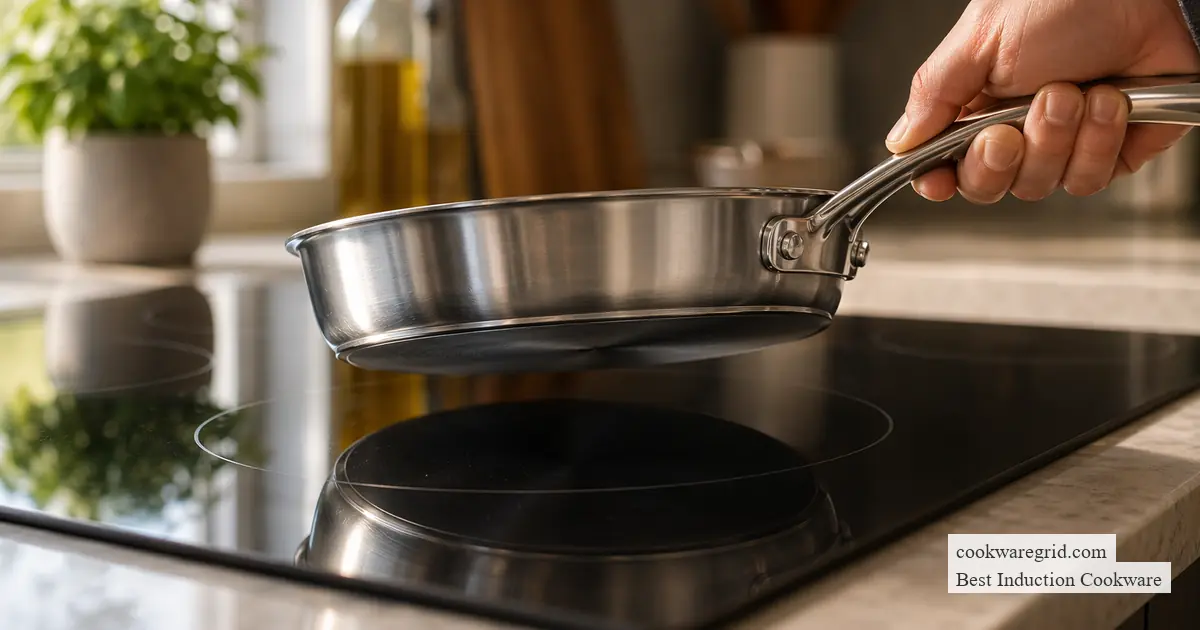
Clean Based on Material
Storage matters too. Nesting pans without protectors can scratch coatings and roughen bases. A damaged or dirty base can scratch glass even if the cookware itself is induction compatible. Help readers separate normal operating sounds from damage or service issues.
- Avoid empty boost preheats.
- Let hot cookware cool before washing.
- Use soft tools on coated pans.
- Keep cookware bases clean before setting them on glass.
Care & Troubleshooting
When to Replace Cookware or Call for Service
Replace the Pan When the Problem Follows the Pan
Replace cookware when it fails the magnet test, rocks badly, has a loose bonded base, has a damaged coating, or repeatedly creates detection errors across multiple burners. A cheap pan that technically works can still waste time, energy, and patience. Best for readers worried about cookware noise.
Consider appliance service when multiple compatible pans fail on the same burner, when the cooktop displays persistent errors with known-good cookware, when buzzing occurs without cookware, or when fan noise sounds like grinding rather than normal cooling.
Check the Cooktop When the Problem Follows the Burner
Most cases are less dramatic. A better-matched pan, a lower preheat setting, or a cleaner glass surface often resolves the issue. The key is to observe patterns instead of guessing.
- Problem follows one pan: cookware issue.
- Problem follows one burner: appliance issue.
- Loose base plate: replace the cookware.
- Burning smell or electrical noise: stop and inspect.
FAQ
Why Is My Induction Cookware Buzzing? Normal Sounds vs Warning Signs FAQ
Concise answers for cooks comparing induction cookware materials, troubleshooting pan behavior, or preparing to buy better magnetic cookware.
What should I check first before blaming the cooktop?
Start with the cookware base. It should be magnetic, flat, and properly sized for the induction zone. Then check for warping, debris under the pan, and whether the base is centered over the burner.
Can cookware cause this problem on its own?
Yes. Weak magnetism, a bowed base, a narrow induction plate, or a pan that is too small for the burner can all cause detection issues, uneven heating, buzzing, or error messages.
When is it time to replace the pan instead of keep troubleshooting?
Replace cookware if it fails the magnet test, rocks on the glass, heats in a tight hot ring, buzzes excessively, or keeps misbehaving across multiple burners. For complete buying help, compare our best induction cookware picks.
About Leamon Warner
Leamon Warner is a kitchen expert, researcher, and founder of CookwareGrid with more than 25 years of experience in the kitchen and home-goods industry. His background includes work with LG, Lamacom Group, and Fleur Metal, alongside cookware research, product testing, and conversations with industry experts. He created CookwareGrid to turn that experience into clear, practical advice for home cooks.