Testing methodology
How We Test Induction Cookware
Induction cookware has to do more than look compatible. We test for magnetic response, flat-base stability, heat distribution, cooking control, durability clues, noise, cleanup, and whether the set configuration makes sense.

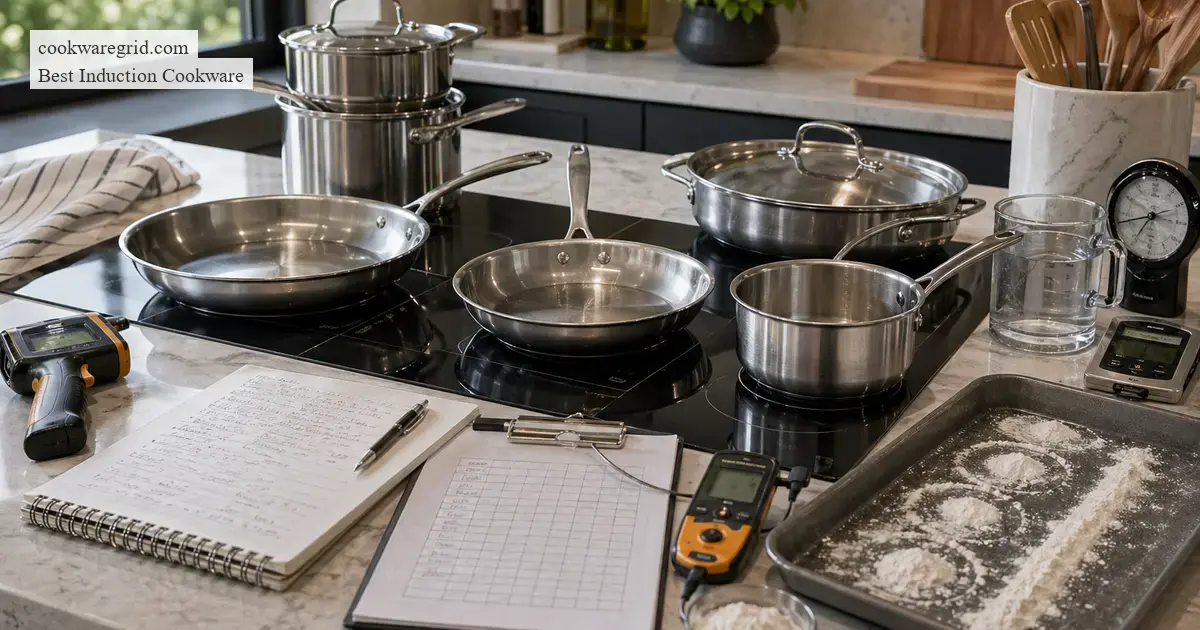
Our Testing Priorities
CookwareGrid evaluates induction cookware through the problems induction owners actually encounter: pans that are not detected, bases that buzz, skillets that heat in a narrow ring, stockpots that take too long to boil, nonstick surfaces that overpromise durability, and stainless sets that look premium but feel awkward in daily use.
We combine manufacturer specifications, retailer data, hands-on style test criteria, and material science. A product earns a recommendation only when its construction and use case match the way induction cooktops transfer energy into the pan.
Magnet Test and Cooktop Detection
Every cookware evaluation starts with magnetic compatibility. We check the bottom of each pan with a magnet and look for firm attraction across the usable cooking base. A weak magnetic patch can trigger an induction burner but still heat inconsistently, especially if the pan body extends beyond the magnetic plate.
We also consider base diameter and burner matching. Some induction cooktops reject pans that are too small for a zone, even when the material is technically compatible. For this reason, we treat "works on induction" as a minimum standard, not the finish line.
Boiling Speed and Power Transfer
Boiling tests show how quickly cookware converts induction energy into usable heat. We compare similar vessel sizes with a measured water volume and note the time to a full rolling boil. Fast boiling can be useful, but it does not automatically mean a pan is better. A thin magnetic base may boil quickly and still scorch sauces or brown food unevenly.
Our notes separate speed from control. A stockpot should bring pasta water up efficiently, while a saucepan should also hold a low simmer without pulsing or burning starches against the base.
Heat Distribution Mapping
Induction coils often heat a smaller circle than the printed burner zone suggests. We look for hot rings, pale edges, and uneven browning with flour tests, oil shimmer patterns, temperature checks, and cooking tasks such as pancakes, cutlets, and pan sauces.
Fully clad stainless steel, aluminum cores, copper layers, and thick 5-ply bodies can help spread heat away from the coil pattern. Disc-base cookware can work well for boiling, but it may heat less evenly up the walls of a saucepan or saute pan.
Warp Resistance and Base Flatness
Flatness is one of the most important induction-specific traits. We check whether cookware rocks on a flat surface before and after heat exposure. Warped pans reduce contact stability, can worsen buzzing, and may cause pan detection problems on sensitive cooktops.
We look for thick bases, fully clad construction, stable manufacturing claims, and sensible care instructions. We also penalize cookware that encourages aggressive empty preheating without warning users about thermal shock and warping risk.
Searing, Simmering, Cleanup, and Noise
Real cooking tests matter because induction cookware has to handle more than water. We judge skillets by searing recovery, fond development, release after proper preheating, and edge-to-edge browning. We judge saucepans by simmer stability, scorching resistance, pouring control, and lid fit.
We also note handle comfort, weight, rivets or welded interiors, dishwasher claims, coating care, and induction noise. Some hum is normal, but harsh buzzing can signal a thin base, poor burner match, loose layers, or a pan that is vibrating strongly under magnetic load.
About Leamon Warner
Leamon Warner is a kitchen expert, researcher, and founder of CookwareGrid with more than 25 years of experience in the kitchen and home-goods industry. His background includes work with LG, Lamacom Group, and Fleur Metal, alongside cookware research, product testing, and conversations with industry experts. He created CookwareGrid to turn that experience into clear, practical advice for home cooks.