Cookware comparison
Tri-Ply vs 5-Ply Induction Cookware: Which Construction Is Worth It?
Tri-Ply vs 5-Ply Induction Cookware is a practical question because induction cooking changes how cookware performs. The cooktop does not simply heat a burner and wait for the pan to catch up. It uses magnetic energy, so the material, base shape, thickness, and construction of the cookware decide whether the cooking experience feels precise or frustrating.

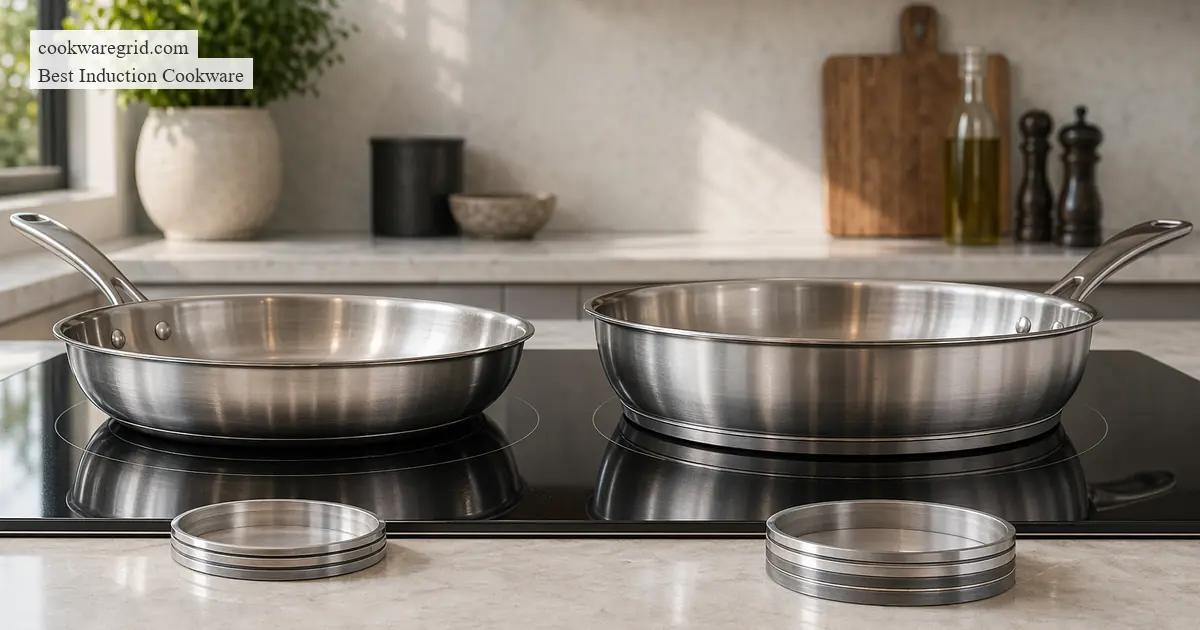
Tri-Ply vs 5-Ply Induction Cookware is a practical question because induction cooking changes how cookware performs. The cooktop does not simply heat a burner and wait for the pan to catch up. It uses magnetic energy, so the material, base shape, thickness, and construction of the cookware decide whether the cooking experience feels precise or frustrating.
This guide answers the search intent behind "tri ply vs 5 ply induction cookware" with a cookware-first lens. It focuses on ferromagnetic response, thermal conductivity, even heat distribution, warp resistance, PTFE-free or coated surfaces where relevant, and the real kitchen details that affect searing, simmering, cleaning, and glass-cooktop safety. Tri-ply and 5-ply cookware both use layered metal, but 5-ply usually adds mass and stability while tri-ply often feels quicker.
For a broader look at complete sets, compare our guide to the top rated induction cookware. The goal is not to chase marketing labels; it is to understand which cookware traits actually matter on induction and how to make a smarter purchase or troubleshooting decision.
Cookware Comparisons
Tri-Ply vs 5-Ply Induction Cookware: The Short Verdict
Choose Based on Heat Behavior
Tri-Ply vs 5-Ply Induction Cookware is not a one-size-fits-all decision. On induction, the best choice depends on magnetic response, thermal conductivity, weight, heat retention, cleanup, and how much control you want at the burner. The same pan that excels at searing may feel clumsy for eggs or delicate sauces. More layers are not automatically better; layer composition and thickness matter more than the count printed on the box.
Induction magnifies cookware differences because power transfer can be very fast. A responsive pan can feel precise. A thin pan can scorch. A heavy pan can brown beautifully but overshoot if you preheat too aggressively. That is why comparing materials and construction matters more on induction than on gas.
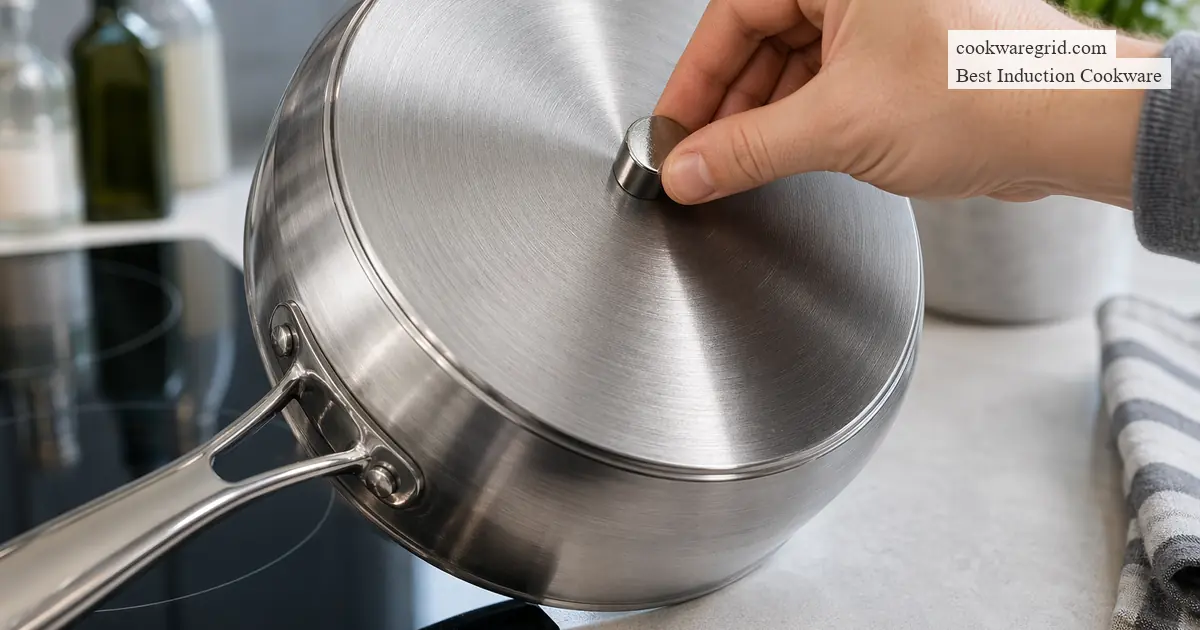
Induction Changes the Tradeoffs
The practical answer is usually a mixed toolkit. Use fully clad stainless for most cooking, cast iron or carbon steel for hard searing, and an induction-ready nonstick or PTFE-free ceramic pan for delicate foods.
- Best versatility: clad stainless steel.
- Best searing: cast iron or carbon steel.
- Best easy release: induction-ready nonstick.
- Best stability: thick flat-bottom cookware.
Cookware Comparisons
Heat Response, Thermal Conductivity, and Even Heat Distribution
Fast Heat Can Still Be Uneven
The biggest technical difference between cookware options is how heat moves after the induction field activates the base. Stainless steel is durable but not especially conductive. Aluminum and copper spread heat better. Cast iron holds heat well but is slower to even out. Carbon steel sits between stainless responsiveness and cast iron searing power.
Fully clad cookware uses layers to solve this problem. A magnetic stainless exterior activates the cooktop, while an aluminum or copper core spreads the heat. Disc-base cookware concentrates the engineered layers in the bottom. That can work for boiling but may be less impressive for skillet cooking. A good 3-ply pan can beat a vague 5-ply pan with poor base geometry.
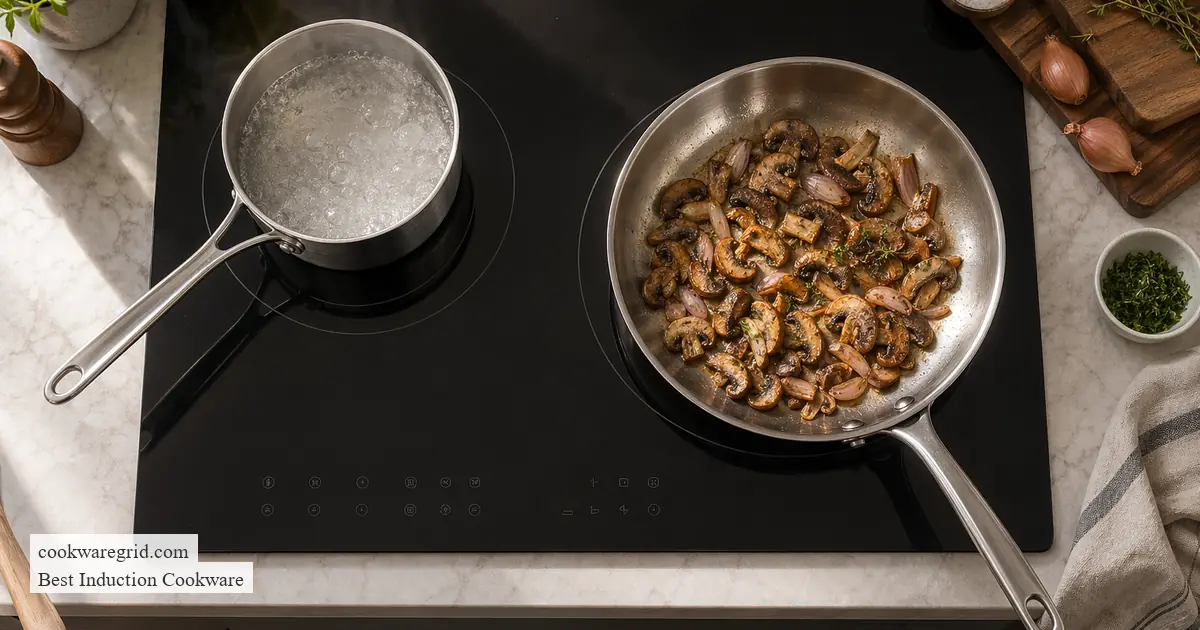
Core Materials Matter
Even heat distribution is what keeps pancakes from browning in a ring and sauces from scorching at the center. It also helps food release from stainless steel because proteins brown more predictably when the pan surface is evenly heated.
- Aluminum cores improve heat spread.
- Cast iron stores heat but responds slowly.
- Carbon steel is lighter and fast once seasoned.
- Thin magnetic bases are the highest-risk choice.
Cookware Comparisons
Care, Durability, and Glass Cooktop Safety
Weight and Surface Texture Matter
Induction cooktops use smooth glass-ceramic surfaces, so cookware handling matters. Cast iron and carbon steel can scratch if dragged, especially when the base is rough or gritty. Heavy cookware should be lifted, not slid. Stainless cookware is usually smoother, but debris under any pan can mark the glass.
Coated cookware introduces another tradeoff. Ceramic and hybrid nonstick pans can make eggs and fish easier, but their surfaces need gentler care. Stainless, cast iron, and carbon steel can usually tolerate harder use, scraping, and higher heat when maintained correctly.
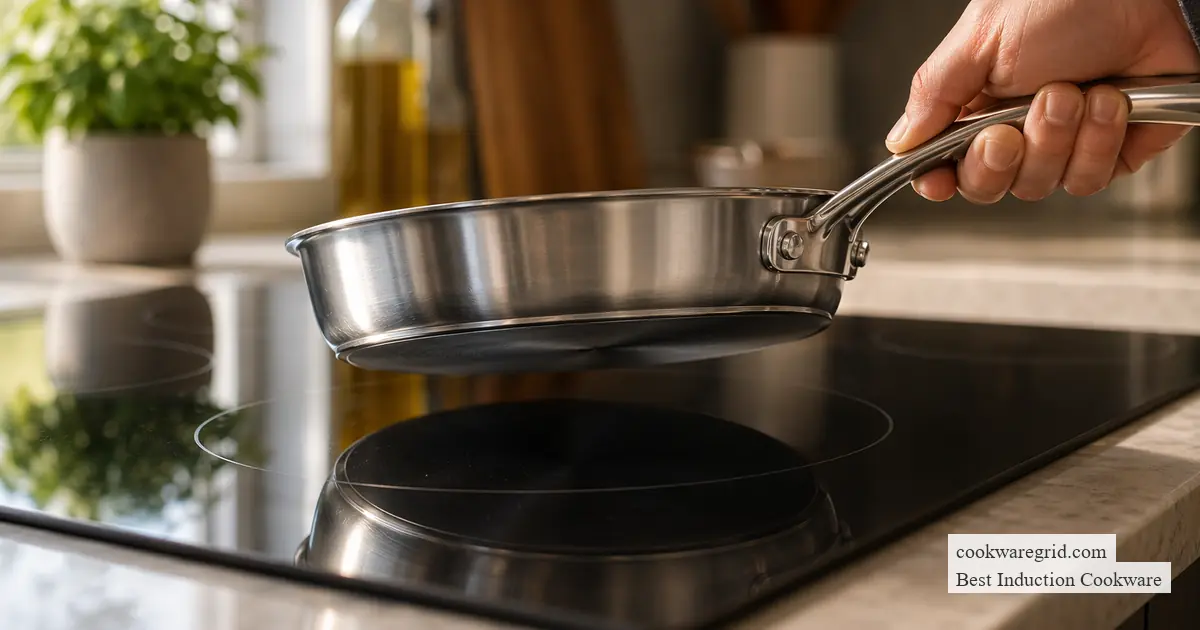
Coatings Require Different Care
Durability also depends on warp resistance. Thin pans can distort under induction's rapid power, especially when empty or shocked with cold water. Thicker cookware, stable bases, and gradual preheating improve long-term performance. Compare responsiveness, buzzing, weight, warp resistance, and heat retention.
- Lift heavy pans on glass induction cooktops.
- Keep pan bottoms clean and smooth.
- Avoid thermal shock after high-heat cooking.
- Treat coated cookware more gently than stainless.
Cookware Comparisons
Which Option Should You Buy?
Match the Material to the Meal
For most cooks searching "tri ply vs 5 ply induction cookware", the best answer is not one winner but a clear hierarchy. Start with cookware that passes the magnet test, sits flat, and matches your burner size. Then choose by cooking style. Best for premium stainless shoppers.
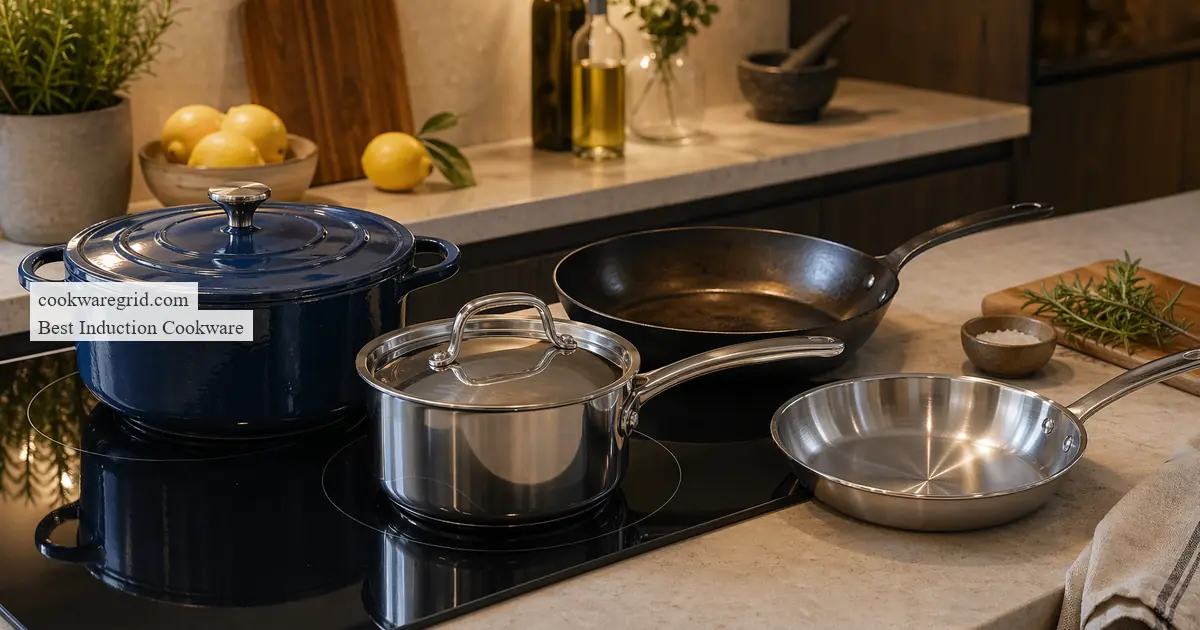
If you cook broadly, clad stainless is the foundation. If you sear often, add cast iron or carbon steel. If you cook delicate low-fat foods, add one induction-ready nonstick pan. If you want minimal lifting, avoid oversized cast iron and look for lightweight clad pieces with helper handles.
Avoid Single-Material Thinking
Do not buy solely by price or piece count. A smaller group of well-chosen induction-compatible pans will outperform a large set full of tiny, thin, or redundant pieces.
- Build a mixed cookware toolkit.
- Prioritize flat bases and magnetic response.
- Use nonstick for specific tasks, not every task.
- Value durability over inflated piece counts.
FAQ
Tri-Ply vs 5-Ply Induction Cookware: Which Construction Is Worth It? FAQ
Concise answers for cooks comparing induction cookware materials, troubleshooting pan behavior, or preparing to buy better magnetic cookware.
Which option is easier for everyday induction cooking?
For most kitchens, the easier option is the one that balances strong magnetic response, even heat distribution, manageable weight, and cleaning convenience for the foods you cook most often.
Which one gives better heat control and more even browning?
That depends on construction. Clad stainless usually gives the best all-around balance, while cast iron and carbon steel can deliver stronger searing and heat retention when used correctly.
Which choice makes more sense for long-term durability?
The better long-term choice is the pan that stays flat, matches your burner size, and fits your cooking habits. If you want a broader buying benchmark, compare our best induction cookware picks.
About Leamon Warner
Leamon Warner is a kitchen expert, researcher, and founder of CookwareGrid with more than 25 years of experience in the kitchen and home-goods industry. His background includes work with LG, Lamacom Group, and Fleur Metal, alongside cookware research, product testing, and conversations with industry experts. He created CookwareGrid to turn that experience into clear, practical advice for home cooks.