Material compatibility guide
What Makes Cookware Induction Compatible? The Complete Material Guide
Cookware becomes induction compatible when the bottom of the pan contains enough ferromagnetic metal to interact with an induction cooktop's magnetic field. That is the foundation. The pan must be magnetic where it touches the burner, and it must have a base shape and diameter the cooktop can detect.

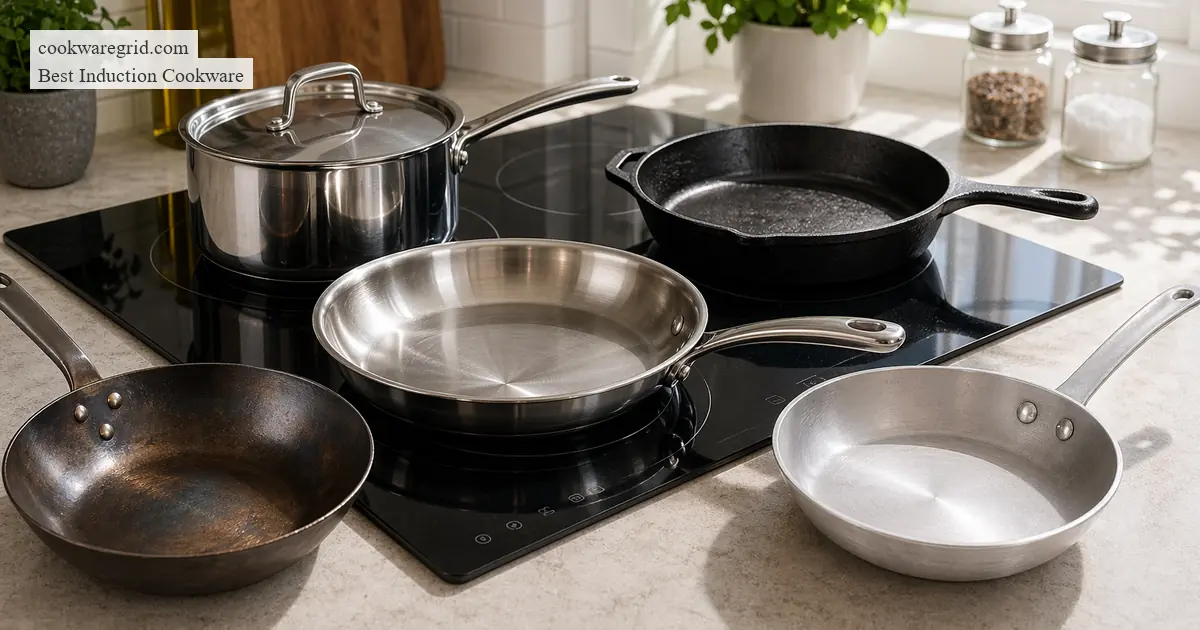
Cookware becomes induction compatible when the bottom of the pan contains enough ferromagnetic metal to interact with an induction cooktop's magnetic field. That is the foundation. The pan must be magnetic where it touches the burner, and it must have a base shape and diameter the cooktop can detect.
This is why induction compatibility is not the same as cookware quality. A pan can be beautifully polished and completely useless on induction. Another pan can be plain carbon steel and work perfectly. Stainless steel can go either way depending on the alloy and exterior layer. Aluminum and copper need a bonded magnetic base before they can heat on induction.
If you are replacing a whole set, compare compatibility alongside construction, thermal conductivity, warp resistance, and handle design. The top performers in our top rated induction cookware guide are not merely magnetic; they use magnetic layers and heat-spreading cores together.
Cookware Lessons
The Magnetic Base Is the First Requirement
Ferromagnetic Metal Activates the Burner
Induction cooktops use a magnetic field, so cookware must contain iron-bearing metal that responds to that field. The easiest home test is simple: hold a magnet to the bottom of the pan. If it sticks firmly, the cookware is likely induction compatible. If it does not stick, the pan will not work unless it is used with an adapter plate.
A weak magnet pull is a warning sign. Some pans have a thin magnetic disc that technically activates the burner, but the pan may heat slowly, buzz loudly, or create a small hot zone. Strong compatibility is about more than triggering the cooktop once. It is about reliable detection, consistent power transfer, and enough magnetic material across the working base.
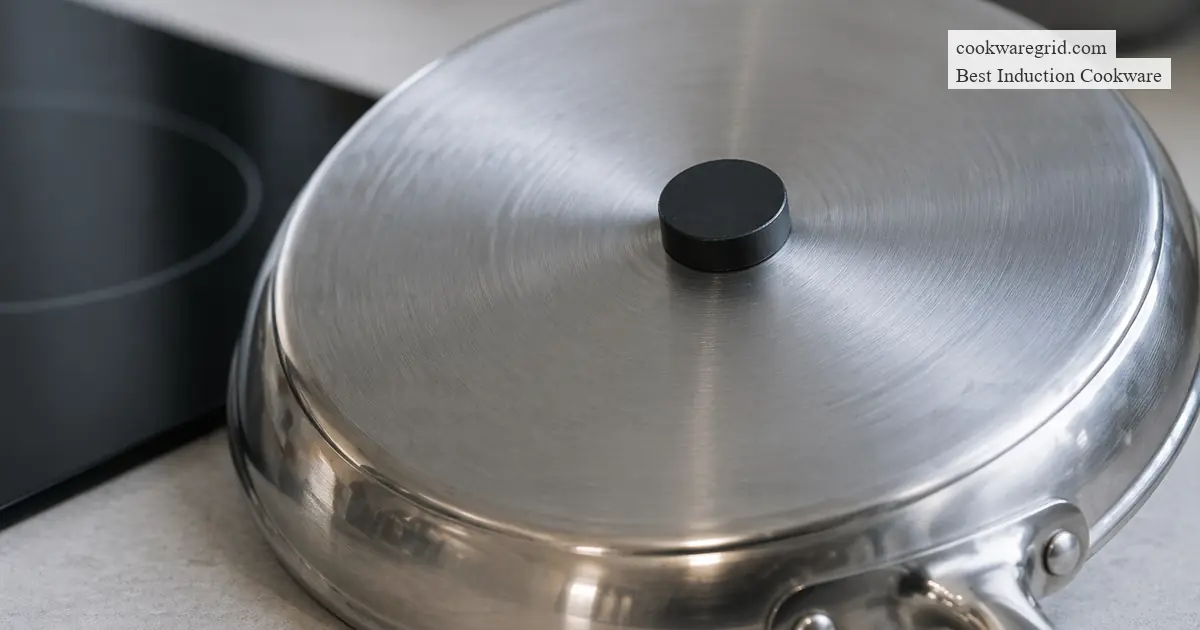
Weak Magnetism Can Still Cause Problems
The magnetic layer should be located in the cooking base, not just in the handle, rim, or sidewall. Always test the underside of the pan. For sloped skillets, test the flat bottom area that actually contacts the cooking zone.
- Firm magnet stick is the basic pass.
- Weak magnet stick means test carefully.
- No magnet stick means no induction heat.
- The cooking base matters more than the rim or sides.
Cookware Lessons
Which Materials Are Naturally Induction Compatible?
Cast Iron and Carbon Steel
Cast iron and carbon steel are naturally compatible because they are iron-based. They are excellent for searing, high-heat cooking, and long heat retention. Cast iron is heavier and slower to adjust, while carbon steel is usually lighter and more responsive. Both can be outstanding on induction if the base is flat and the cookware is handled gently on glass.
Stainless steel is the material that causes the most confusion. Some stainless steel is magnetic and some is not. Many cookware interiors use 18/10 stainless steel because it resists corrosion, but the exterior layer may need a more magnetic ferritic stainless steel to work on induction. Quality clad cookware often uses this layered approach.
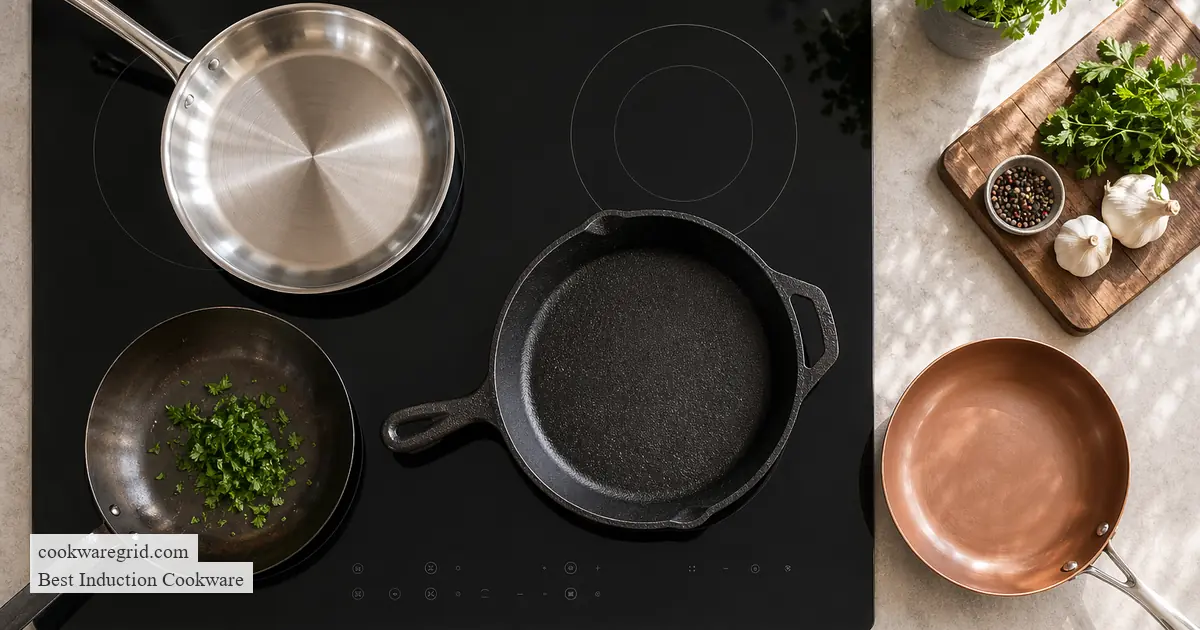
Magnetic Stainless Steel
Enameled cast iron is usually compatible too, though base flatness and enamel thickness still matter. If the magnet sticks firmly and the bottom sits stable on the glass, enameled cookware can be excellent for braises, soups, and steady simmering.
- Cast iron: naturally magnetic but heavy.
- Carbon steel: magnetic and responsive after seasoning.
- Stainless steel: compatible only when the base is magnetic.
- Enameled iron: usually compatible, but always test.
Cookware Lessons
Why Aluminum, Copper, and Ceramic Need Help
Great Conductors, Poor Magnetic Response
Aluminum and copper are excellent conductors of heat, which is why they appear inside so much premium cookware. The problem is that they are not ferromagnetic. Bare aluminum and bare copper will not heat on induction because they do not respond properly to the magnetic field.
Manufacturers solve this by adding a magnetic stainless steel layer to the bottom or exterior. Many induction-ready nonstick pans are aluminum bodies with bonded magnetic bases. Many premium stainless pans use aluminum or copper as a core material between stainless layers. In both cases, compatibility comes from the magnetic layer, while cooking performance comes from the conductive core.
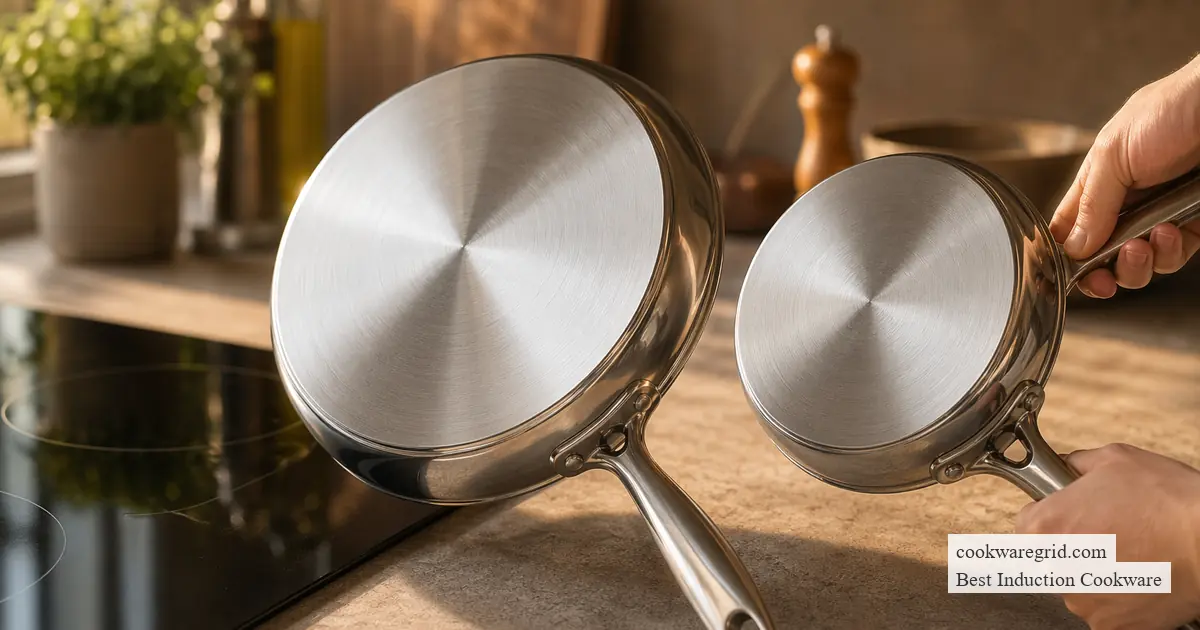
Bonded Bases and Hybrid Construction
Pure ceramic, glass, and stoneware are generally not induction compatible unless they are part of a product with a magnetic base. Do not assume that a ceramic coating means induction readiness. The coating affects food release; the metal under the coating determines compatibility.
- Aluminum needs a magnetic base.
- Copper needs magnetic stainless to work on induction.
- Ceramic coating does not equal induction compatibility.
- Hybrid pans still need magnetic metal under the cooking surface.
Cookware Lessons
Flat Bottoms and Base Diameter Matter
Detection Zones Need Enough Metal
A compatible material is not enough if the pan base is too small for the cooking zone. Induction burners are designed around detection areas. A tiny magnetic disc under a wide pan may turn on the burner, but the outer pan can remain cooler than expected. This is a common reason large nonstick pans heat unevenly on portable induction burners.
Flatness matters because the pan should sit close to the glass surface and magnetic field. Warped cookware can rock, buzz, heat unevenly, or fail detection. A flat base gives better magnetic coupling, better stability, and better even heat distribution.
Warped Pans Waste Power
Before buying, check the published base diameter when available. Before using, set the pan on the cool cooktop and press lightly on the rim. If it rocks, it may not be a great induction pan even if it passes the magnet test.
- Use cookware that matches the burner zone.
- Prioritize flat-bottom skillets, saucepans, and stockpots.
- Avoid warped pans on glass induction surfaces.
- Base diameter matters more than rim diameter.
Cookware Lessons
How to Read Induction Cookware Claims
Look Beyond the Induction Icon
The induction symbol is useful, but it is not the entire story. Two pans can both be labeled induction compatible while performing very differently. A fully clad stainless skillet with an aluminum core will usually distribute heat better than a lightweight pan with a thin magnetic plate. A heavy 5-ply pan may feel more stable and quieter than a thin tri-ply pan, while a light pan may respond faster.
Look for construction details such as magnetic stainless exterior, aluminum core, copper core, fully clad body, encapsulated base, oven-safe temperature, dishwasher guidance, and lid material. PTFE-free or ceramic claims are relevant for nonstick shoppers, but the induction question still depends on the metal base.
Confirm Construction and Care Limits
If a product page does not clearly explain why the cookware is induction compatible, test it in person or choose a better-documented option. Good cookware brands usually publish compatibility, materials, and care instructions because those details matter in real kitchens.
- Induction icon: useful but not enough.
- Construction: full clad, disc base, or hybrid.
- Care limits: oven temperature, dishwasher guidance, coating rules.
- Documentation: clear specs are a trust signal.
FAQ
What Makes Cookware Induction Compatible? The Complete Material Guide FAQ
Concise answers for cooks comparing induction cookware materials, troubleshooting pan behavior, or preparing to buy better magnetic cookware.
What is the easiest way to know if cookware is induction compatible?
Use a magnet on the bottom of the pan. A firm stick means the cookware is likely induction compatible.
Can nonstick cookware be induction compatible?
Yes. Nonstick cookware works on induction only when it has a magnetic base or exterior layer.
Does all stainless steel work on induction?
No. Stainless steel must contain enough magnetic material in the base or exterior to work on induction.
About Leamon Warner
Leamon Warner is a kitchen expert, researcher, and founder of CookwareGrid with more than 25 years of experience in the kitchen and home-goods industry. His background includes work with LG, Lamacom Group, and Fleur Metal, alongside cookware research, product testing, and conversations with industry experts. He created CookwareGrid to turn that experience into clear, practical advice for home cooks.