Induction cookware fundamentals
How Does Induction Cookware Work? Magnetic Heat Explained
Induction cookware works because the pan is not just sitting above the heat source. With induction, compatible cookware becomes part of the heating system itself. A magnetic field from the cooktop interacts with ferromagnetic metal in the pan, generating heat directly inside the cookware base.

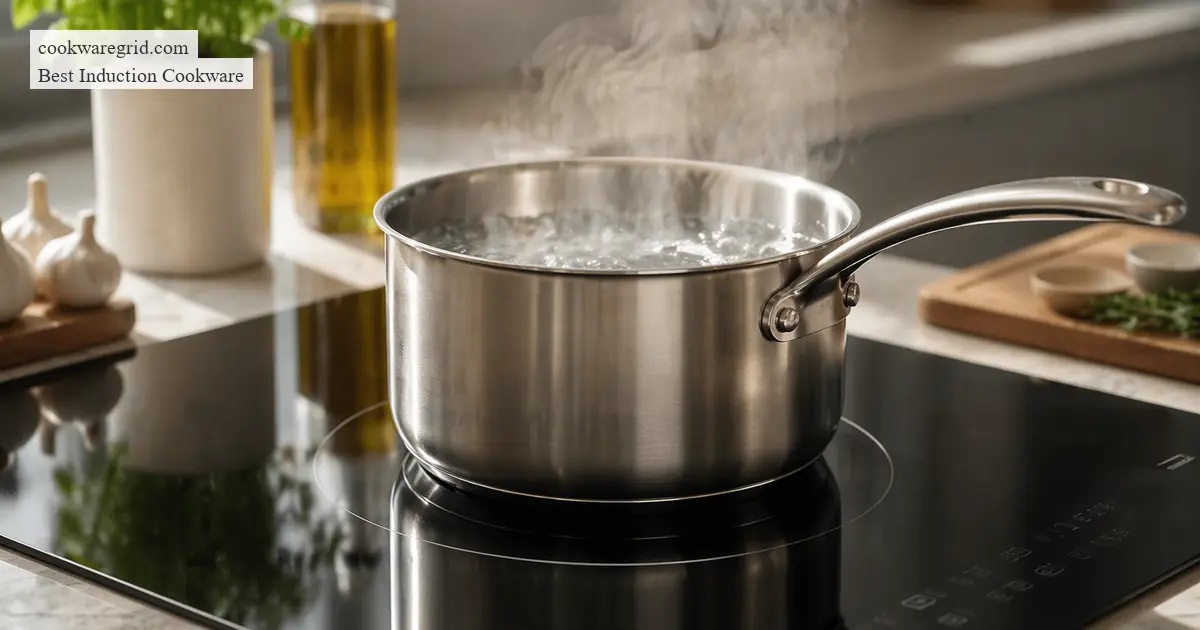
Induction cookware works because the pan is not just sitting above the heat source. With induction, compatible cookware becomes part of the heating system itself. A magnetic field from the cooktop interacts with ferromagnetic metal in the pan, generating heat directly inside the cookware base.
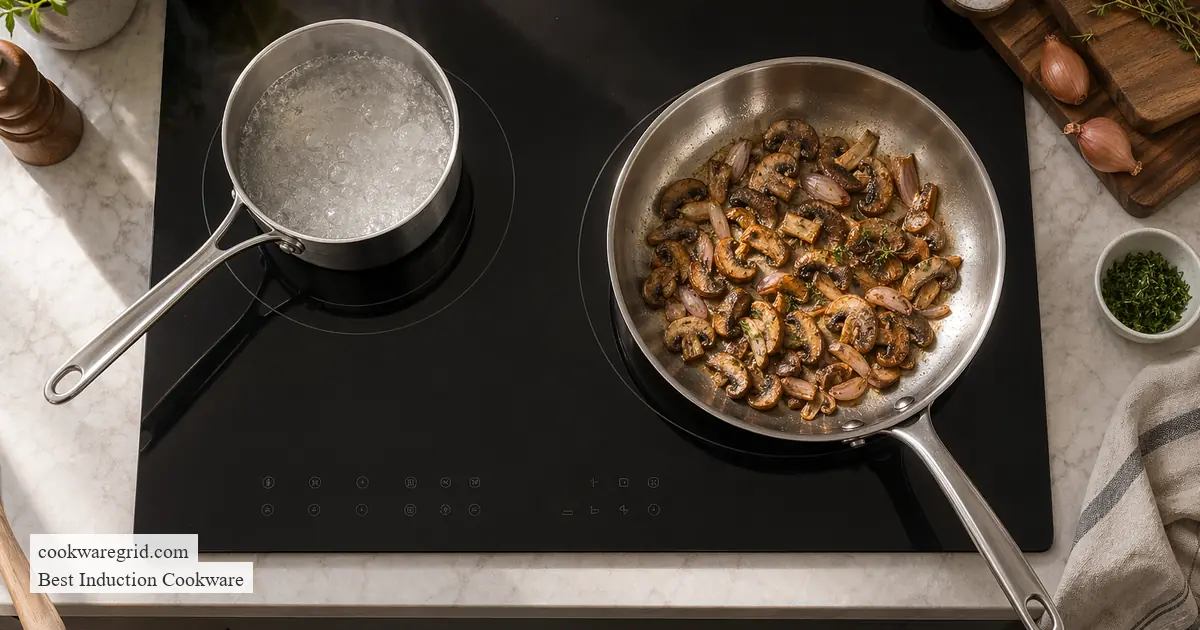
That difference is why induction cooking can feel unusually fast, precise, and efficient. On a gas stove, flame heats the air around the pan and transfers energy through direct contact with the metal. On a radiant electric cooktop, a hot element warms the glass, then the glass warms the pan. On an induction cooktop, the glass surface is mostly a platform for magnetic energy. The pan itself becomes the active heat source, which is why induction can boil water quickly and respond almost immediately when you lower the power.
The catch is that cookware must be compatible. Aluminum, copper, glass, and pure ceramic do not work on induction by themselves because they are not ferromagnetic. Cast iron and carbon steel usually work because they are iron-based. Stainless steel is more complicated: some stainless cookware is magnetic, while some is not. The best induction cookware often combines a magnetic stainless exterior with an aluminum or copper core, giving the cooktop the magnetic response it needs while improving thermal conductivity and even heat distribution. If you are shopping for a full set, start with our guide to the best induction cookware.
Cookware Lessons
How the Magnetic Field Heats the Pan
The Cooktop Creates the Field
Under the glass of an induction cooktop is a copper coil. When power flows through that coil, it creates a rapidly changing electromagnetic field. The glass surface does not need to become red-hot for cooking to begin. Instead, the magnetic field reaches the cookware base and interacts with magnetic metal. That interaction creates electrical resistance and microscopic magnetic movement inside the pan, and those effects become heat.
This is why induction is so dependent on cookware material. A nonmagnetic aluminum pan can sit on a live induction zone and remain cool because the pan is not responding to the field. A cast iron skillet, carbon steel pan, or stainless pan with a magnetic exterior can respond immediately. The cookware base converts the electromagnetic energy into heat, then the pan's thickness, core layers, and thermal conductivity decide how that heat spreads.
The Pan Generates the Heat
The most useful way to think about induction is this: the cooktop supplies energy, but the cookware determines how well that energy becomes controlled cooking heat. Thin magnetic steel may activate quickly but scorch in a tight ring. A fully clad stainless pan may use a magnetic exterior to activate the burner and an aluminum core to move heat outward. Heavy cast iron may heat more slowly but hold heat long enough to brown steak or smash burgers with authority.
- Induction heat starts in the pan, not in a flame.
- Ferromagnetic metal is required for strong activation.
- Core materials such as aluminum help spread heat beyond the induction coil.
- Base flatness improves coupling between the pan and magnetic field.
Cookware Lessons
Which Cookware Materials Work on Induction?
Naturally Compatible Materials
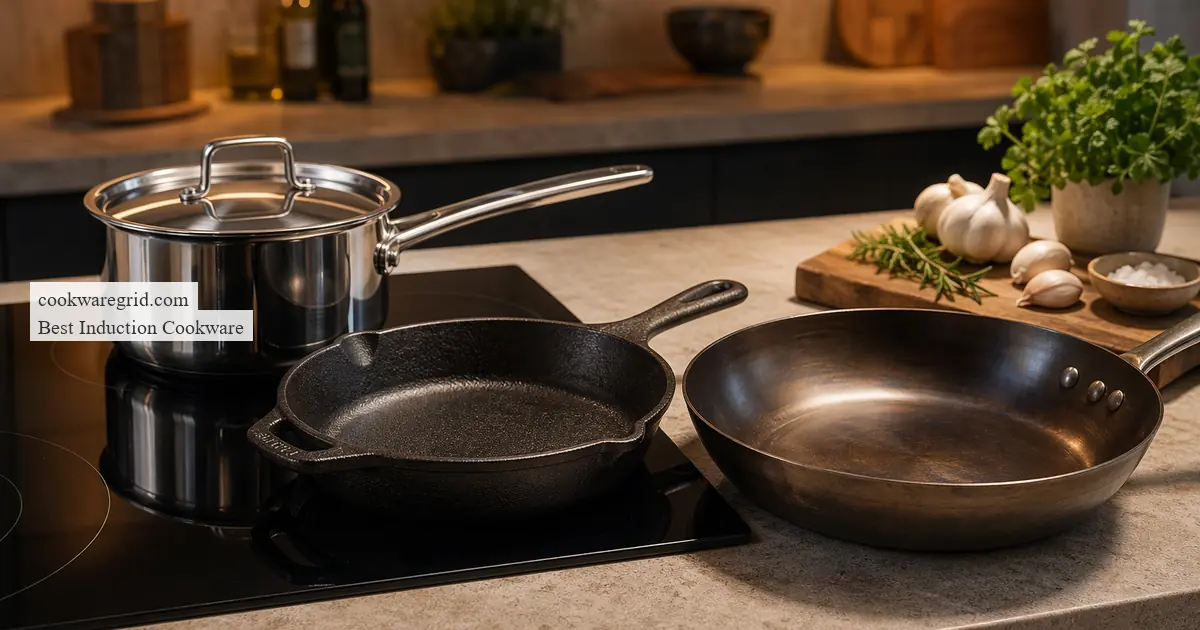
Cast iron and carbon steel are naturally induction-friendly because they are iron-based and magnetic. They respond well to the electromagnetic field, hold heat effectively, and work especially well for searing. The tradeoff is weight and responsiveness. Cast iron is slow to cool when you lower the power, while carbon steel is lighter and often more nimble once seasoned.
Stainless steel requires more attention. Some stainless steel alloys are not magnetic enough for induction. This is why a pan can look like stainless cookware and still fail on an induction hob. High-quality induction stainless usually uses a magnetic stainless exterior, often a ferritic stainless layer, bonded to heat-spreading aluminum or copper. The cooking surface can still be corrosion-resistant stainless while the exterior provides the magnetic response.
Materials That Need a Magnetic Base
Aluminum and copper are excellent heat conductors, but they are not magnetic. They work on induction only when the manufacturer adds a magnetic stainless base or exterior layer. This is common in induction-ready nonstick skillets and some copper-colored cookware. The question is not whether the pan contains aluminum or copper; the question is whether the bottom has enough ferromagnetic material to trigger the cooktop and enough thickness to resist warping.
- Cast iron: strong magnetic response and heat retention.
- Carbon steel: magnetic, lighter than cast iron, excellent for high heat.
- Clad stainless: best everyday balance when built with a magnetic exterior.
- Aluminum or copper: induction-ready only with a bonded magnetic layer.
Cookware Lessons
Why Thermal Conductivity Still Matters
Induction Speed Is Not the Same as Even Heat
Induction can put energy into compatible cookware very quickly, but speed alone does not guarantee even heat distribution. The induction coil is usually smaller than the visible cooking zone. If the pan base does not spread heat well, you can get a hot ring above the coil and cooler metal toward the edges. That is why thin magnetic pans can boil water fast but still perform poorly for pancakes, crepes, fish, or delicate sauces.
Thermal conductivity describes how well a material moves heat. Aluminum and copper conduct heat much better than stainless steel, which is why they are commonly used inside clad cookware. A tri-ply stainless pan with an aluminum core uses stainless steel for durability and induction compatibility while relying on aluminum for heat spread. A 5-ply pan may add thickness and stability, improving heat retention and warp resistance.
Why Cladding Improves Cooking Control
For real cooking, even heat distribution matters as much as activation. A saucepan should simmer custard without scorching in the center. A skillet should brown chicken cutlets edge to edge. A saute pan should recover temperature after food is added without creating a harsh ring of over-browning. Good induction cookware is not just magnetic; it is magnetic plus conductive.
- Fast heating can still be uneven.
- Aluminum and copper cores help distribute induction heat.
- Thicker cookware may reduce hot spots and vibration.
- Better conductivity improves sauces, browning, and low-temperature control.
Cookware Lessons
Why Flat Bases Improve Induction Performance
The Glass Surface Needs Stable Contact
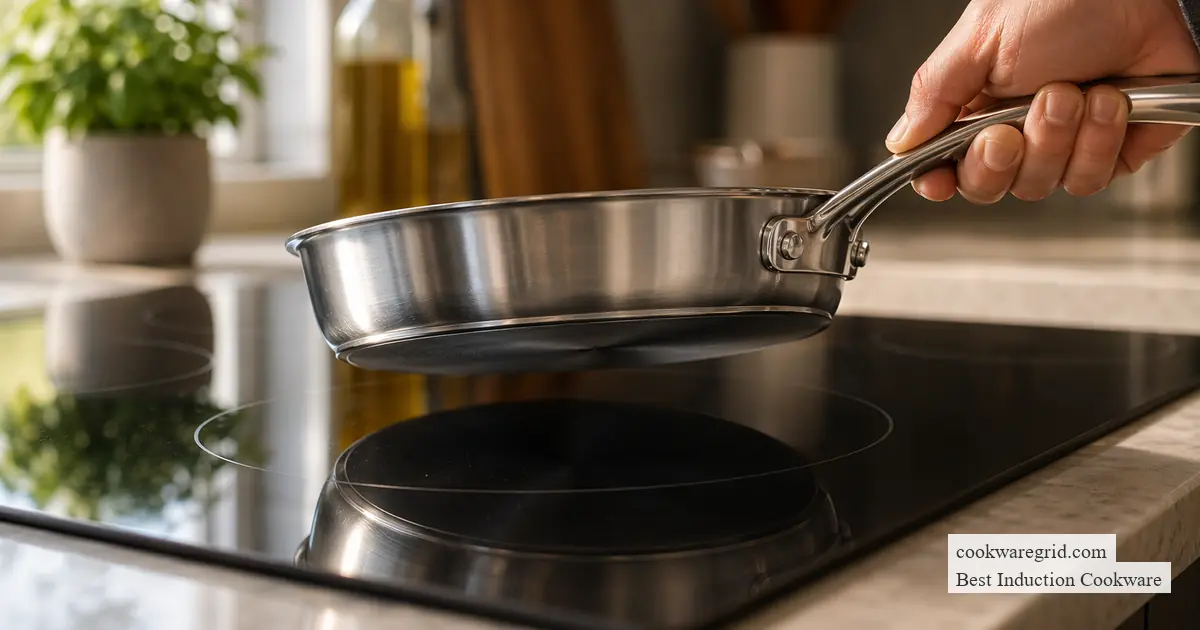
A flat base matters on every smooth cooktop, but it matters even more on induction. The cookware needs to sit close to the glass surface and within the effective magnetic field. A warped pan can rock, buzz, heat unevenly, or fail to trigger pan detection reliably. Even when a warped pan does heat, the uneven gap between metal and glass can make cooking less predictable.
Flatness also affects noise. Induction cookware often hums or buzzes slightly because magnetic energy can make metal vibrate. A stable, heavier, flatter base tends to damp that vibration better than a thin disc or bowed pan. That does not mean premium cookware will be silent, but it usually makes the sound less harsh and the heat more controlled.
Warp Resistance Protects Long-Term Efficiency
Warp resistance is partly about construction and partly about technique. Thin pans, empty boost preheats, and sudden cold-water shocks are the usual enemies. Let cookware heat gradually, match pan size to burner size, and avoid plunging hot metal under cold water. A pan that stays flat will remain more efficient for years.
- Check new pans for rocking before first use.
- Avoid long empty boost preheats.
- Match cookware base diameter to the induction zone.
- Lift heavy pans instead of sliding them across the glass.
Cookware Lessons
What This Means Before You Buy Induction Cookware
Buy for the Way You Cook
The best induction cookware choice depends on your cooking habits. If you want one versatile set, fully clad stainless steel is the safest recommendation. It can sear, simmer, deglaze, and go in the oven. If you cook steak, burgers, or cornbread, add cast iron or carbon steel. If you cook eggs and delicate fish often, an induction-ready nonstick or PTFE-free ceramic pan can be useful, but it should not be your only serious cookware.
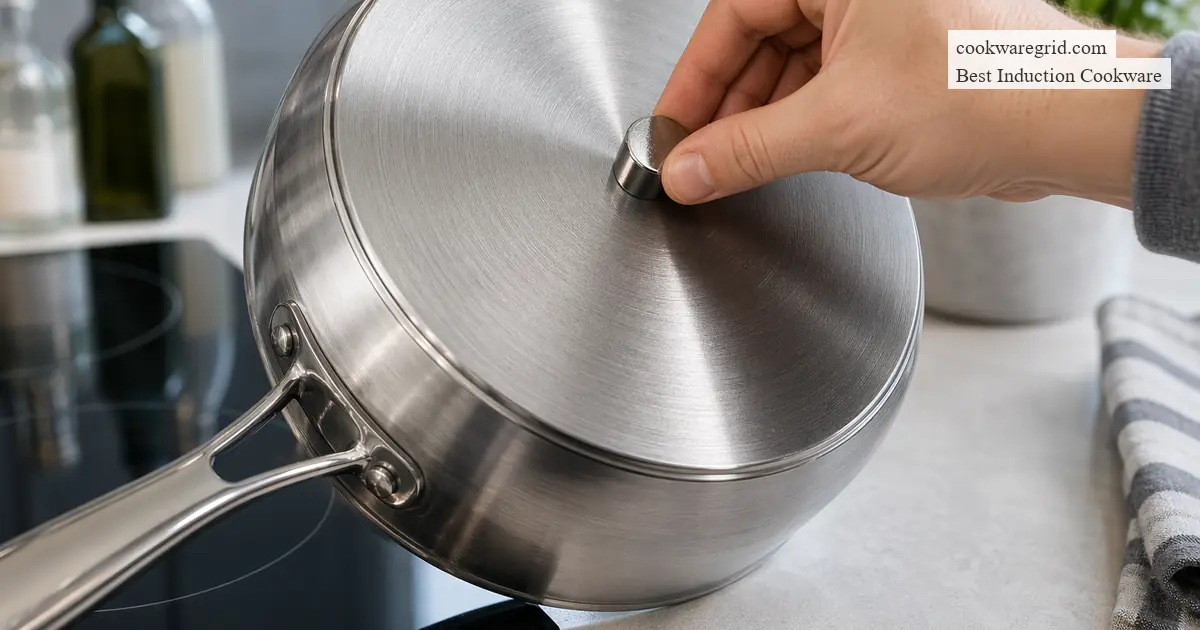
The magnet test is the first filter. If a magnet does not stick firmly to the base, the pan is not a good induction candidate. After that, examine construction: is it fully clad or just a thin disc bottom? Does it have an aluminum or copper core? Is the base flat? What are the oven-safe limits? Are the lids glass or stainless? Does the manufacturer publish induction compatibility clearly?
Use the Magnet Test, Then Read the Construction
Induction rewards cookware that is honest about its materials. Look for magnetic stainless exteriors, iron-based pans, thick bases, and clear care instructions. Avoid vague claims when the pan feels flimsy, has a small magnetic plate under a large body, or rocks on the glass. The right cookware makes induction feel like a precision tool instead of a mysterious appliance.
- Best all-around: fully clad stainless steel.
- Best searing: cast iron or carbon steel.
- Best easy release: induction-ready nonstick or ceramic.
- Best quiet feel: thicker 5-ply or heavy stable cookware.
FAQ
How Does Induction Cookware Work? Magnetic Heat Explained FAQ
Concise answers for cooks comparing induction cookware materials, troubleshooting pan behavior, or preparing to buy better magnetic cookware.
Why does induction cookware need to be magnetic?
Induction cookware needs magnetic material because the cooktop uses an electromagnetic field to generate heat inside the pan. Nonmagnetic materials such as bare aluminum, copper, glass, and ceramic will not respond by themselves.
Does the glass on an induction cooktop get hot?
The glass can become hot from contact with the heated pan, but the cooktop is not heating the glass the same way a radiant electric burner does. The cookware generates most of the cooking heat.
Is heavier cookware always better for induction?
Not always. Heavier cookware can feel stable and reduce buzzing, but it may respond more slowly. The best choice balances magnetic response, thermal conductivity, base flatness, and weight.
About Leamon Warner
Leamon Warner is a kitchen expert, researcher, and founder of CookwareGrid with more than 25 years of experience in the kitchen and home-goods industry. His background includes work with LG, Lamacom Group, and Fleur Metal, alongside cookware research, product testing, and conversations with industry experts. He created CookwareGrid to turn that experience into clear, practical advice for home cooks.