Induction education
The Induction Cookware Magnet Test: How to Check Any Pan in 10 Seconds
The Induction Cookware Magnet Test is a practical question because induction cooking changes how cookware performs. The cooktop does not simply heat a burner and wait for the pan to catch up. It uses magnetic energy, so the material, base shape, thickness, and construction of the cookware decide whether the cooking experience feels precise or frustrating.

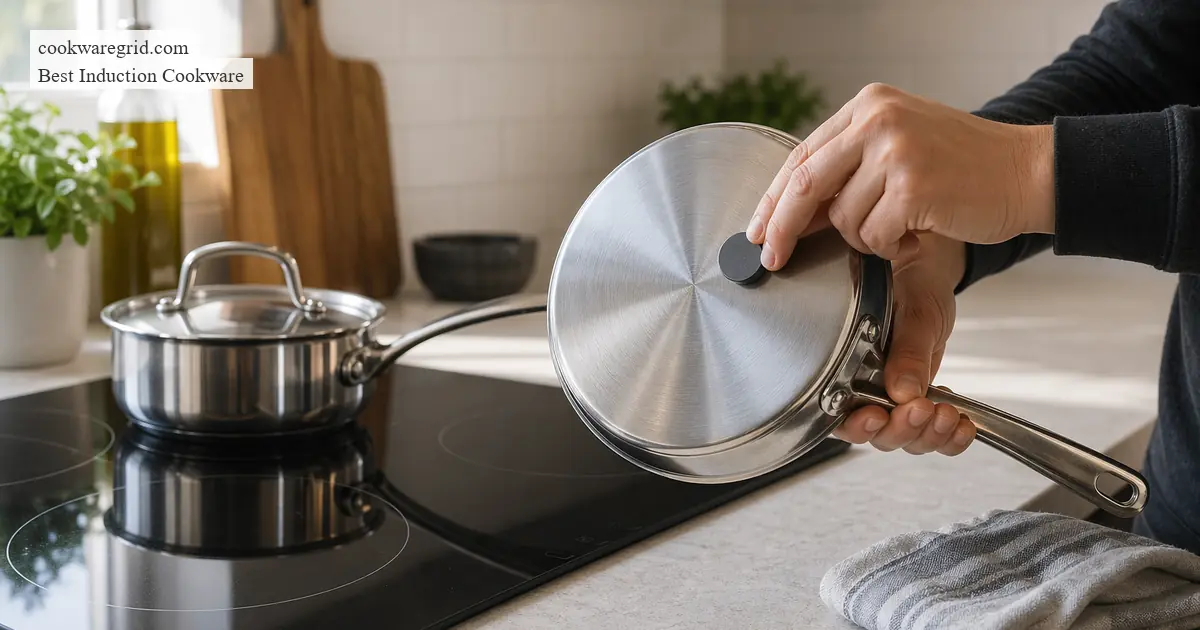
The Induction Cookware Magnet Test is a practical question because induction cooking changes how cookware performs. The cooktop does not simply heat a burner and wait for the pan to catch up. It uses magnetic energy, so the material, base shape, thickness, and construction of the cookware decide whether the cooking experience feels precise or frustrating.
This guide answers the search intent behind "induction cookware magnet test" with a cookware-first lens. It focuses on ferromagnetic response, thermal conductivity, even heat distribution, warp resistance, PTFE-free or coated surfaces where relevant, and the real kitchen details that affect searing, simmering, cleaning, and glass-cooktop safety. A reliable magnet test should be treated like a triage tool, not a full lab test: it confirms magnetic response, then flatness and base diameter decide performance.
For a broader look at complete sets, compare our guide to the top rated induction cookware. The goal is not to chase marketing labels; it is to understand which cookware traits actually matter on induction and how to make a smarter purchase or troubleshooting decision.
Cookware Lessons
The Induction Cookware Magnet Test: The Core Concept
Magnetism Comes First
The first principle behind induction cookware magnet test is that induction cooking starts with magnetism. A pan must contain enough ferromagnetic metal in the base to respond to the electromagnetic field below the glass. If the base is not magnetic, the cooktop may not detect the pan at all. If the magnetic layer is weak or tiny, the pan may activate but heat slowly, pulse, or create a narrow hot zone. Move the magnet across the entire base because some pans have a small induction plate that leaves the outer cooking surface cooler.
The second principle is that induction compatibility is not the same as induction quality. A simple magnetic steel plate can trigger the burner, but it may not spread heat well. Better cookware combines a magnetic exterior with a conductive core. Aluminum and copper are valuable inside cookware because they improve thermal conductivity and even heat distribution, even though they are not magnetic by themselves.
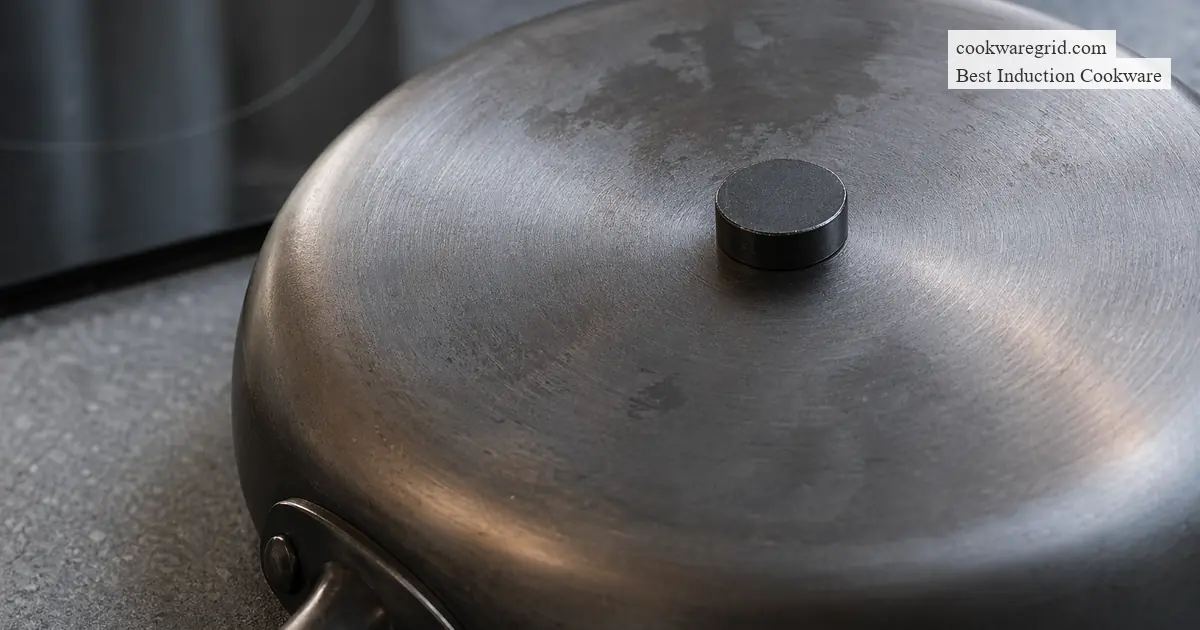
Performance Comes From Construction
This is why fully clad stainless steel, carbon steel, cast iron, and well-built induction-ready nonstick occupy different roles. Stainless is versatile, cast iron is steady, carbon steel is responsive after seasoning, and PTFE-free ceramic or hybrid pans offer easier release when they include a proper magnetic base.
- Check the base with a magnet.
- Prefer flat bottoms over warped or rounded bases.
- Look for aluminum or copper cores in stainless cookware.
- Match the pan base to the burner zone.
Cookware Lessons
Why The Induction Cookware Magnet Test Matters for Real Cooking
Boiling Is the Easy Test
A pan that boils water quickly is not automatically a great induction pan. Boiling water hides hot spots because convection moves the water around. Skillets, saucepans, and saute pans reveal more. Flour browning, pancake color, sauce scorching, and searing patterns show whether heat spreads beyond the coil area.
Even heat distribution depends on base thickness, core material, and how far the conductive layer extends. Fully clad cookware tends to be better for skillets because the heat-spreading layer runs through the body. Disc-base cookware can be good for stockpots and boiling, but it may leave the sides cooler and less responsive. A weak magnet pull is not an automatic fail, but it predicts slower heating, pulsing, and more sensitivity to burner size.
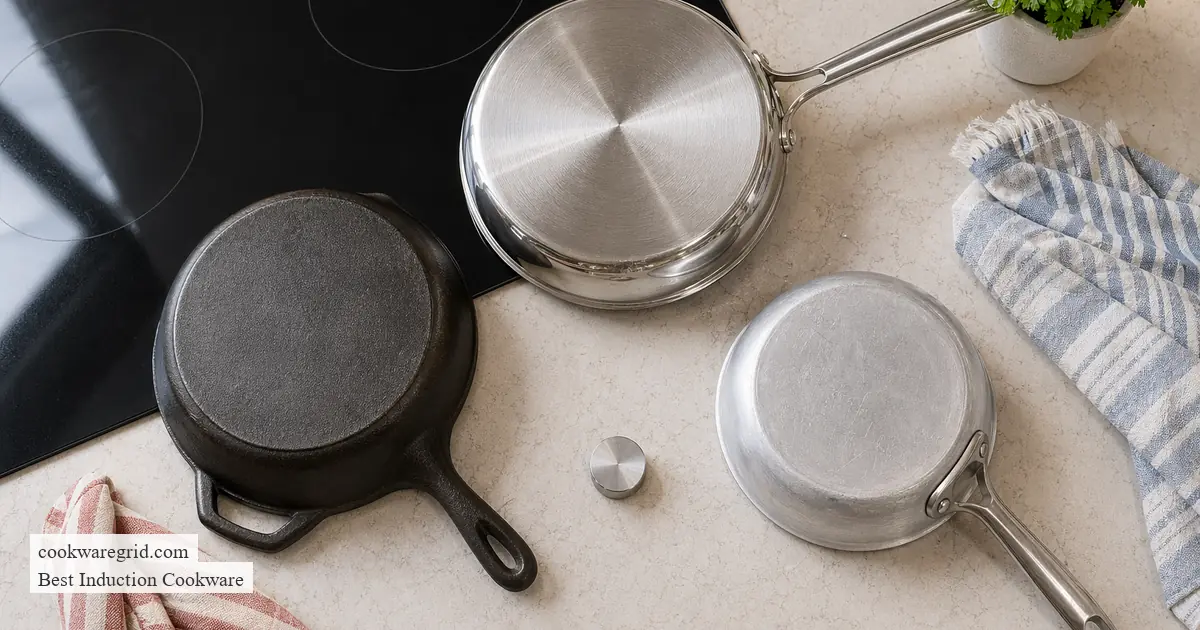
Browning and Simmering Reveal More
For low-temperature cooking, responsiveness matters. A heavy cast iron pan will hold heat stubbornly. A tri-ply stainless pan will usually respond more quickly when you lower the power. A 5-ply pan may feel calmer and more stable, but it can take longer to change temperature.
- Test skillets with browning, not just boiling.
- Choose fully clad cookware for edge-to-edge heat.
- Use heavy cookware for searing and heat retention.
- Use responsive clad stainless for sauces and everyday control.
Cookware Lessons
Common Mistakes When Evaluating The Induction Cookware Magnet Test
Trusting Labels Without Testing
The most common mistake is assuming a cookware label tells the full story. The word induction on a box is useful, but it does not tell you how large the magnetic layer is, how thick the base is, or whether the pan will stay flat after repeated heating. Two induction-ready pans can perform very differently.
Another mistake is ignoring base diameter. Induction zones need enough magnetic material over the detection area. A small magnetic disc under a wide aluminum pan may technically work while still heating unevenly. The cooking base diameter matters more than the rim diameter.
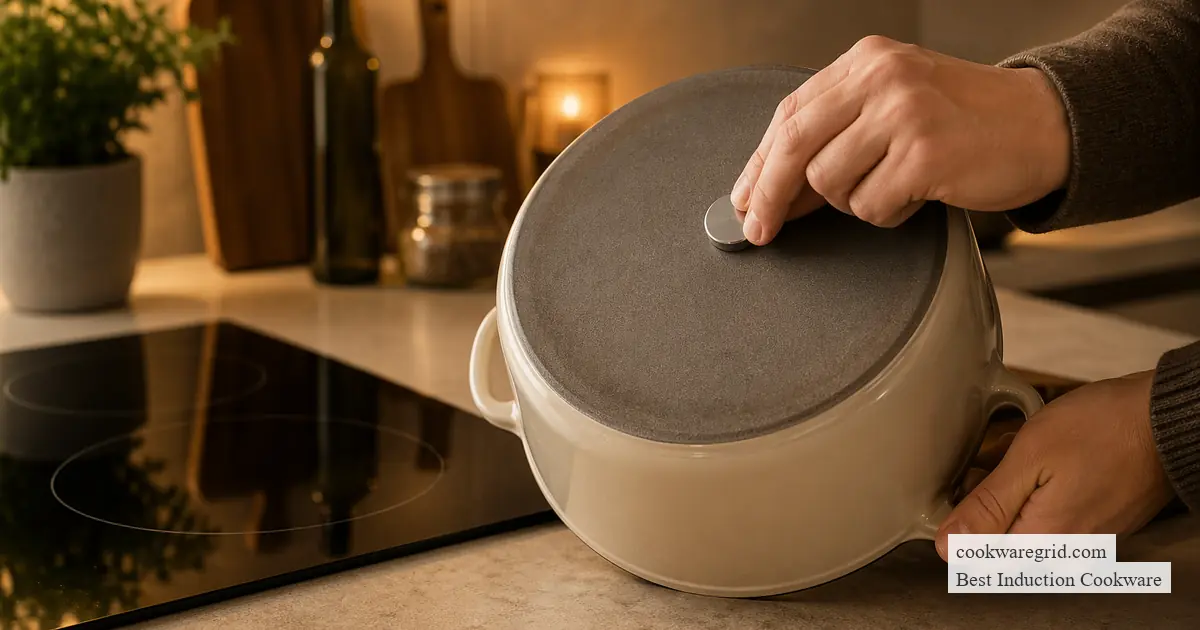
Ignoring Flatness and Diameter
Flatness is equally important. If the pan rocks on the glass, it may buzz, waste energy, or brown food unevenly. Warp resistance should be part of every induction cookware decision, especially for skillets exposed to high heat. Use a strong fridge magnet and test the pan cold, clean, and dry.
- Do not test the handle or sidewall; test the base.
- Do not drag rough cookware across glass.
- Do not use boost for long empty preheats.
- Do not assume all stainless steel is magnetic.
Cookware Lessons
How to Shop Smarter for The Induction Cookware Magnet Test
Read the Spec Sheet Like a Cook
When shopping, look for clear construction language. Terms such as magnetic stainless exterior, 18/0 stainless base, fully clad tri-ply, 5-ply, aluminum core, copper core, flat base, and induction compatible are useful. Vague phrases are less helpful if the brand does not explain the materials. Best for readers auditing older cookware before replacing an entire set.
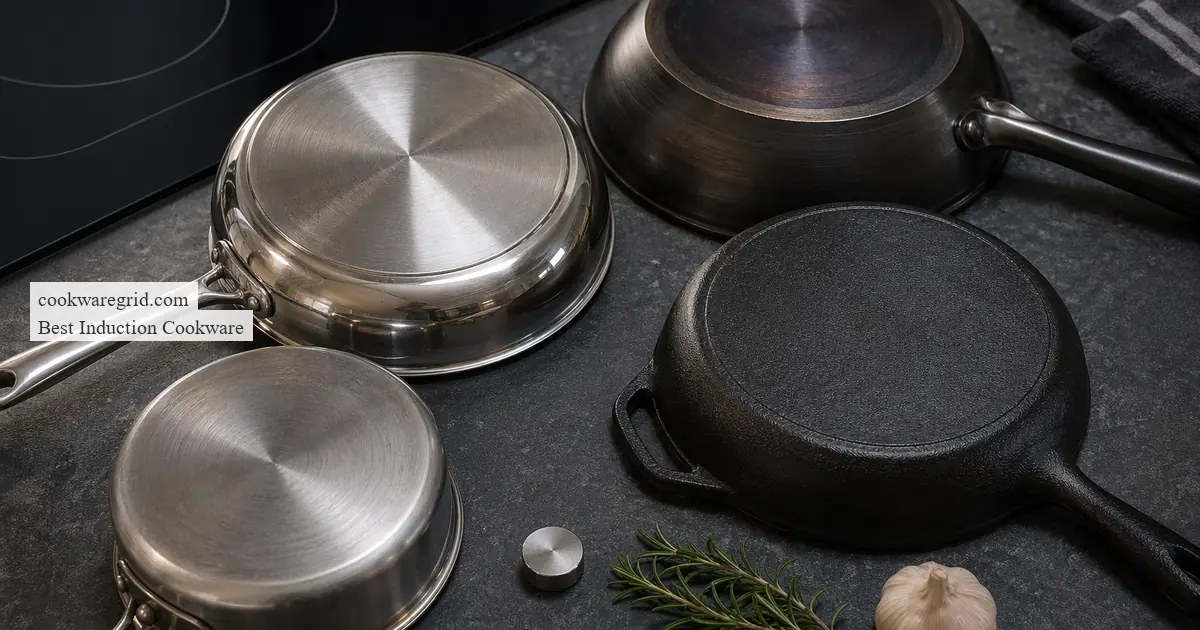
Choose cookware by task. For sauteing and pan sauces, clad stainless is usually the most flexible. For searing, carbon steel or cast iron can be excellent. For eggs, an induction-ready ceramic or hybrid nonstick pan can make sense, especially if you want PTFE-free cookware. For stockpots, disc-base stainless can be acceptable if the base is thick and stable.
Choose for Your Cooking Style
The strongest induction kitchens mix materials instead of relying on one set for everything. A stainless saucepan, clad skillet, stockpot, and carbon steel or cast iron pan will handle most cooking better than a large set of identical pieces.
- Buy by task, not just by set size.
- Prioritize magnetic response, flatness, and heat spread.
- Check oven-safe limits and lid materials.
- Keep one easy-release pan for delicate foods.
FAQ
The Induction Cookware Magnet Test: How to Check Any Pan in 10 Seconds FAQ
Concise answers for cooks comparing induction cookware materials, troubleshooting pan behavior, or preparing to buy better magnetic cookware.
What is the most important thing to understand first?
Induction performance starts with magnetism at the base of the pan. After that, flatness, conductive core materials, and overall construction determine how evenly and predictably the cookware cooks.
Which cookware materials usually perform best on induction?
Magnetic stainless steel, cast iron, and carbon steel are the most dependable starting points. Aluminum and copper can perform very well too, but only when they are paired with a magnetic induction-ready layer.
How can I test cookware before buying or replacing it?
Use a magnet on the base, check that the pan sits flat without rocking, and match the base size to your burner. If you are building a full setup, our best induction cookware guide is a good next step.
About Leamon Warner
Leamon Warner is a kitchen expert, researcher, and founder of CookwareGrid with more than 25 years of experience in the kitchen and home-goods industry. His background includes work with LG, Lamacom Group, and Fleur Metal, alongside cookware research, product testing, and conversations with industry experts. He created CookwareGrid to turn that experience into clear, practical advice for home cooks.