Buying guide
Best Non-Toxic Induction Cookware: Stainless Steel, Cast Iron, Carbon Steel, and Ceramic Options
The best non-toxic induction cookware is usually the simplest cookware: uncoated, well-documented materials that work with a magnetic cooktop and do not rely on a fragile mystery coating for everyday performance.

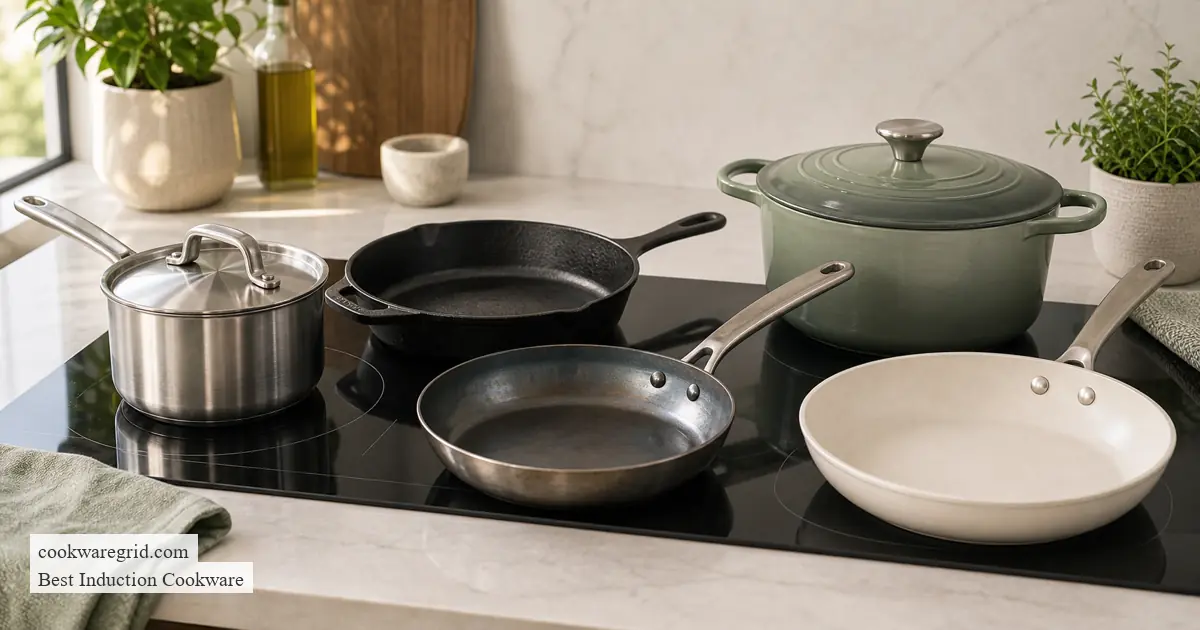
For most induction kitchens, the strongest non-toxic starting point is fully clad stainless steel, cast iron, carbon steel, or enameled cast iron. PFAS-free ceramic nonstick can be useful for eggs and fish, but it is a coating category, so durability and care limits matter more than marketing language.
If you want the Best induction cookware non toxic option, start with uncoated stainless steel, cast iron, carbon steel, or enameled cast iron, then consider ceramic nonstick only if you accept that coatings may wear faster over time.
“Non-toxic” is a useful shopping phrase, but it is not a magic certification by itself. A better question is: what material touches the food, what coating is present, what does the manufacturer disclose, and how does the pan behave at induction heat levels? For a broader safety foundation, read is induction cookware safe? and our material guide to the best materials for induction cookware.
Shortlist
Best Non-Toxic Induction Cookware Materials at a Glance
These materials are ranked by practical usefulness on induction: compatibility, durability, food-contact surface, heat behavior, and how much care they require.
1Fully Clad Stainless Steel
Best overall for most cooks: uncoated cooking surface, broad food compatibility, and aluminum or copper cores for even induction heat.
2Cast Iron
Best budget high-heat option: naturally magnetic, extremely durable, excellent heat retention, and seasoning-based release.
3Carbon Steel
Best lighter high-heat option: magnetic, responsive once seasoned, and excellent for searing, sauteing, woks, and skillets.
4Enameled Cast Iron
Best low-maintenance iron option: magnetic cast iron body with a glassy enamel surface that does not need seasoning.
5PFAS-Free Ceramic Nonstick
Best easy-release option: useful for eggs and fish, but coatings require gentle tools, moderate heat, and realistic lifespan expectations.
Quick safety note
No cookware material is perfect for every food. The right “non-toxic” choice depends on cooking temperature, coating disclosure, care habits, and food type.
Materials
Non-Toxic Induction Cookware Comparison Table
Compare the cookware surface, induction behavior, best uses, and tradeoffs before you choose a pan or set.
| Rank | Material | Induction Fit | Food-Contact Surface | Best Use | Tradeoff |
|---|---|---|---|---|---|
| 1 | Fully clad stainless steel | Works when exterior/base is magnetic | Uncoated stainless steel | Everyday cooking, acidic foods, sauces, boiling, searing | Not nonstick; can discolor cosmetically |
| 2 | Cast iron | Naturally magnetic | Seasoned iron | Searing, frying, cornbread, high heat, budget durability | Heavy, reactive with long acidic cooking, needs drying and oiling |
| 3 | Carbon steel | Naturally magnetic | Seasoned carbon steel | Sauteing, woks, searing, eggs after seasoning, lighter handling | Requires seasoning and rust prevention |
| 4 | Enameled cast iron | Usually works when base is flat and magnetic | Porcelain enamel over cast iron | Braises, soups, Dutch ovens, acidic sauces, oven cooking | Heavy and can chip if abused |
| 5 | PFAS-free ceramic nonstick | Works only with magnetic base | Ceramic nonstick coating | Eggs, fish, pancakes, low-oil cooking, easy cleanup | Coating can wear faster; claims vary by brand |
Reviews
Best Non-Toxic Induction Cookware Material Reviews
These material reviews explain why each option belongs in an induction kitchen and what kind of cook should buy it first.
Best overall
1. Fully Clad Stainless Steel
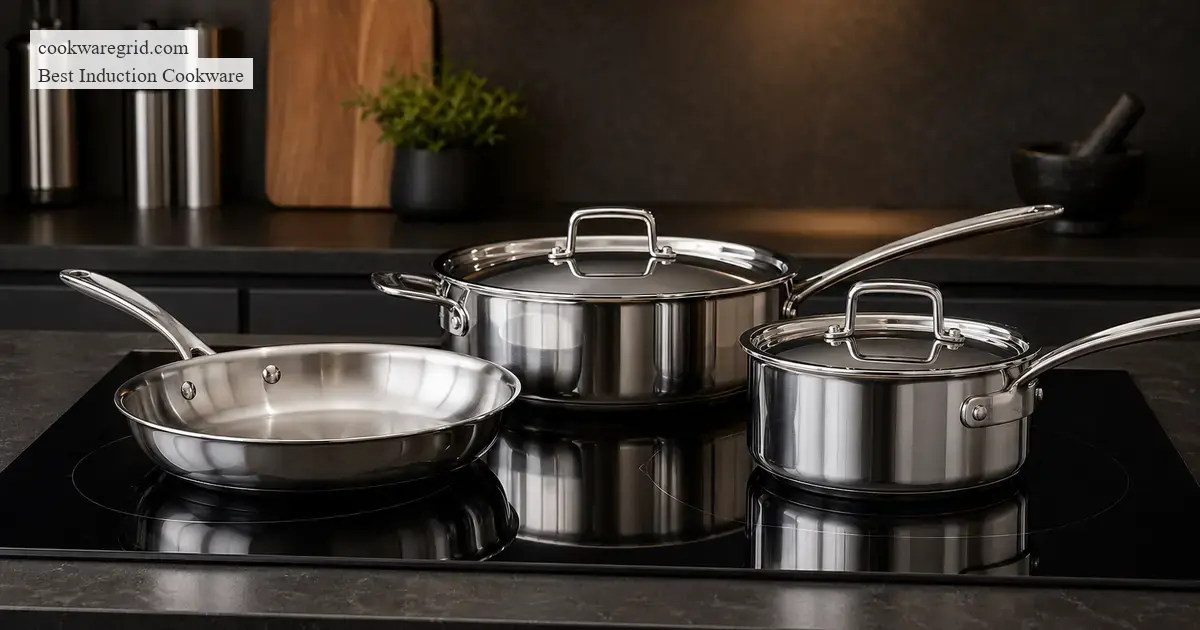
Fully clad stainless steel is the best non-toxic induction cookware starting point for most kitchens because the cooking surface is uncoated, durable, and compatible with acidic foods. A good induction-ready stainless pan uses a magnetic stainless exterior to activate the cooktop and an aluminum or copper core to improve thermal conductivity.
Its weakness is technique. Stainless is not nonstick unless you preheat correctly, use enough fat, and let proteins release naturally. But as a long-term material, it is hard to beat. It can sear, simmer, deglaze, boil, roast, and make pan sauces without relying on a coating that will eventually wear. For a dedicated stainless guide, see best stainless steel induction cookware.
Best for: Everyday cooks who want one durable, uncoated foundation material.
Skip if: You want effortless egg release without learning stainless technique.
Best budget high heat
2. Cast Iron
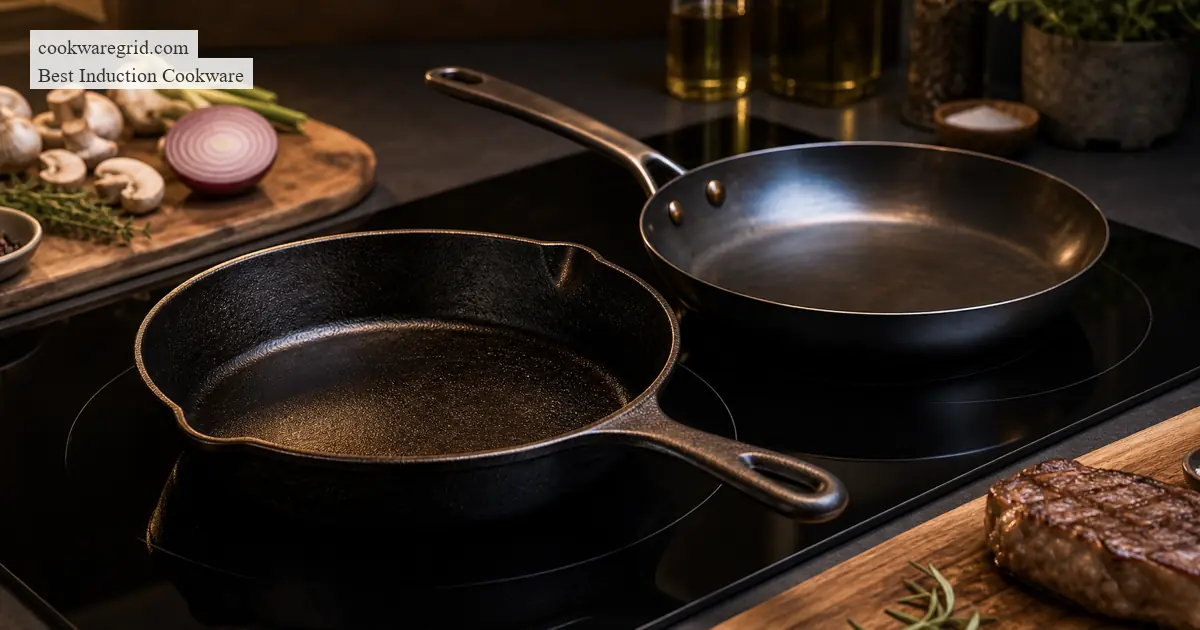
Cast iron is naturally induction compatible because it is iron-based and magnetic. It is also one of the most durable cookware materials you can buy. A seasoned cast iron skillet can sear steak, shallow-fry, bake cornbread, and move from induction cooktop to oven with confidence.
The tradeoffs are weight, maintenance, and reactivity. Cast iron should be dried thoroughly, oiled lightly, and not used for long acidic simmering if you want to protect seasoning. It can also scratch glass if dragged, so lift it instead. For a direct daily-use comparison, read cast iron vs stainless steel on induction.
Best for: Searing, frying, baking, budget durability, and high heat.
Skip if: You need lightweight cookware or cook acidic sauces for long periods.
Best lighter high-heat option
3. Carbon Steel
Carbon steel sits between stainless steel and cast iron in daily behavior. Like cast iron, it is iron-based, magnetic, high-heat capable, and develops a seasoned cooking surface. Compared with cast iron, it is usually thinner, smoother, and easier to maneuver, especially in skillet and wok shapes.
It still needs seasoning discipline. Water, long acidic cooking, and neglect can strip seasoning or encourage rust. But for cooks who want a non-coated induction pan that can become more stick-resistant over time, carbon steel is one of the best choices. For shape, weight, and care differences, read carbon steel vs cast iron on induction.
Best for: Sauteing, stir-frying, searing, eggs after seasoning, and cooks who want a lighter iron pan.
Skip if: You do not want to maintain seasoning or dry cookware promptly.
Best low-maintenance iron
4. Enameled Cast Iron
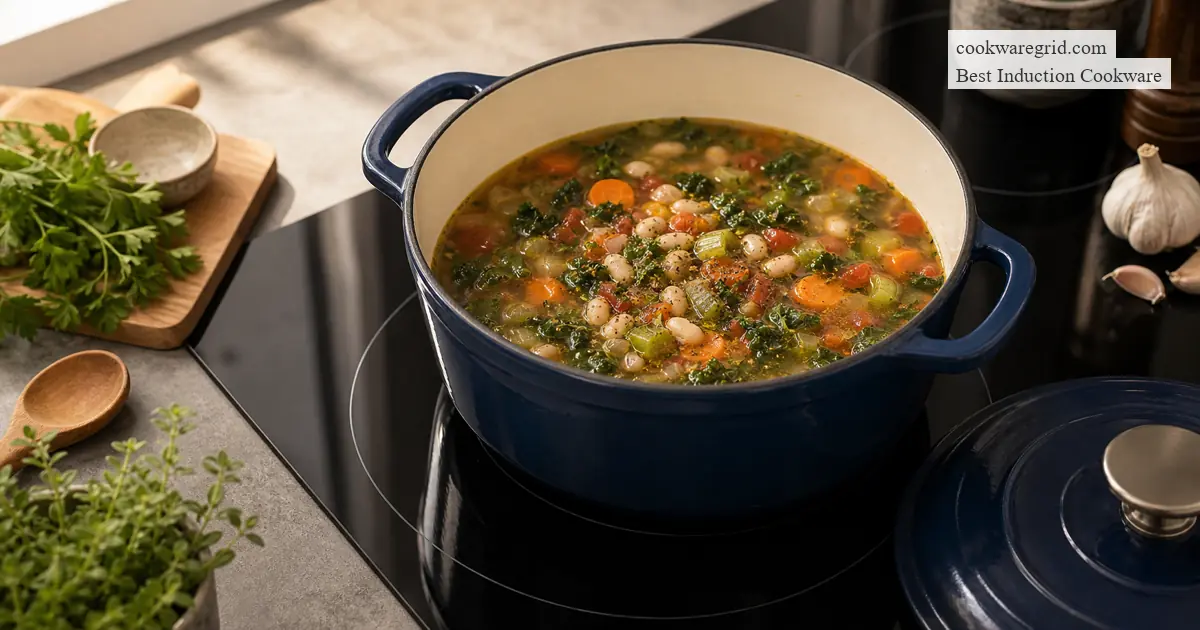
Enameled cast iron gives you the heat retention and magnetic compatibility of iron with a glassy enamel surface that does not need seasoning. That makes it a smart non-toxic induction choice for Dutch ovens, braises, soups, beans, bread, and acidic sauces that would be harder on bare cast iron or carbon steel seasoning.
The caution is mechanical, not mysterious: enamel can chip if dropped, banged with metal tools, or overheated empty. It is also heavy. But if you want a non-coated-in-the-nonstick-sense workhorse for slow cooking and oven work, enameled cast iron is one of the calmest options.
Best for: Braising, soups, acidic sauces, Dutch ovens, and cooks who do not want seasoning maintenance.
Skip if: You need lightweight cookware or a pan for quick tossing and sauteing.
Best easy release
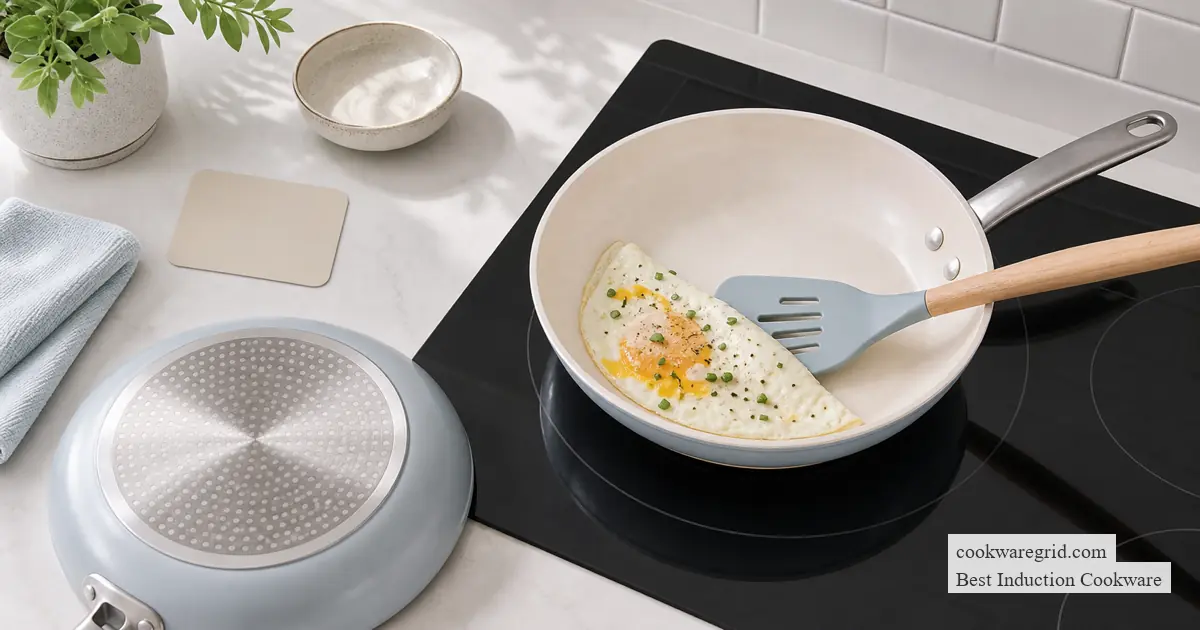
5. PFAS-Free Ceramic Nonstick
PFAS-free ceramic nonstick is the option for cooks who want easier release but prefer to avoid traditional PTFE-based nonstick. It can be excellent for eggs, pancakes, fish, crepes, and lower-oil cooking. The induction requirement is separate from the coating: the pan still needs a magnetic base or body.
The caveat is durability. Ceramic coatings can lose slickness, chip, or scratch, especially with high induction heat, abrasive cleaning, or metal tools. Treat ceramic as a convenience surface, not a forever material. For a direct comparison, see ceramic nonstick vs stainless steel induction cookware.
Best for: Eggs, fish, pancakes, and cooks who want PFAS-free easy release.
Skip if: You want decades of high-heat cookware performance.
Buying guide
How to Choose Non-Toxic Cookware for Induction
Define “non-toxic” by material and disclosure
Start by asking what touches the food. Uncoated stainless steel, seasoned cast iron, seasoned carbon steel, and porcelain enamel are easier to understand than broad “clean” or “green” claims. With coated cookware, read the specific disclosure: PFAS-free, PTFE-free, PFOA-free, ceramic, titanium, silicone, or enamel can mean different things.
Then ask whether the cookware is induction compatible. Cast iron and carbon steel are naturally magnetic. Stainless steel must have enough magnetic material in the exterior or base. Ceramic nonstick cookware often has an aluminum body, so it needs a magnetic stainless steel plate or base to work on induction.
Match the material to the job
For a main cookware set, stainless steel is usually the easiest non-toxic recommendation because it handles the broadest range of foods. For searing, cast iron and carbon steel are excellent. For braises and soups, enameled cast iron is comfortable. For eggs and delicate fish, PFAS-free ceramic nonstick can be useful if you accept a shorter coating life.
There is no single material that wins every category. A practical induction kitchen might use stainless saucepans and saute pans, a cast iron or carbon steel skillet for hard searing, and one ceramic nonstick pan for eggs.
Use induction heat with care
Induction heats compatible cookware quickly. That is helpful for boiling and searing, but it can punish coatings and thin cookware. Avoid long empty preheats, choose pans with flat bases, and lower power sooner than you would on a slower radiant electric cooktop. This is especially important for ceramic and nonstick cookware.
- Best default: fully clad stainless steel with a magnetic exterior.
- Best high heat: cast iron or carbon steel with a seasoned surface.
- Best slow cooking: enameled cast iron Dutch oven.
- Best easy release: PFAS-free ceramic nonstick used gently.
Coatings
Ceramic, PFAS-Free, and Nonstick Claims Without the Hype
PFAS-free ceramic is useful, but not permanent
Ceramic nonstick is often marketed to shoppers who want to avoid PFAS. That can be a valid preference, but it does not make every ceramic pan identical. Coating formulas vary, durability varies, and “non-toxic” is not a universal regulated cookware standard. Look for clear manufacturer disclosures and independent testing when available.
Use ceramic nonstick at low to medium heat, avoid metal tools unless the maker clearly allows them, and handwash gently. Replace coated cookware if the surface is peeling, deeply scratched, or no longer performing. Nonstick cookware is a convenience category; uncoated stainless, cast iron, and carbon steel are the durability categories.
When coating-free is better
If you cook at high heat, use metal utensils, broil often, or want cookware you can keep for decades, choose coating-free materials first. Stainless steel, cast iron, and carbon steel have learning curves, but they do not rely on a nonstick film to remain useful.
For people who mainly cook eggs, pancakes, fish, and quick reheats, one ceramic nonstick pan can still be worth owning. The key is keeping that pan in its lane instead of asking it to do steakhouse searing, broiling, or heavy scraping.
- Do not overheat coated pans empty on induction.
- Do not assume “ceramic” means every coating detail has been disclosed.
- Do not use a full nonstick set for every high-heat job.
- Do use stainless, cast iron, or carbon steel when durability matters most.
FAQ
Best Non-Toxic Induction Cookware FAQ
Short answers for choosing non-toxic induction cookware without exaggerating coating claims or ignoring induction compatibility.
What is the best non-toxic cookware for induction?
For most cooks, start with fully clad stainless steel, cast iron, carbon steel, or enameled cast iron. These are durable, familiar materials that do not rely on a traditional nonstick coating.
Is stainless steel non-toxic cookware?
Uncoated stainless steel is widely used because it is durable, corrosion resistant, and suitable for acidic foods. For induction, make sure the cookware has a magnetic exterior or base.
Is ceramic nonstick better than stainless steel?
Ceramic nonstick is better for easy release and PFAS-free nonstick shoppers. Stainless steel is better for durability, browning, pan sauces, and long-term use.
Do cast iron and carbon steel work on induction?
Yes. Both are iron-based and naturally magnetic. They work best when the base is flat, dry, and not dragged across the glass cooktop.
Specification and Research Sources
CookwareGrid reviews current cookware testing and safety discussions, then translates them into induction-specific shopping guidance: magnetic compatibility, flat bases, documented materials, heat limits, and realistic coating durability.
About Leamon Warner
Leamon Warner is a kitchen expert, researcher, and founder of CookwareGrid with more than 25 years of experience in the kitchen and home-goods industry. His background includes work with LG, Lamacom Group, and Fleur Metal, alongside cookware research, product testing, and conversations with industry experts. He created CookwareGrid to turn that experience into clear, practical advice for home cooks.