Buying guide
Best Stainless Steel Induction Cookware: Top Picks for Fast, Even Heating
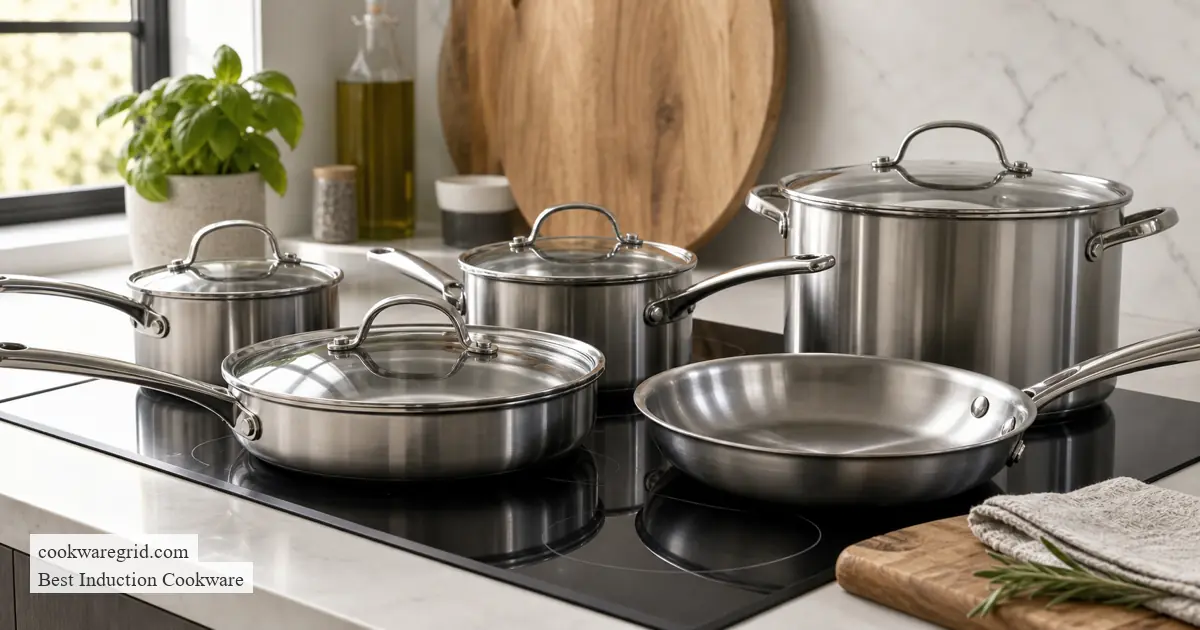
The best stainless steel induction cookware combines magnetic compatibility with the heat-spreading behavior stainless steel lacks on its own. The winning sets use a ferromagnetic exterior to activate the cooktop, a flat base to stay stable on glass, and aluminum or copper inside the layers for fast, even heating.

As an Amazon Associate, CookwareGrid earns from qualifying purchases. That support helps fund our editorial research and testing.
The best stainless steel induction cookware reviewed by CookwareGrid
Retailer availability checked July 29, 2026. Use the retailer button for the latest live pricing and availability.
Best overall
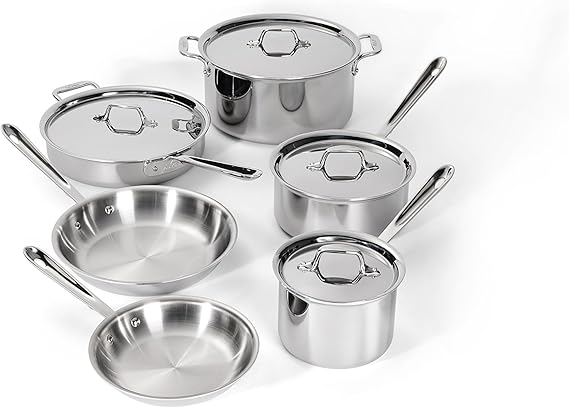
1. All-Clad D3 Stainless 10-Piece
Tri-ply stainless with an aluminum core, quick induction response, and excellent everyday versatility.
Read more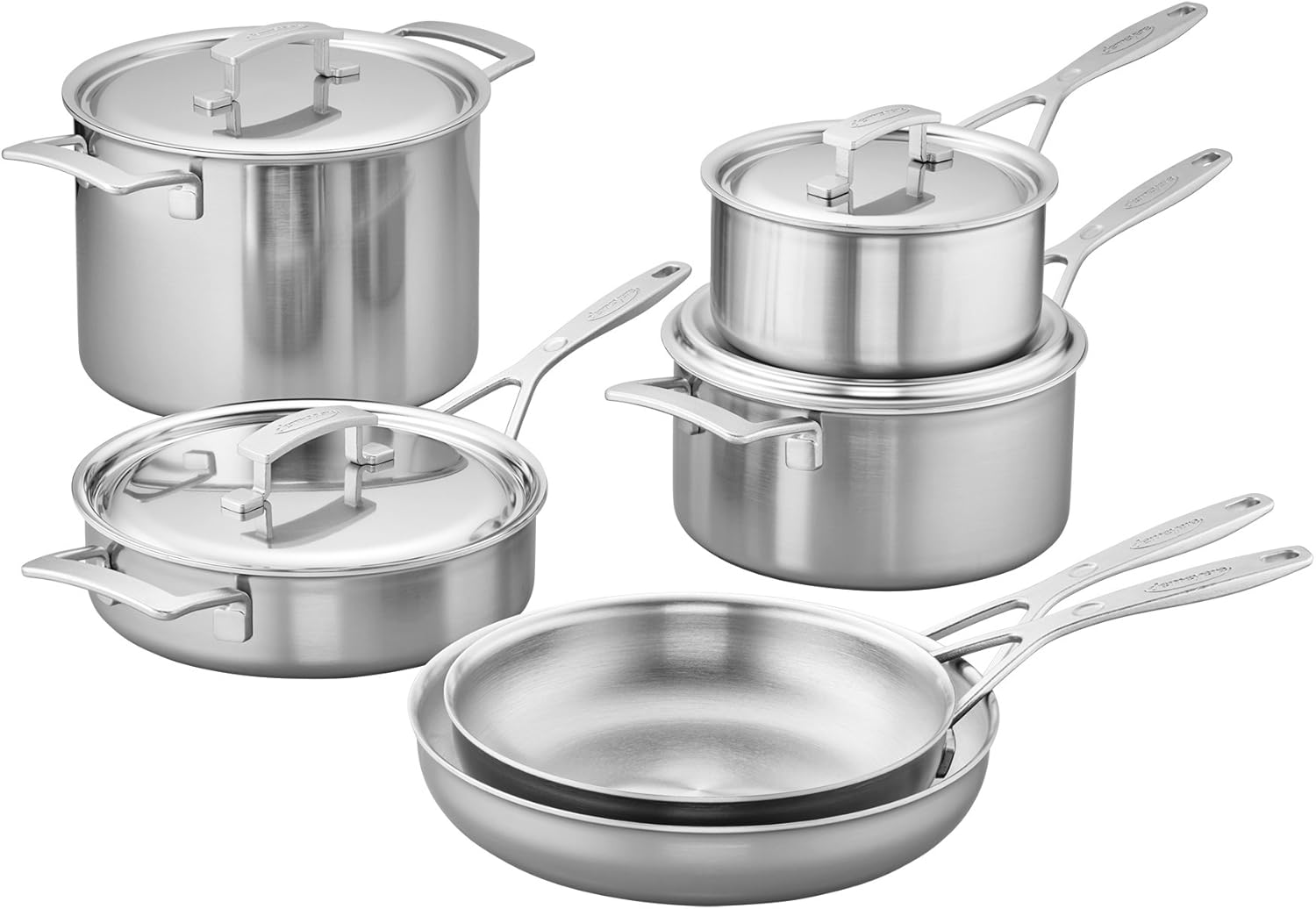
Best premium stainless
2. Demeyere Industry 5
Thicker 5-ply stainless with a stable flat base and a calmer feel on high-output induction.
Read more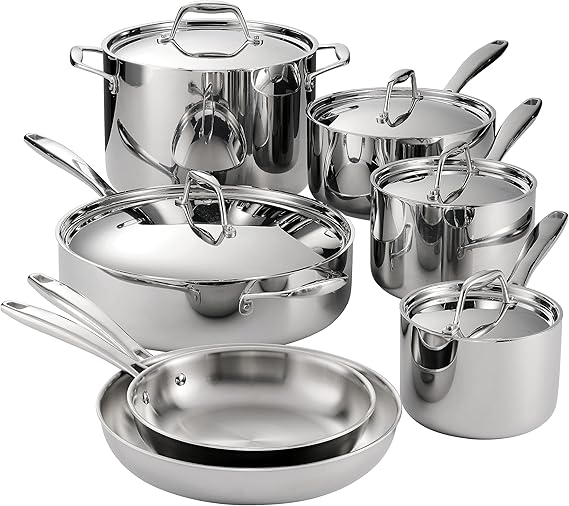
Best value
3. Tramontina Tri-Ply Clad
Fully clad stainless cookware with a magnetic exterior and the right everyday induction architecture.
Read more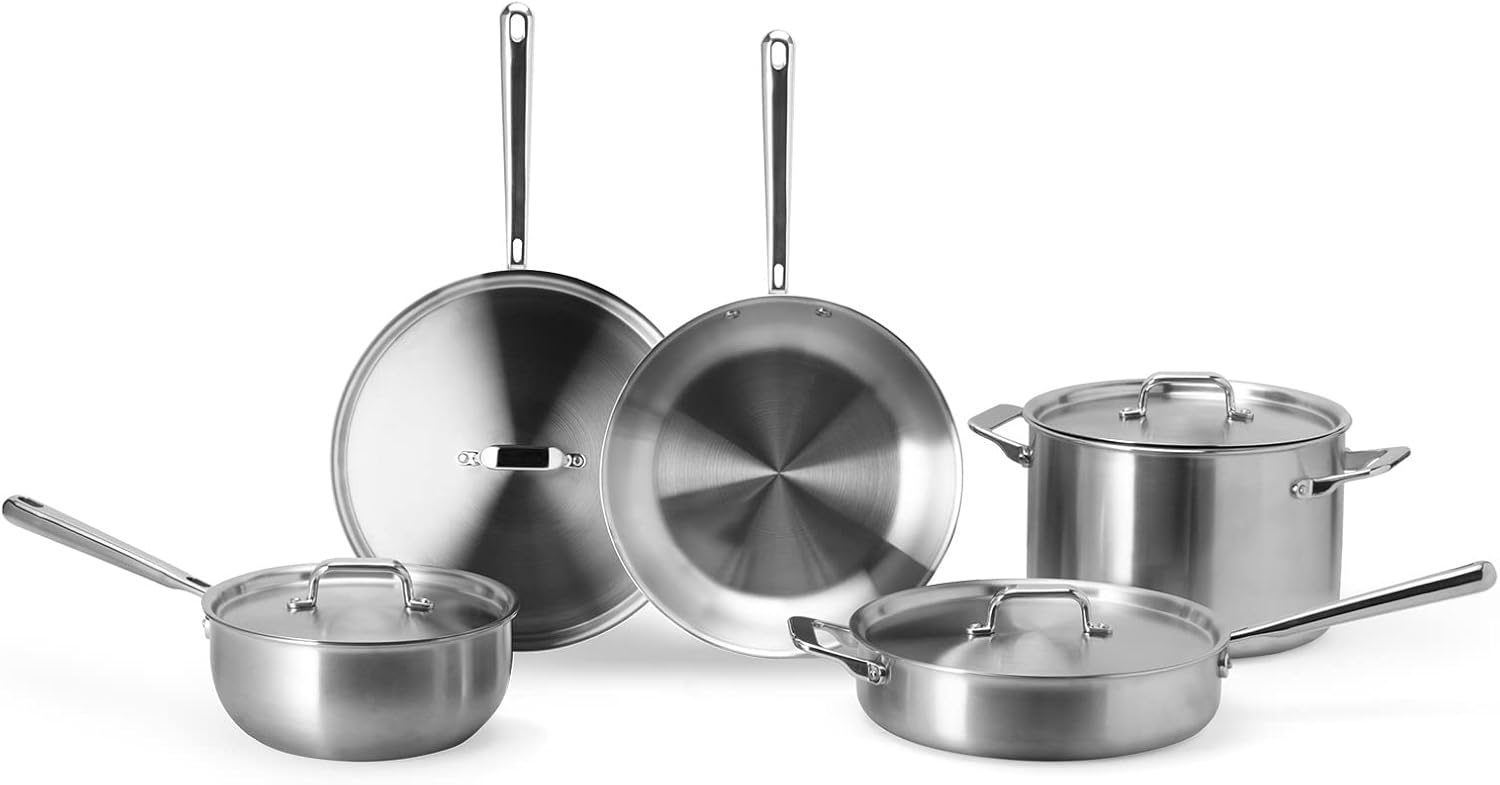
Best thick 5-ply value
4. Misen Stainless Steel Set
Substantial 5-ply stainless for cooks who want more mass, heat retention, and oven flexibility.
Read more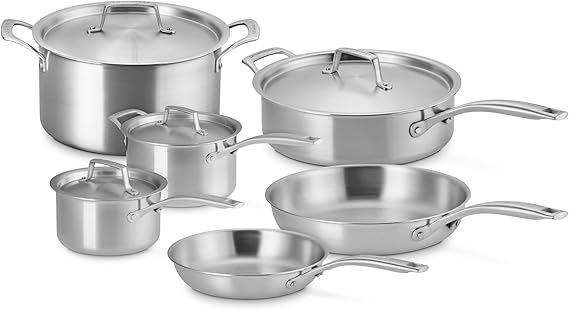
Best polished everyday
5. Le Creuset Essential Stainless
Triple-layer stainless with refined handling, easy pouring, and strong induction compatibility.
Read moreOur top overall pick is All-Clad D3 Stainless because it gives most cooks the best balance of magnetic response, fully bonded tri-ply construction, manageable weight, and long-term durability. Demeyere Industry 5 is the premium upgrade if you want thicker 5-ply stainless with excellent base stability.
If you are searching for the Best induction cookware stainless steel option, focus on fully clad stainless steel with an aluminum or copper core, a flat base, and strong magnetic compatibility. That combination matters because induction power starts at the magnetic base, but good cooking depends on how evenly the pan moves that heat across the surface.
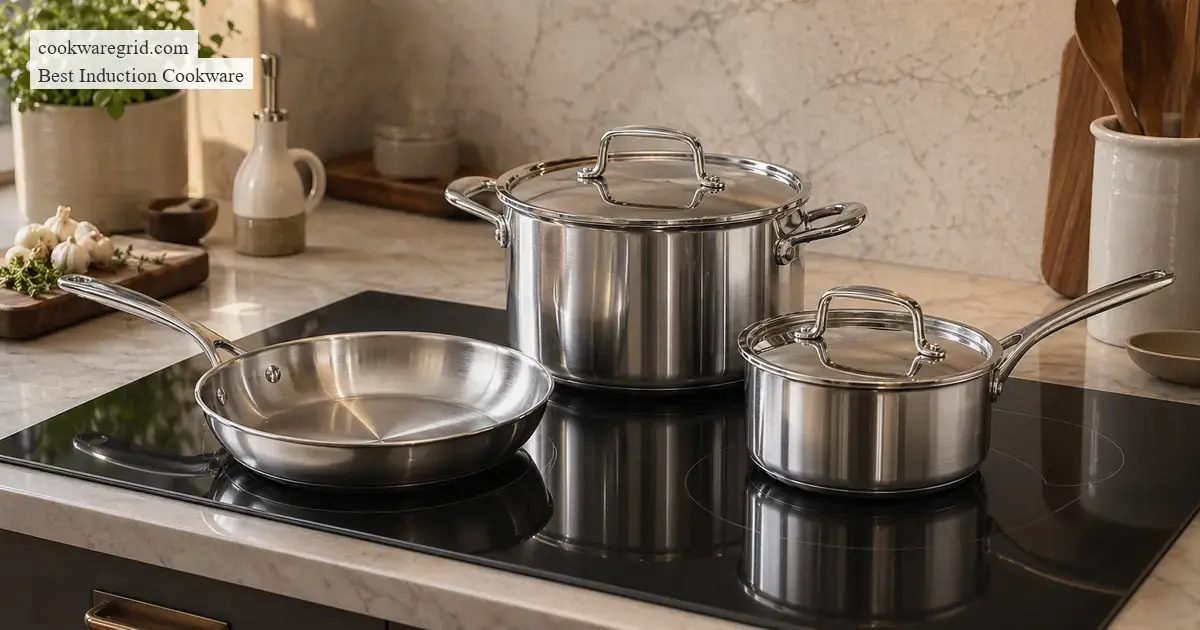
Stainless steel is the commercial hub material for induction cookware because it can sear, simmer, deglaze, handle acidic sauces, move into the oven, and survive years of daily use. The catch is that not every stainless pan works well on induction. Some stainless alloys are not magnetic enough, and some budget pans only add a small disc to the bottom. For construction details, compare tri-ply vs 5-ply induction cookware and fully clad vs disc bottom induction cookware before you buy.
Shortlist
Best Stainless Steel Induction Cookware at a Glance
These are the stainless sets I would shortlist first because their construction matches what induction cooktops need: magnetic stainless outside, conductive metal inside, and enough base stability to prevent hot rings and rocking.
1All-Clad D3 Stainless
Best overall for most cooks. Tri-ply stainless with an aluminum core, fast response, and excellent everyday durability.
2Demeyere Industry 5
Best premium choice. 5-ply stainless with a thick aluminum core and a calm, stable feel on induction glass.
3Tramontina Tri-Ply Clad
Best value. Fully clad stainless performance at a friendlier price, with the right magnetic exterior and aluminum core architecture.
4Misen Stainless
Best thick 5-ply value. A modern set for cooks who want more mass, high oven tolerance, and responsive stainless performance.
5Le Creuset Essential Stainless
Best polished everyday set. A refined tri-ply option with practical handling details and an aluminum core from base to rim.
Need the bigger picture?
For cast iron, carbon steel, nonstick, and hybrid options too, read our main best induction cookware guide.
Specs
Stainless Steel Induction Cookware Comparison Table
All stainless cookware below is induction compatible, but the best fit depends on whether you value responsiveness, heat retention, budget, weight, or premium base stability.
| Rank | Cookware Set | Construction | Core / Magnetic Layer | Best Use | Tradeoff |
|---|---|---|---|---|---|
| 1 | All-Clad D3 Stainless 10-Piece | Fully bonded tri-ply stainless steel | Aluminum core with induction-compatible stainless exterior | Best all-around set for searing, sauteing, boiling, and oven finishing | Costs more than value tri-ply and the handles divide opinions |
| 2 | Demeyere Industry 5 Stainless | 5-ply stainless steel | Thick aluminum core with magnetic stainless outside | Premium flat-base stability, heat retention, and reduced vibration | Heavier and slower to respond than lighter tri-ply |
| 3 | Tramontina Tri-Ply Clad | Tri-ply clad stainless steel | Aluminum core with magnetic stainless exterior | Best value for fully clad induction cooking | Not as refined as premium sets and glass lids can lower oven flexibility |
| 4 | Misen Stainless Steel | Thick 5-ply stainless steel | Aluminum layers and induction-compatible 18/0 stainless exterior | High-heat cooking, thicker feel, and modern direct-to-consumer value | More mass than some cooks want for quick meals |
| 5 | Le Creuset Essential Stainless | Triple-layer stainless steel | Aluminum core from base to rim | Polished everyday cooking with comfortable details and table appeal | Usually priced for design and brand as much as raw performance |
Reviews
Full Reviews of the Best Stainless Steel Induction Cookware
These reviews focus on induction-specific behavior: magnetic response, flat-base contact, cladding, heat distribution, weight, warp resistance, and long-term stainless care.
Best overall
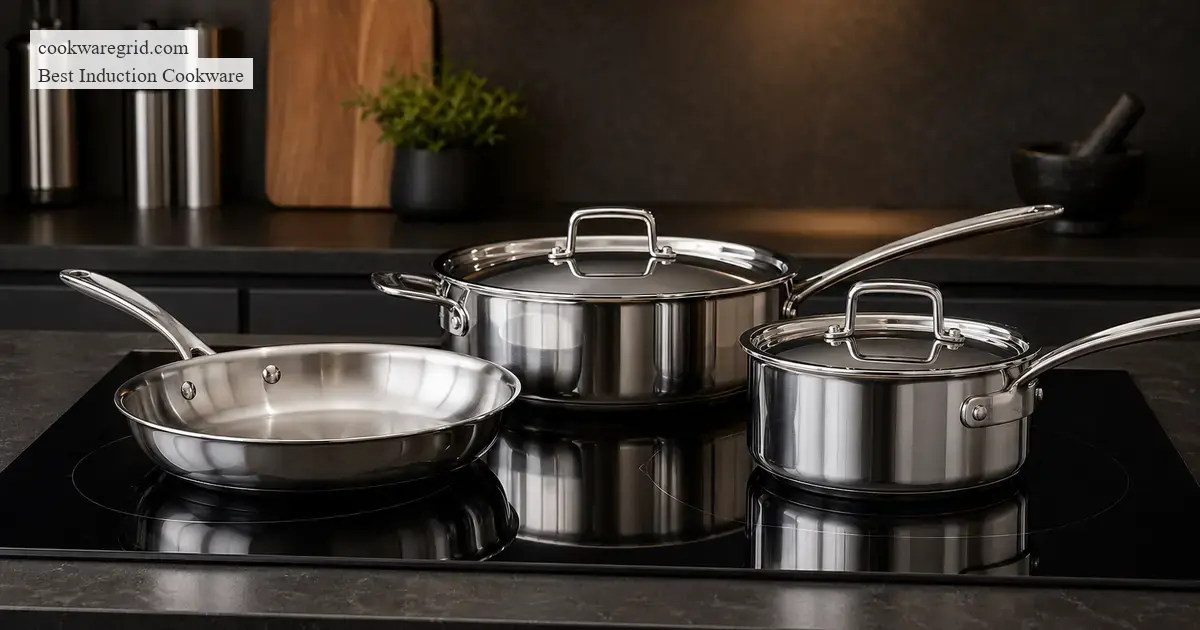
1. All-Clad D3 Stainless 10-Piece Cookware Set
All-Clad D3 is the safest top recommendation because its tri-ply build solves the main stainless steel problem. Stainless is durable and corrosion resistant, but it does not move heat especially well. D3 bonds stainless steel around an aluminum core, so the magnetic exterior activates induction while the aluminum spreads heat across the pan.
On induction, this matters most in skillets and saute pans. Thin magnetic stainless can heat in a tight ring above the coil, which gives you scorched centers and pale edges. D3 is still responsive enough for weeknight cooking, but it has enough conductive metal to make browning and pan sauces more predictable. It is the set I would choose for a serious home cook who wants one stainless foundation before adding specialty pans.
Best for: Everyday stainless cooking, searing proteins, deglazing, boiling, and oven finishing.
Skip if: You want the heaviest, quietest premium feel or prefer rounded comfort handles over All-Clad's classic handle shape.
Best premium stainless
2. Demeyere Industry 5 Stainless Steel Cookware
Demeyere Industry 5 is the upgrade pick for cooks who notice how cookware feels on induction. The 5-ply body adds mass and stability, which can make the pan feel calmer at high output. That extra thickness can also help with warp resistance and heat retention when you drop cold food into a hot pan.
The tradeoff is speed and weight. A heavier 5-ply pan can be less nimble than tri-ply when you are quickly lowering heat for garlic, butter, eggs, or delicate sauces. But for steak, chicken thighs, scallops, and serious sauce reduction, Industry 5 gives a confident, planted feel that pairs beautifully with induction's intensity. If buzzing and rocking bother you, this is one of the stainless lines worth considering first.
Best for: Premium induction kitchens, high-output burners, searing, and cooks who want a stable base.
Skip if: You need the lightest cookware or want the fastest possible heat response.
Best value
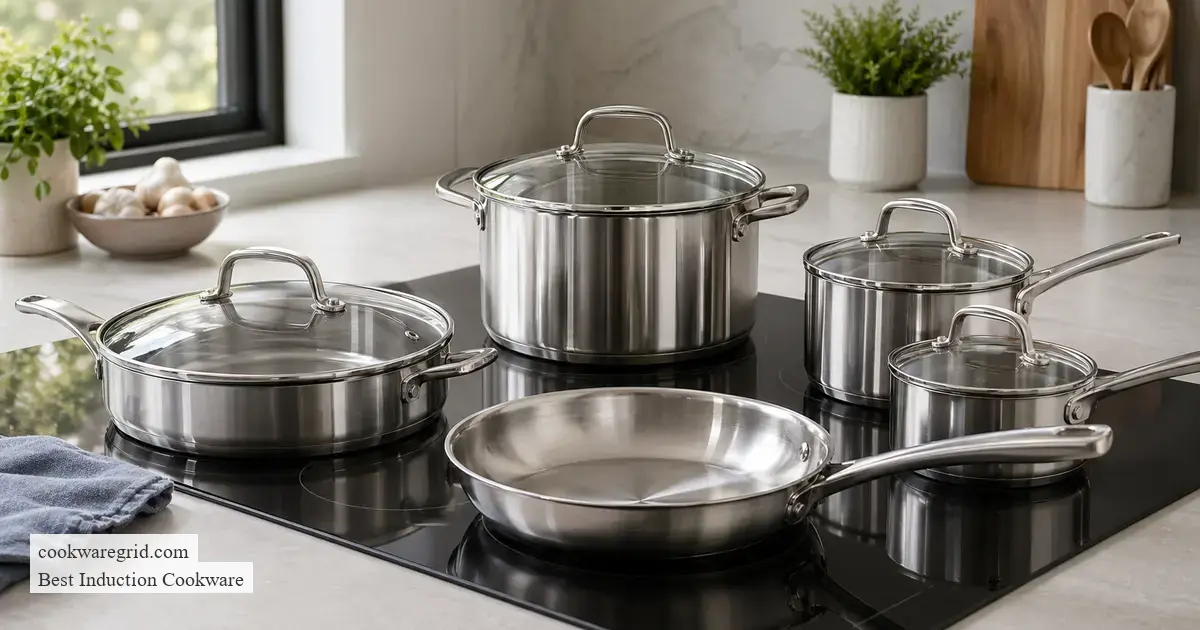
3. Tramontina Tri-Ply Clad Stainless Steel Cookware
Tramontina Tri-Ply Clad is the set to consider when you want the right architecture without the highest premium price. The important phrase is fully clad: the heat-spreading metal is not limited to a small plate on the bottom. That makes Tramontina more useful for skillets and saute pans than many cheap stainless sets that rely on disc bases.
It is not as polished as the most expensive stainless cookware, and some versions include glass lids that can limit oven flexibility compared with stainless lids. But for induction cooking, the core idea is sound: magnetic stainless outside, aluminum in the middle, stainless cooking surface inside. If you are building a kitchen and still need budget for a cast iron skillet, a nonstick egg pan, or a carbon steel wok, Tramontina is the value play.
Best for: Budget-conscious cooks who still want fully clad stainless steel induction cookware.
Skip if: You want welded handles, premium finishing, or the quietest heavy-base feel.
Best thick 5-ply value
4. Misen Stainless Steel Cookware Set
Misen appeals to cooks who want the sturdier feel of 5-ply stainless without moving all the way into luxury pricing. The thicker body gives it a strong induction personality: more heat storage, more stability, and a little more patience required when adjusting burner power.
That makes it particularly good for cooks who sear, roast, or build pan sauces. It is less ideal if you want featherweight cookware for quick breakfasts. On induction, a thick stainless pan can hold onto heat after you lower the control, so the cook has to learn the rhythm. Once you do, the payoff is a stable cooking surface and less anxiety about warping under high output.
Best for: Cooks who want thicker stainless, high-heat flexibility, and a modern set lineup.
Skip if: You prioritize quick response and minimal lifting weight above heat retention.
Best polished everyday set
5. Le Creuset Essential Stainless Steel Cookware
Le Creuset Essential Stainless is the refined everyday option. It is not the pick for raw value or maximum technical aggression. It is the pick for cooks who want a stainless set that feels composed, looks polished, and includes practical details like comfortable handles, clean pouring, and a shape language that fits a premium kitchen.
For induction, the key is still construction. A tri-ply stainless body with an aluminum core is the right starting point. The magnetic exterior lets the pan heat on induction, while the aluminum helps distribute energy across the cooking surface. If you already love Le Creuset's broader design language and want stainless pieces beside enameled cast iron, this set makes sense.
Best for: Everyday cooks who value design, handling, and a polished stainless set.
Skip if: You want the lowest price per piece or the thickest 5-ply construction.
Buying guide
How to Choose the Best Stainless Steel Induction Cookware
Start with magnetic compatibility, then judge the layers
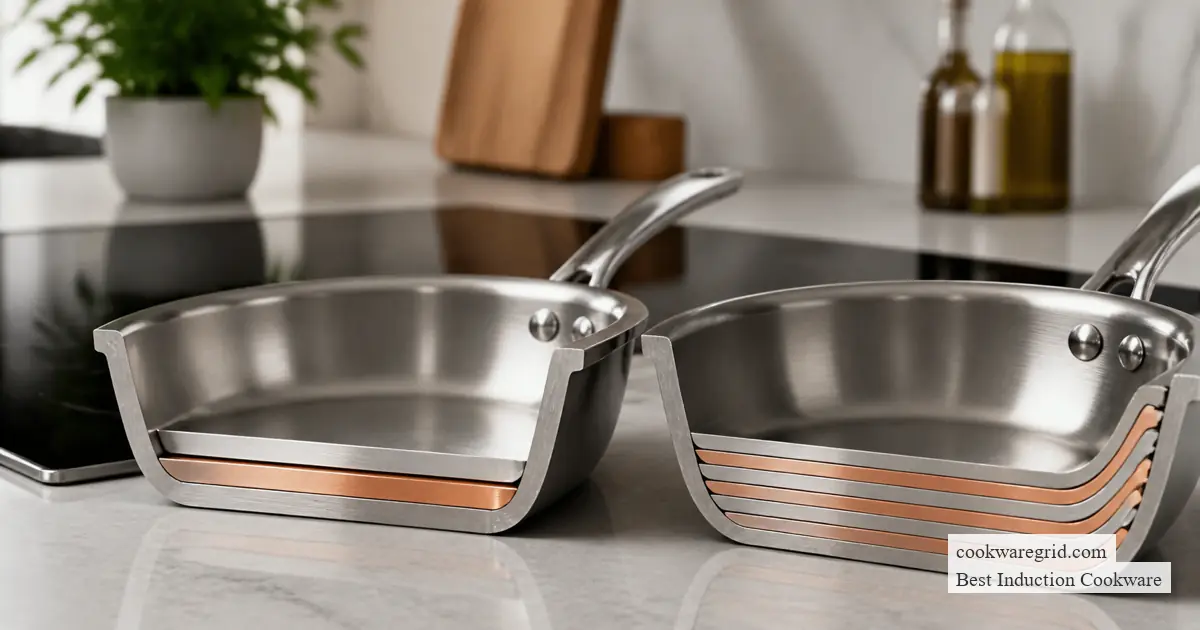
The first test is simple: a magnet should stick firmly to the bottom of the pan. But the magnet test only tells you whether the pan is likely to activate an induction burner. It does not tell you whether the pan will cook evenly. That is why layer construction matters. Fully clad stainless cookware usually uses a magnetic stainless exterior, an aluminum or copper core, and an 18/10 stainless cooking surface. The exterior talks to the cooktop; the core moves heat; the interior handles food contact and corrosion resistance.
For a deeper material breakdown beyond stainless, use our guide to the best materials for induction cookware. Stainless is the best default for broad cooking, but cast iron, carbon steel, ceramic nonstick, and hybrid pans all solve different kitchen problems.
Tri-ply vs 5-ply: do more layers mean better induction performance?
More layers do not automatically make better cookware. A well-made tri-ply pan can outperform a vague 5-ply pan if the tri-ply has a good aluminum core, a flat base, and a strong magnetic exterior. Tri-ply is usually lighter and faster to respond, which is helpful for sauces, vegetables, and weeknight cooking.
5-ply cookware usually adds thickness and thermal mass. That can improve heat retention, make searing more stable, and reduce vibration on some induction burners. It can also make the pan heavier and slower to cool when you lower the power. The right choice depends on how you cook. If you make quick pan sauces and saute vegetables often, tri-ply feels agile. If you sear steaks and dislike pan movement or buzzing, 5-ply may feel more premium.
Fully clad vs disc bottom: choose by vessel shape
Fully clad stainless is usually the safer choice for skillets, sauciers, and saute pans because the conductive layers run through the sides. This helps when food climbs the sidewall, when you reduce sauces, or when you sear near the edge of the pan. Disc-bottom stainless can work well for stockpots and some saucepans because boiling water mostly needs strong bottom heat, but a thin disc under a wide skillet is a warning sign.
Base flatness matters just as much as construction type. A pan that rocks on the glass can buzz, heat unevenly, and trigger frustrating cooktop behavior. Before using a new stainless pan, place it on a flat counter and press gently around the rim. If it moves like a seesaw when cold, it is already a poor induction candidate.
- Best everyday build: fully clad tri-ply stainless with an aluminum core.
- Best premium build: thick 5-ply stainless for stability and heat retention.
- Best value warning: avoid thin stainless with a tiny magnetic plate under a wide body.
- Best handling test: lift a full saucepan or saute pan before buying if weight matters.
Care
Care, Discoloration, and Stainless Steel on Induction
Rainbow tint and brown stains are usually cosmetic
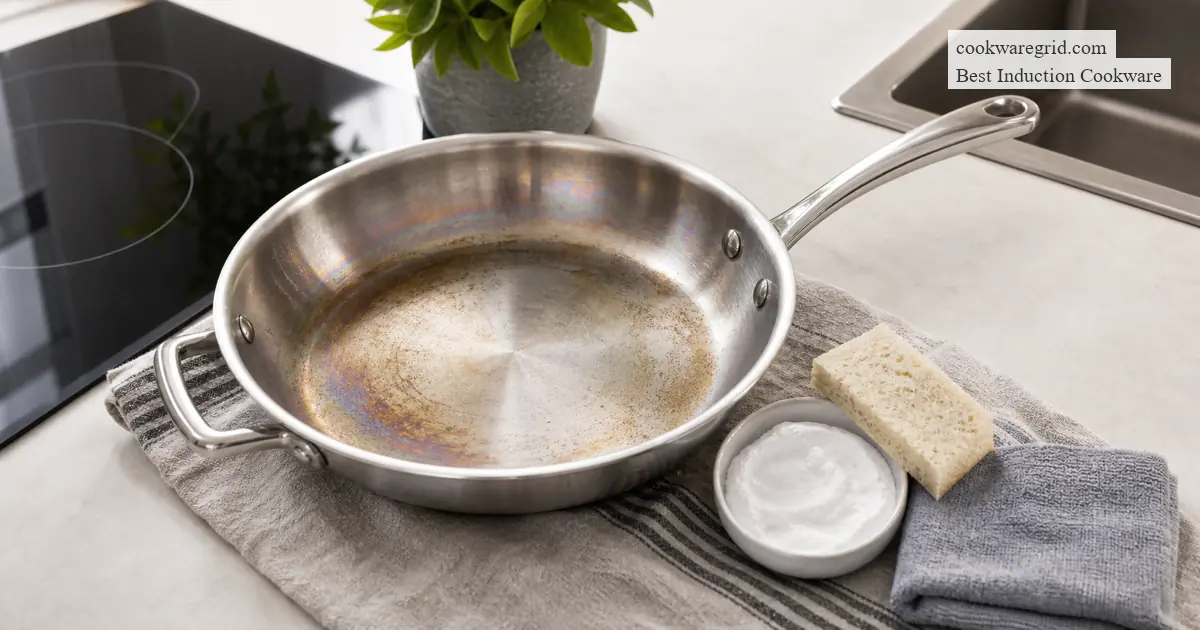
Stainless steel can turn rainbow, blue, gold, brown, cloudy, or speckled on induction. That does not automatically mean the cookware is damaged. Rainbow heat tint usually comes from stainless chromium oxide changing thickness under high heat. White cloudy spots often come from minerals in water. Sticky brown patches are usually polymerized oil. For a full cleaning breakdown, read our guide to stainless steel induction cookware discoloration.
Induction can make these marks happen faster because the cooktop puts energy into the pan so quickly. Long empty preheats, boost mode, and oil heated past its smoke point are the usual causes. To protect stainless, preheat with intention, add oil after the pan is warm, and lower power earlier than you would on a slow radiant electric cooktop.
Stainless vs cast iron on induction
Stainless steel is better for acidic foods, pan sauces, boiling, simmering, and general versatility. Cast iron is better for heat retention, hard searing, cornbread, and tasks where you want the pan to stay hot after food goes in. Stainless is usually smoother on glass and easier to clean without worrying about seasoning, while cast iron asks for more lifting discipline and oil care.
If you are choosing one main skillet material, compare cast iron vs stainless steel on induction. In my view, the most useful induction kitchen has both: a fully clad stainless skillet for most meals and a cast iron or carbon steel pan for hard searing.
- Do not run a hot stainless pan under cold water.
- Use lower induction power once the pan is hot.
- Deglaze browned bits while the pan is still warm.
- Use non-abrasive cleaners first, then stainless-safe powder cleaners for heat tint or cooked-on oil.
FAQ
Best Stainless Steel Induction Cookware FAQ
Short answers for choosing stainless steel cookware that heats evenly, stays flat, and works confidently on an induction cooktop.
What stainless steel cookware works best on induction?
The best stainless steel cookware for induction has a magnetic stainless exterior, a flat base, and a conductive aluminum or copper core. Fully clad tri-ply stainless is the most versatile starting point for most kitchens.
Is tri-ply or 5-ply stainless steel better for induction?
Tri-ply is usually lighter and more responsive. 5-ply usually adds stability, heat retention, and a heavier premium feel. Both can work well if the pan has strong magnetic compatibility and stays flat.
Can stainless steel induction cookware warp?
Yes. Stainless cookware can warp if it is thin, overheated empty, exposed to sudden cold water, or used on boost too aggressively. Thicker fully clad cookware and gradual preheating improve warp resistance.
Why does my stainless steel pan buzz on induction?
Buzzing usually comes from magnetic vibration in the cookware layers. It can be louder with lightweight pans, high power settings, warped bases, or empty cookware. Heavier, flatter stainless pans often sound calmer.
Specification and Research Sources
CookwareGrid reviews manufacturer specifications, retailer listings, and independent cookware testing notes, then interprets those details through an induction-specific lens: magnetic response, flatness, cladding, heat spread, and daily handling.
About Leamon Warner
Leamon Warner is a kitchen expert, researcher, and founder of CookwareGrid with more than 25 years of experience in the kitchen and home-goods industry. His background includes work with LG, Lamacom Group, and Fleur Metal, alongside cookware research, product testing, and conversations with industry experts. He created CookwareGrid to turn that experience into clear, practical advice for home cooks.