Cookware Safety
Does Induction Cooking Leach Metals Into Food? Evidence by Material
Induction does not create a special metal-leaching reaction. Metal transfer is governed mainly by the food-contact material, acidity and salt, cooking time, temperature, surface damage, and whether food is stored in the cookware.

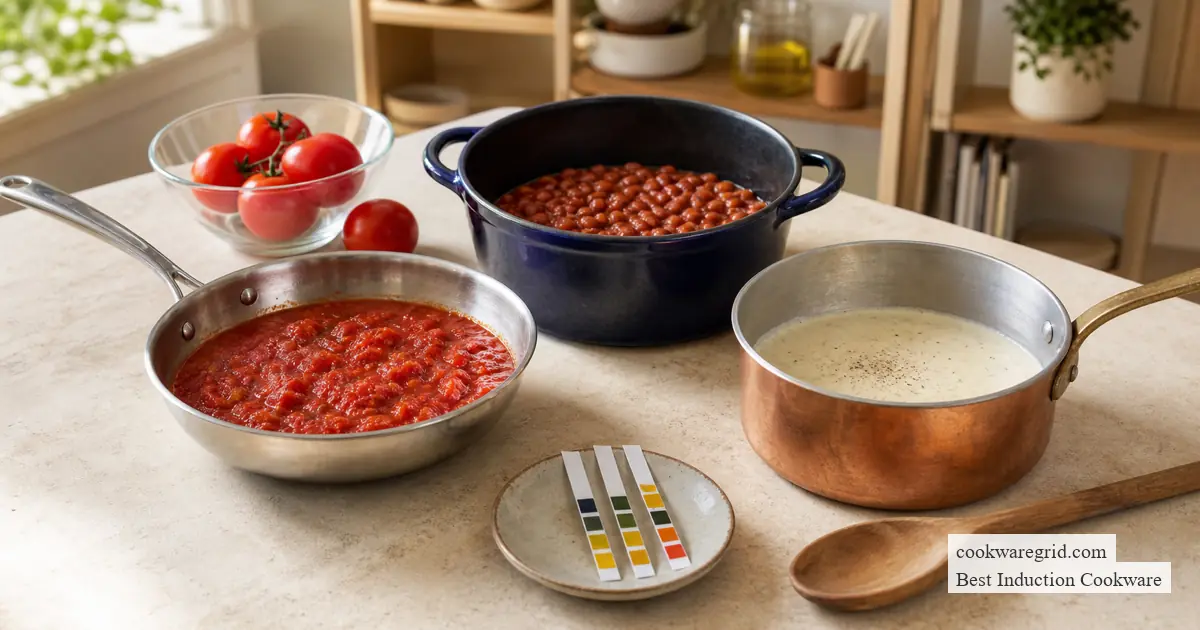
Evidence-based answer: properly made, intact cookware used as directed is the practical standard. Pay particular attention to damaged linings, uncoated reactive metals, nickel allergy, acidic food, and current safety alerts for specific products.
All cookware is a food-contact surface, and small amounts of substances can migrate under some conditions. The useful question is not whether transfer can ever occur; it is whether the cookware is suitable, compliant, intact, and used in a way that limits avoidable exposure.
Health Canada identifies material type, food type, and conditions of use as factors that influence transfer. The FDA also monitors toxic elements in foods and foodware and issues product-specific alerts when testing identifies a hazard. Those principles apply regardless of whether heat comes from induction, gas, or electric.
Core concept
Induction Changes the Heat Source, Not the Food-Contact Chemistry
An induction coil creates a magnetic field that heats compatible metal in the pan base. Food does not interact with the coil. It touches stainless steel, seasoning, enamel, a nonstick coating, tin, or another interior surface. That contact layer is the primary material question.
Induction can heat quickly, so uncontrolled high power may raise surface temperature faster than expected. Higher temperature can influence reactions and damage, but the same final pan temperature has the same basic food-contact implications whether it was reached by gas, radiant electric, or induction.
This is why safe use begins with temperature control, intact surfaces, and manufacturer instructions. Read is induction cookware safe for magnetic-field and cooktop handling questions beyond metal transfer.
Food surfaces
Stainless Steel, Cast Iron, Aluminum, and Copper
Stainless steel: durable stainless commonly contains iron, chromium, and nickel. Its chromium-rich passive layer resists corrosion. People with a known nickel allergy should follow medical guidance and may prefer nickel-free options. Avoid severe pitting and add salt after water boils to reduce localized corrosion.
Cast iron and carbon steel: these can transfer iron, especially with acidic foods and longer cooking. That is not an induction-specific effect. A sound seasoning layer reduces direct contact, while enameled iron provides a glass-like barrier. Do not store acidic food for long periods in uncoated iron cookware.
Aluminum: worn or pitted bare aluminum and prolonged contact with acidic or salty foods can increase transfer. Hard anodizing creates a more resistant surface, but damaged anodized cookware should be used according to the maker’s guidance. In clad cookware, aluminum is normally sealed inside and does not touch food.
Copper: copper is reactive and is normally lined with stainless steel or tin. Do not cook or store food in scratched, uncoated copper cookware. The FDA Food Code restricts copper contact with acidic foods in covered food-service settings, and consumer guidance similarly emphasizes intact linings.
Risk factors
Conditions That Can Increase Metal Transfer
Acidic foods such as tomatoes, citrus, vinegar, and wine are more reactive than neutral foods. Salt can also contribute to corrosion, particularly when crystals sit on stainless before dissolving. Longer cooking and storage times give reactions more opportunity to occur.
Surface damage changes the equation. Deep scratches, worn anodizing, chipped enamel, pitted stainless, and exposed copper beneath a lining remove protective barriers. Very high heat can accelerate wear or distort cookware, while abrasive cleaning can strip soft linings and seasoning.
Product quality and provenance matter. In 2025, the FDA warned about specific imported cookware made from aluminum, brass, and certain aluminum alloys that testing found could leach lead. That does not mean all aluminum cookware contains lead; it means consumers should pay attention to named alerts, reputable sellers, and traceable manufacturers.
- Acidic or highly salted foods.
- Long cooking or storage in the pan.
- Worn, pitted, chipped, or deeply scratched surfaces.
- Excessive heat and repeated thermal stress.
- Untraceable cookware or products named in safety alerts.
Practical safety
How to Choose and Use Induction Cookware Responsibly
Buy from a traceable manufacturer or retailer, keep receipts and model information, and read the care guide. Choose the interior material based on your food and maintenance habits: uncoated stainless for durability, enamel for a nonreactive barrier, seasoned iron or carbon steel for high-heat cooking, or an approved coating for lower-heat release.
Use moderate heat, avoid long empty preheats, and move leftovers to storage containers once they have cooled appropriately. Clean with tools suited to the surface and inspect linings and enamel regularly. Our best non-toxic induction cookware guide discusses uncoated and PFAS-free options without treating “non-toxic” as a universal technical certification.
For bare or reactive materials, follow authoritative guidance for acidic food and storage. If a household member has a diagnosed metal allergy or a clinician has recommended avoiding a material, that personal guidance should override general cookware advice.
Inspection
When to Stop Using Cookware and Check an Alert
Stop using cookware when a copper lining exposes the copper body, enamel chips into the cooking area, a coating peels or blisters, or the metal shows severe pitting and corrosion. Loose handles and separating bonded bases are also reasons to retire a pan.
If a government alert names your product, follow the alert’s disposal or return instructions rather than donating it. The FDA’s 2025 lead-leaching warning explicitly advised consumers not to donate or refurbish the identified cookware.
Normal cosmetic discoloration is different from structural failure. Rainbow heat tint on stainless or mineral haze is usually a cleaning issue. See stainless steel induction cookware discoloration before discarding an otherwise sound pan.
FAQ
Does Induction Cooking Leach Metals Into Food? FAQ
Direct answers to the practical questions readers ask most often.
Does induction pull nickel out of stainless steel?
No evidence supports the idea that the magnetic field pulls nickel into food. Transfer depends on the stainless alloy, food, temperature, time, and surface condition.
Is aluminum-core stainless steel cookware a leaching concern?
In properly clad cookware, the aluminum core is sealed between stainless layers and does not normally contact food. Stop using a pan if layers separate or the interior is structurally damaged.
Does cast iron release more iron on induction?
The cooktop type is not the main factor. Acidity, cooking duration, seasoning condition, and the food-contact surface matter more than whether the heat source is induction.
Should damaged copper cookware be used?
Do not cook or store food in scratched or uncoated copper cookware. A damaged lining should be professionally restored or the pan retired.
Editorial references
Sources and Further Reading
- Health Canada: safe use of cookware and bakeware
- FDA: toxic elements in foods and foodware
- FDA: 2025 warning about imported cookware that may leach lead
CookwareGrid uses manufacturer documentation and primary public guidance to verify technical and safety claims. Product instructions for your exact cookware and cooktop take priority over general advice.
About Leamon Warner
Leamon Warner is a kitchen expert, researcher, and founder of CookwareGrid with more than 25 years of experience in the kitchen and home-goods industry. His background includes work with LG, Lamacom Group, and Fleur Metal, alongside cookware research, product testing, and conversations with industry experts. He created CookwareGrid to turn that experience into clear, practical advice for home cooks.