Cookware comparison
Ceramic vs Teflon Induction Cookware: Which Nonstick Works Better?
Ceramic and Teflon-style traditional nonstick are not the same thing, even when both pans say they work on induction. They release differently, age differently, tolerate heat differently, and attract different buyers. The induction part comes from the magnetic base. The daily experience comes from the coating.

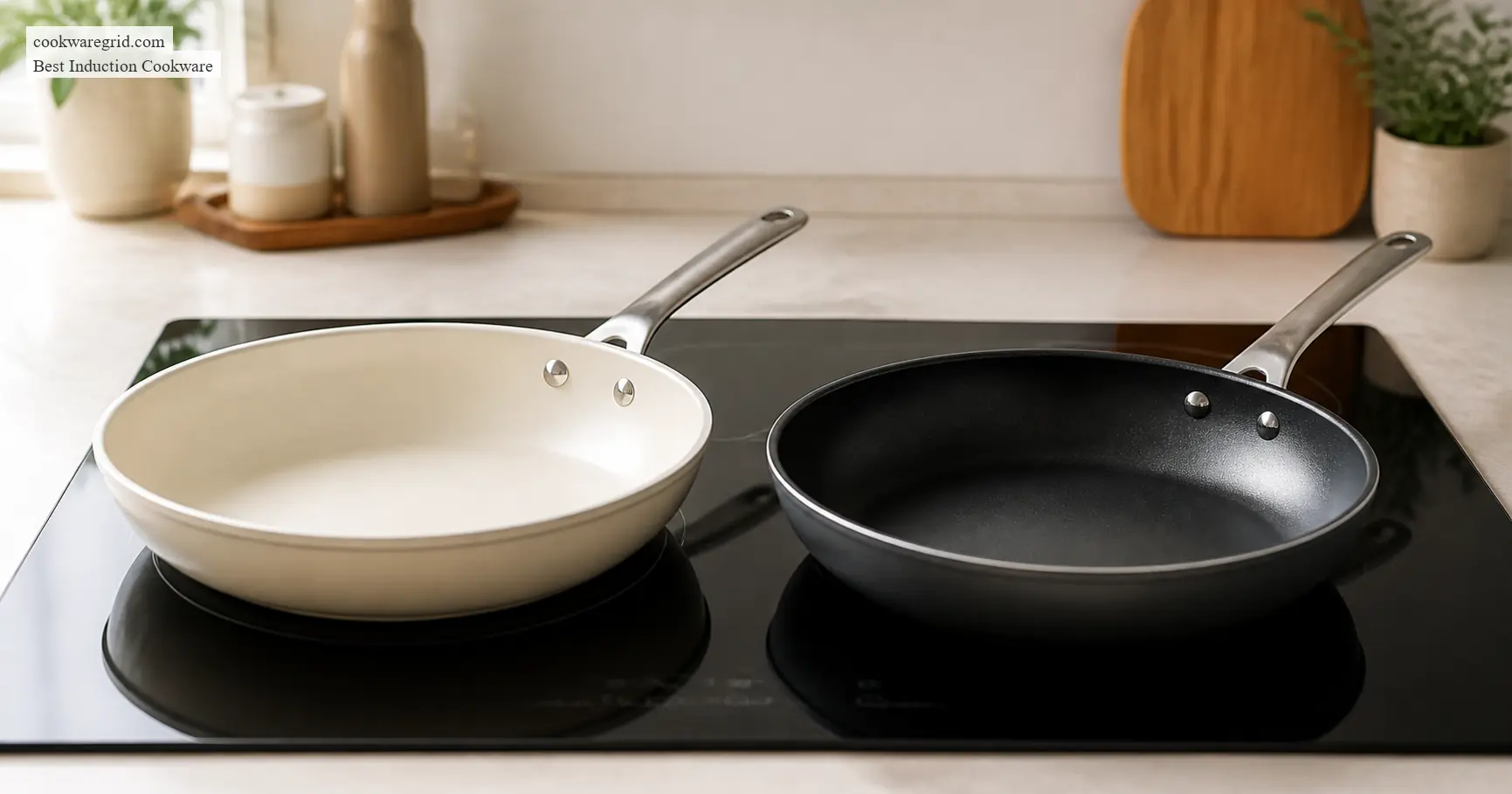
If you want PFAS-free positioning and lower-heat easy cleanup, ceramic is the better fit. If you want the slickest release and are comfortable using gentler temperatures with a traditional coating, Teflon-style nonstick often performs better for longer.
This is one of the biggest buying questions inside the best nonstick induction cookware category. It also matters for shoppers comparing health claims, easy-clean performance, and how much maintenance they can realistically tolerate. If you are still zoomed out, start with stainless steel vs nonstick induction cookware first.
At a glance
Ceramic vs Teflon on Induction
The label on the box does not tell the full story. This table does.
| Factor | Ceramic Nonstick | Teflon-Style Nonstick |
|---|---|---|
| Typical buyer | PFAS-free shopper | Maximum easy-release shopper |
| Release feel | Good early, then can fade faster | Usually slicker and more forgiving |
| Heat preference | Low to medium | Low to medium |
| Induction requirement | Magnetic base required | Magnetic base required |
| Wear pattern | Can lose slickness without obvious peeling | Can gradually lose release and coating integrity |
| Best use | Gentle weeknight cooking | Eggs, fish, and very easy release |
Performance
Release and Heat Behavior Are the Real Differences
Ceramic nonstick often feels excellent when new. It can be smooth, clean-looking, and easy to wipe down. But many cooks notice that ceramic loses its best easy-release behavior earlier than they hoped, especially if the pan is overheated, stacked carelessly, or used dry on an induction burner for too long.
Teflon-style traditional nonstick usually has the advantage on raw slipperiness. That is why it remains popular for omelets, crepes, and delicate fish. The tradeoff is that it still needs discipline. Induction heats fast, and overheated traditional nonstick is a bad bargain. For focused product picks, see best nonstick induction pan.
If you want a coating-free alternative for broader cooking, compare this with ceramic nonstick vs stainless steel for induction.
Care
Care, Cleaning, and Safety Framing
Shoppers often come to this comparison through concern about coatings. That is understandable, but the better path is calm material literacy, not panic. Ceramic is commonly sold as PFAS-free. Traditional nonstick often triggers more caution, but both categories depend heavily on how the pan is made and how it is used.
Read labels carefully, use low-to-medium heat, avoid preheating an empty coated pan for long periods, and handwash when possible. If you want the broader safety framing, read is induction cookware safe?. If you want the cleaning angle, use how to clean induction cookware.
The induction base matters here too. A weak or thin base can lead to hot spots, and hot spots shorten coating life in both categories.
Decision
Who Should Buy Ceramic and Who Should Buy Teflon?
Choose ceramic if your priority is PFAS-free positioning, a cleaner visual finish, and gentler everyday cooking. Choose Teflon-style nonstick if your priority is the slickest possible release and you are willing to use the pan gently and replace it when performance drops.
Many cooks overbuy here. A full coated set is rarely necessary. One skillet and maybe one small saucepan usually cover the jobs where nonstick matters most. For broader everyday work, stainless steel remains the smarter base collection, especially if you are also reading our hard anodized vs stainless steel induction cookware guide.
- Best for PFAS-free buyers: ceramic.
- Best for maximum slipperiness: Teflon-style nonstick.
- Best for full-kitchen versatility: add stainless elsewhere.
- Best next stop: best non-toxic induction cookware.
FAQ
Ceramic vs Teflon Induction Cookware FAQ
Short answers for the biggest nonstick-induction concerns.
Is ceramic or Teflon better for induction cookware?
Ceramic appeals to buyers who want PFAS-free positioning, while Teflon-style traditional nonstick usually gives easier release and often longer slick performance when treated well.
Do ceramic and Teflon pans both need a magnetic base for induction?
Yes. The coating does not make the pan induction compatible. The body or base still needs a magnetic stainless layer that the cooktop can detect.
Which coating wears out faster on induction?
Ceramic often loses its initial slickness sooner if overheated or scrubbed aggressively, while traditional nonstick can stay slipperier longer but still degrades over time.
About Leamon Warner
Leamon Warner is a kitchen expert, researcher, and founder of CookwareGrid with more than 25 years of experience in the kitchen and home-goods industry. His background includes work with LG, Lamacom Group, and Fleur Metal, alongside cookware research, product testing, and conversations with industry experts. He created CookwareGrid to turn that experience into clear, practical advice for home cooks.