Cookware comparison
Stainless Steel vs Nonstick Induction Cookware: Which Should You Buy?
For induction cooking, stainless steel and nonstick solve different kitchen problems. Stainless wins on browning, fond, durability, and oven range. Nonstick wins on eggs, fish, sticky foods, and cleanup. The right answer for most cooks is not one or the other. It is knowing where each one belongs.

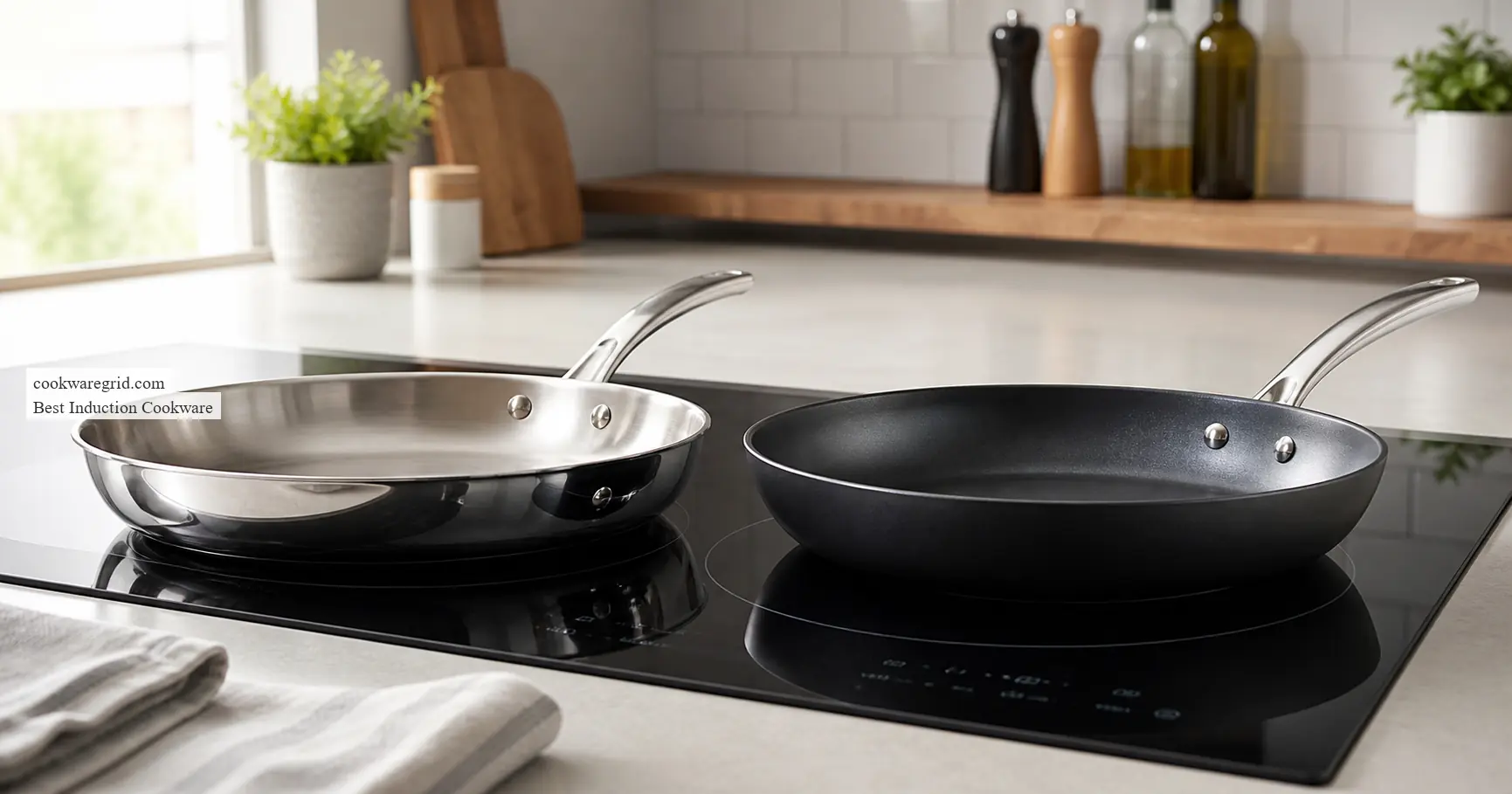
If you want one answer fast, buy stainless steel as your main induction cookware and add one good nonstick skillet for delicate foods. Stainless is the better long-term foundation. Nonstick is the better specialty tool.
Induction makes this comparison more important because the cooktop transfers power fast. Stainless steel can take that power if the pan has a flat, magnetic, well-built base. Nonstick can work beautifully too, but coatings reward lower heat and shorter preheats. If you are still choosing products, compare our picks for best stainless steel induction cookware, best nonstick induction cookware, and the broader best induction cookware guide.
At a glance
Stainless Steel vs Nonstick on Induction
Use this as the quick-buying version before you get into preheating, sticking, and coating tradeoffs.
| Factor | Stainless Steel | Nonstick |
|---|---|---|
| Best at | Searing, sauces, high-heat cooking, fond, oven use | Eggs, fish, pancakes, sticky foods, easy cleanup |
| Induction heat tolerance | High if the construction is good | Moderate; coatings prefer lower heat |
| Food release | Technique dependent | Easy by design |
| Durability | Very strong long term | Limited by coating life |
| Cleaning | Can need soaking or stainless cleaner | Usually fast and simple |
| Best buying strategy | Main cookware set | One or two specialty pans |
Performance
Stainless Steel Wins on Browning and Range
On induction, stainless steel gives you more room to cook aggressively. A good fully clad pan with an aluminum core will heat quickly, brown deeply, and tolerate deglazing, acidic sauces, and oven finishing. That is why it remains the best all-around material for cooks who want one pan to do many jobs.
Nonstick is narrower. It does not create fond as well, and it should not be pushed as hard on boost or empty preheat. That does not make it worse. It makes it specialized. For eggs and fish, nonstick can feel dramatically easier. For steak or a pan sauce, stainless is the better tool.
If you struggle with release, read why food sticks to stainless steel on induction and how to preheat stainless steel on induction. A lot of the frustration people blame on stainless is actually timing, temperature, or oil management.
Care
Nonstick Wins on Cleanup, Stainless Wins on Lifespan
Cleanup is where nonstick earns its place. If you are cooking eggs, reheating rice, or making sticky sauces, a good induction-ready nonstick skillet can wipe clean with far less effort. That matters on busy weeknights.
The tradeoff is lifespan. Coatings wear. Even better nonstick pans eventually lose slickness, especially if they see high heat, metal utensils, stacked storage, or rough scrubbing. Stainless steel is much more forgiving over time. It can discolor, but that is often cosmetic and fixable. For care details, see how to clean induction cookware and stainless steel induction cookware discoloration.
For buyers comparing surface chemistry, our new ceramic vs Teflon induction cookware guide breaks down what changes within the nonstick category itself.
Decision
Which One Should You Actually Buy?
Buy stainless steel first if you are building a cookware collection from scratch. It handles the widest range of foods, works for higher heat, and supports more advanced cooking. Then add one nonstick skillet as a convenience piece.
Buy nonstick first only if your real cooking pattern is narrow: eggs every morning, delicate fish, low-oil cooking, simple reheats, and minimal cleanup. Even then, it is smart to add one stainless saucepan or skillet later so you are not stuck with a full coated lineup for every meal.
- Best for serious everyday cooking: stainless steel.
- Best for low-stress breakfast cooking: nonstick.
- Best for most induction kitchens: both, with clear roles.
- Best next read: hard anodized vs stainless steel induction cookware.
FAQ
Stainless Steel vs Nonstick Induction Cookware FAQ
Short answers for the biggest real-world buying questions.
Is stainless steel or nonstick better for induction?
Stainless steel is better for searing, sauces, durability, and higher heat. Nonstick is better for eggs, fish, and easy cleanup. Most induction kitchens do best with both.
Why does food stick more on stainless steel than nonstick?
Stainless steel needs correct preheating, enough oil, and time for proteins to release naturally. Nonstick coatings reduce sticking, but they trade away some browning power and long-term durability.
Can nonstick pans handle induction heat?
Yes, if the pan has a magnetic induction-ready base. The main limitation is coating life: nonstick should be used at lower heat than stainless steel on induction.
About Leamon Warner
Leamon Warner is a kitchen expert, researcher, and founder of CookwareGrid with more than 25 years of experience in the kitchen and home-goods industry. His background includes work with LG, Lamacom Group, and Fleur Metal, alongside cookware research, product testing, and conversations with industry experts. He created CookwareGrid to turn that experience into clear, practical advice for home cooks.