Care & troubleshooting
How to Preheat Stainless Steel on Induction
Preheating stainless steel on induction is where many cooks either unlock the material or decide they hate it. The goal is not to blast the pan until it smokes. The goal is to build an evenly warmed surface so oil behaves correctly and food releases naturally.

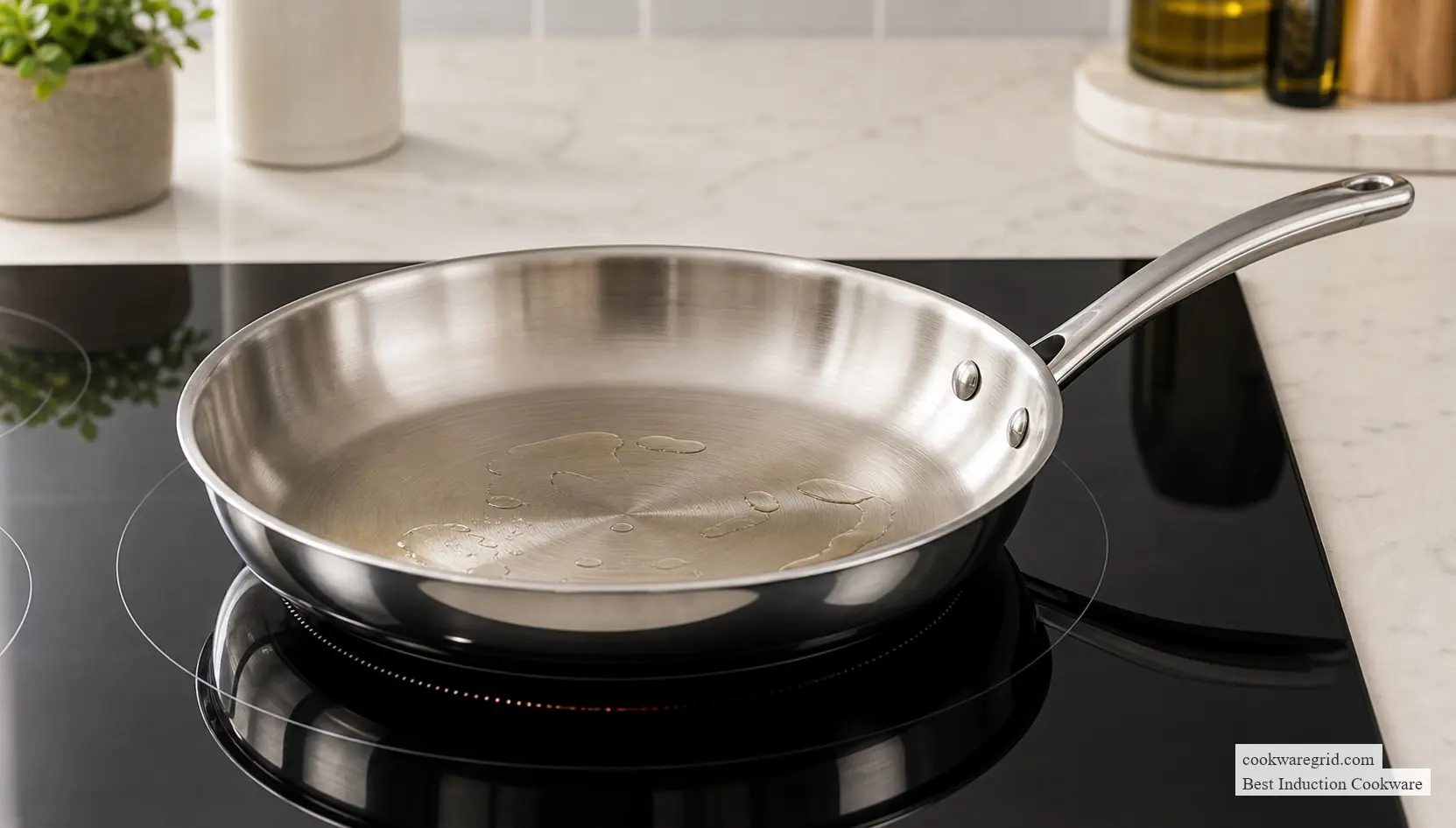
Use medium or medium-high, not boost, for most stainless steel preheating on induction. Let the pan warm gradually, add oil after the steel is ready, and then add dry food only after the oil has a brief moment to heat.
This is the companion article to why food sticks to stainless steel on induction. It also pairs with best stainless steel induction cookware and why induction pans heat unevenly if you suspect the cookware itself is part of the problem.
Method
Step-by-Step Stainless Steel Preheating on Induction
Start with a clean, dry pan. Put it on a burner that matches the base size reasonably well. Set the cooktop to medium or medium-high. Give the pan a short controlled preheat instead of spiking the power. That short patience window is what keeps the center from racing ahead of the rest of the cooking surface.
Once the pan is heated, add oil. Let the oil warm briefly, then add your dry food. If the food is cold and wet, you are pulling the pan backward at the exact moment you need consistency.
- Use steady medium power first.
- Do not preheat empty on boost by default.
- Add oil after the steel is hot enough.
- Add food only after the oil is ready too.
Timing
When to Add Oil, and Why It Matters
The most reliable sequence for stainless steel on induction is pan first, oil second, food third. That order gives you better feedback and reduces the chance of cold oil sitting in a not-quite-ready pan or smoking in an overheated one.
Once the oil is in, you do not need a long wait. A brief moment is enough. Then lay the food down and give it time to build color before you try to move it. If the pan is right, the food usually releases better than most beginners expect.
If you still prefer easier release for certain meals, that is where a support pan from the best nonstick induction cookware category makes sense.
Avoid
Common Stainless Preheating Mistakes on Induction
The biggest mistake is using boost out of habit. The second is treating stainless steel like nonstick and expecting instant release without enough heat. The third is forgetting that induction can reveal pan quality problems: a weak base, a warped bottom, or a poor burner match can all undermine preheating.
These issues connect directly to why induction cookware needs a flat bottom, induction cookware warping, and induction cooktop not detecting pan. Good technique works best when the equipment is fundamentally sound.
Equipment
Pan Size and Burner Fit Matter More Than People Think
If the induction zone is much smaller than the working base of the pan, the center can run ahead while the outer area lags. That makes preheating feel inconsistent and can trick you into chasing the wrong heat level. In those cases, the issue is not your oil or your protein. It is heat distribution.
That is one reason better clad cookware tends to feel calmer on induction. A good core helps spread energy beyond the hottest center zone. If you are shopping, compare tri-ply vs 5-ply induction cookware and fully clad vs disc bottom induction cookware.
FAQ
How to Preheat Stainless Steel on Induction FAQ
Short answers for the heat-control questions that matter most.
What heat setting should I use to preheat stainless steel on induction?
Start around medium or medium-high, not boost. Induction heats fast, so controlled preheating gives a more even surface and better release.
When should I add oil to a stainless steel pan on induction?
Usually after the pan has preheated. Add oil once the steel is ready, then let the oil warm briefly before adding food.
Why does stainless steel overheat so quickly on induction?
Induction transfers energy directly into the magnetic base, so the pan can gain heat much faster than many people expect, especially on smaller burners or high settings.
About Leamon Warner
Leamon Warner is a kitchen expert, researcher, and founder of CookwareGrid with more than 25 years of experience in the kitchen and home-goods industry. His background includes work with LG, Lamacom Group, and Fleur Metal, alongside cookware research, product testing, and conversations with industry experts. He created CookwareGrid to turn that experience into clear, practical advice for home cooks.