Care & troubleshooting
Why Food Sticks to Stainless Steel on Induction
Food sticking to stainless steel on induction is usually a technique problem, not proof that stainless steel is bad. Induction simply heats the pan fast enough to expose mistakes quickly: weak preheating, cold oil, wet proteins, overly high power, and uneven base contact.

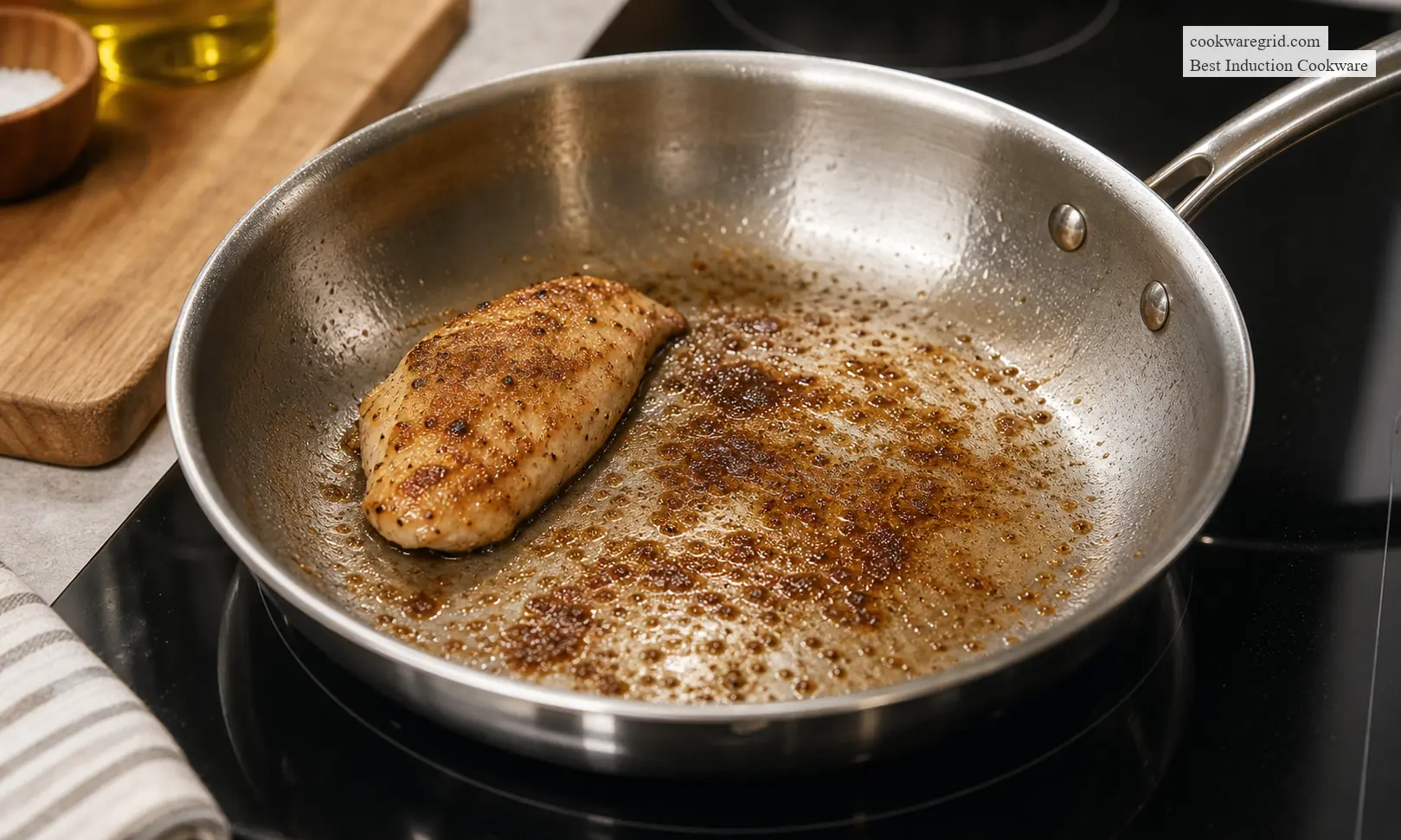
If food is sticking, the fastest fix is this: preheat the empty pan correctly, add oil after preheating, dry the food thoroughly, and stop moving it too early. Stainless steel usually releases once the surface and the protein reach the right stage.
This article pairs closely with how to preheat stainless steel on induction, best stainless steel induction cookware, and why induction pans heat unevenly. Together they explain the full chain: pan construction, burner behavior, and cooking technique.
Diagnosis
The Most Common Reasons Food Sticks
The first mistake is adding food to a pan that is not ready. On induction, stainless can jump from too cool to too hot fast, especially on smaller burners and boost settings. A lukewarm pan grabs proteins. An overheated pan scorches the contact points before the rest of the surface settles.
The second mistake is wet food. Moisture on chicken, fish, mushrooms, or tofu cools the oil film and interferes with release. The third mistake is impatience. Many proteins stick at first, then release naturally once the browning sets. If you force them early, they tear.
Oil timing matters too. A cold, oily pan can behave differently from a properly preheated pan that gets oil right before the food. If you are switching over from nonstick, this is usually the biggest habit change.
Method
How to Fix Sticking on Stainless Steel Induction Pans
Start by using moderate power instead of boost. Let the empty pan warm for a controlled preheat rather than racing it. Then add oil and give it a brief moment to thin out and shimmer. Add the food only once the pan and oil are both ready.
Pat proteins dry, season them, and place them down with confidence. After that, leave them alone. If you keep nudging the food, you interrupt the browning stage that helps release it. This matters especially for chicken and fish.
If you want the full timing breakdown, use how to preheat stainless steel on induction. If you want the bigger material debate, compare stainless steel vs nonstick induction cookware.
- Use medium or medium-high, not automatic boost.
- Dry the food thoroughly before it touches the pan.
- Add oil after preheating, not before by default.
- Let the food release naturally before flipping.
Equipment
Sometimes the Pan Really Is the Problem
If your stainless pan has a thin base, a poor magnetic layer, or uneven contact with the glass, technique alone may not solve everything. Induction hot spots can make one section of the pan much hotter than the rest. That creates patchy browning and inconsistent release.
Check whether the base rocks, whether the burner size fits the pan, and whether the pan is discoloring or warping. Those signs can point to construction limits. Our guides to why induction cookware needs a flat bottom and induction cookware warping explain what to look for.
If the pan is simply not good enough, upgrading to better stainless steel is often more effective than fighting it every night.
Practical use
Use Stainless for the Jobs It Does Best
Stainless steel shines when you want a good crust, a pan sauce, aggressive sauteing, or oven finishing. It is not the ideal surface for every food. Eggs and delicate fish are often easier in nonstick. That is why a mixed induction kitchen works so well: use stainless for browning and use nonstick where easy release matters most.
If you want a better core setup, start with best induction cookware and then narrow down with best stainless steel induction cookware.
FAQ
Food Sticking to Stainless Steel on Induction FAQ
Short answers for the sticking problems that frustrate most induction cooks.
Why does stainless steel stick more on induction?
Induction heats quickly, so a pan that is too cool or too hot will grab food more aggressively. Sticking usually comes from preheat timing, wet proteins, not enough oil, or moving the food too early.
Should I add oil before or after preheating stainless steel?
Usually preheat the stainless pan first, then add oil, let the oil heat briefly, and only then add the food. That sequence gives better release than starting with a cold oily pan.
Does a warped or uneven pan make stainless food release worse?
Yes. If the base is not sitting evenly on the induction zone, you can get hotter center areas and cooler edges, which makes sticking and patchy browning more likely.
About Leamon Warner
Leamon Warner is a kitchen expert, researcher, and founder of CookwareGrid with more than 25 years of experience in the kitchen and home-goods industry. His background includes work with LG, Lamacom Group, and Fleur Metal, alongside cookware research, product testing, and conversations with industry experts. He created CookwareGrid to turn that experience into clear, practical advice for home cooks.