Cookware comparison
Hard Anodized vs Stainless Steel Induction Cookware: What’s Better?
Hard anodized and stainless steel feel like direct competitors in many cookware aisles, but on induction they behave very differently. One is usually easier at first. The other is broader, tougher, and more resilient over time. The key is understanding what the induction burner sees and what your food sees.

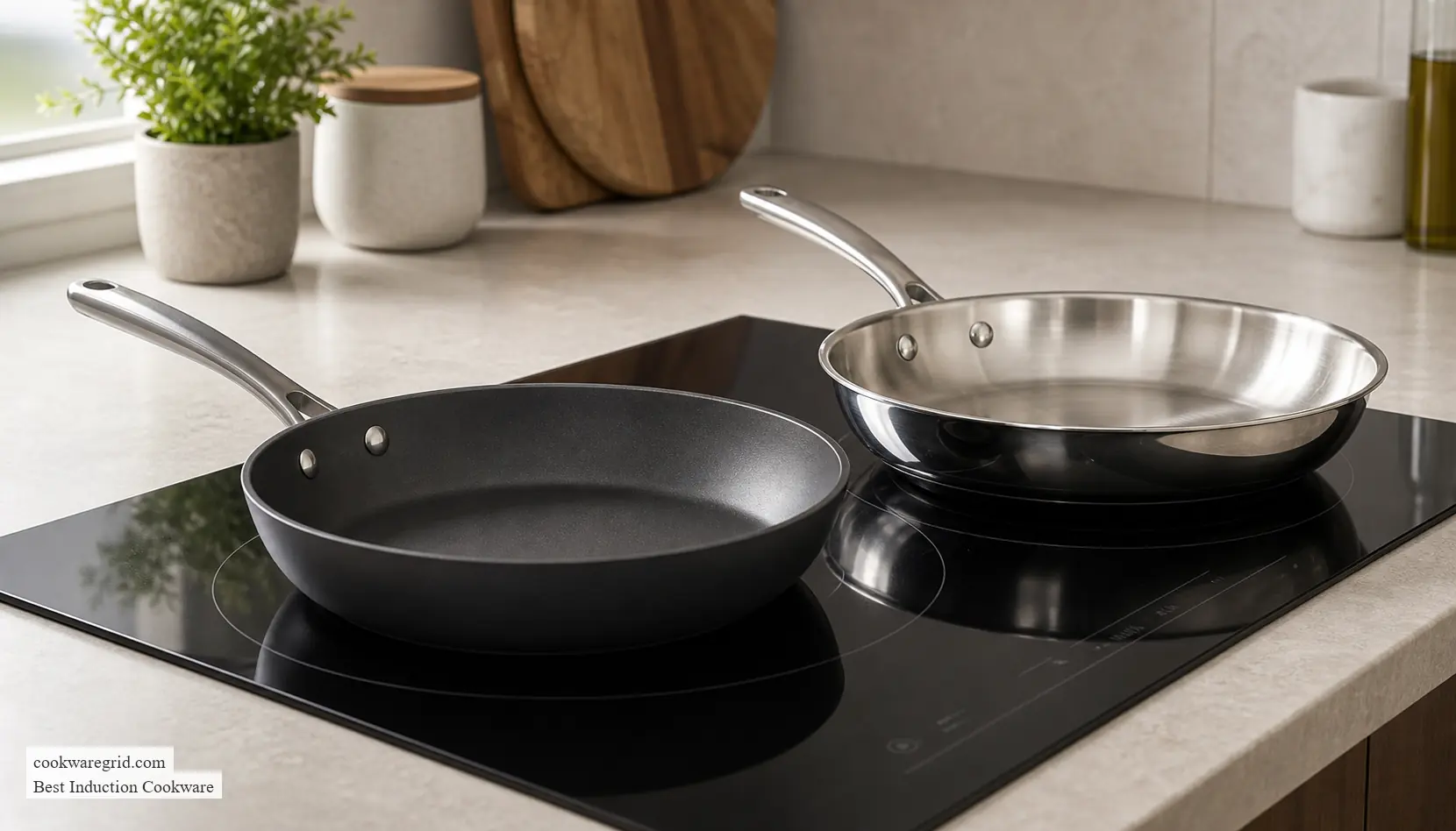
If you want the easier learning curve, hard anodized nonstick is simpler. If you want the stronger long-term cookware foundation, stainless steel is better. For many induction kitchens, stainless is the core material and hard anodized is a support pan.
The important technical detail is this: hard anodized aluminum is not magnetic by itself. So for induction, the pan still needs a magnetic base plate or magnetic stainless layer. Stainless steel already fits the induction conversation more naturally, especially in a fully clad build. For construction context, compare fully clad vs disc bottom induction cookware and our picks for best stainless steel induction cookware.
At a glance
Hard Anodized vs Stainless Steel on Induction
The cooking surface, not just the marketing label, decides the day-to-day experience.
| Factor | Hard Anodized | Stainless Steel |
|---|---|---|
| Induction readiness | Needs a magnetic base added | Often naturally built for induction in the right grade and construction |
| Food release | Easier, especially with coated interiors | Technique dependent |
| Browning and fond | More limited | Much better |
| Heat tolerance | Moderate | High |
| Long-term durability | Limited by coating wear if nonstick | Excellent |
| Best role | Convenience pan | Main cookware system |
Technical fit
Induction Compatibility Starts With the Base
Hard anodized aluminum by itself will not work on induction. The pan must include a magnetic stainless steel plate or a bonded magnetic layer underneath. That is why some hard anodized pans work and others do not. You cannot assume the material name alone tells you the full story.
Stainless steel also varies, but the good news is that induction-friendly stainless is common. Especially in clad cookware, you are usually getting a magnetic exterior plus an aluminum core for better heat spread. If you are not sure what the cooktop can detect, use the induction cookware magnet test.
Performance
Everyday Cooking Differences Are Bigger Than They Look
Hard anodized nonstick is forgiving. It helps beginners succeed with eggs, chicken cutlets, fish, and lower-oil foods without learning stainless release timing. That makes it appealing for quick weeknight cooking.
Stainless steel is broader. It can take more heat, build better fond, handle acidic ingredients, and move from stovetop to oven without the same coating anxiety. It is also easier to keep using for years if you are willing to learn preheating. For help there, see why food sticks to stainless steel on induction and how to preheat stainless steel on induction.
If your main question is really surface convenience versus versatility, our stainless steel vs nonstick induction cookware page is the clean companion piece.
Decision
Which One Should You Buy?
Buy stainless steel if you want cookware that scales with your skills. It supports searing, sauces, one-pan dinners, and higher oven use, and it fits better with the logic of a long-term induction setup. Buy hard anodized if you prioritize ease and know you mainly want one easy-release pan, not a forever collection.
For many households, the real answer is not either-or. It is one stainless set plus one convenience skillet. That is also why our best induction cookware sets page favors stainless as the core buying lane.
- Best for beginners: hard anodized nonstick.
- Best for long-term versatility: stainless steel.
- Best for everyday induction kitchens: a mixed setup.
- Best next article: why induction pans heat unevenly.
FAQ
Hard Anodized vs Stainless Steel Induction Cookware FAQ
Fast answers to the compatibility and buying questions that come up most often.
Is hard anodized cookware good for induction?
It can be, but only if the pan includes a magnetic stainless steel base. Hard anodized aluminum alone will not activate an induction burner.
Is stainless steel more durable than hard anodized nonstick?
Yes. Stainless steel usually lasts longer because it has no release coating to wear down, and it handles higher heat more comfortably.
Which one is easier for beginners on induction?
Hard anodized nonstick is usually easier for beginners because food releases more easily. Stainless steel asks for better preheating and oil control but rewards that technique with more versatility.
About Leamon Warner
Leamon Warner is a kitchen expert, researcher, and founder of CookwareGrid with more than 25 years of experience in the kitchen and home-goods industry. His background includes work with LG, Lamacom Group, and Fleur Metal, alongside cookware research, product testing, and conversations with industry experts. He created CookwareGrid to turn that experience into clear, practical advice for home cooks.