Materials & Compatibility
Does Copper Cookware Work on Induction? What Makes It Compatible
Traditional copper cookware does not work on a standard induction cooktop because copper is not ferromagnetic. Copper pans become induction compatible only when their construction includes a magnetic stainless steel base or exterior layer.

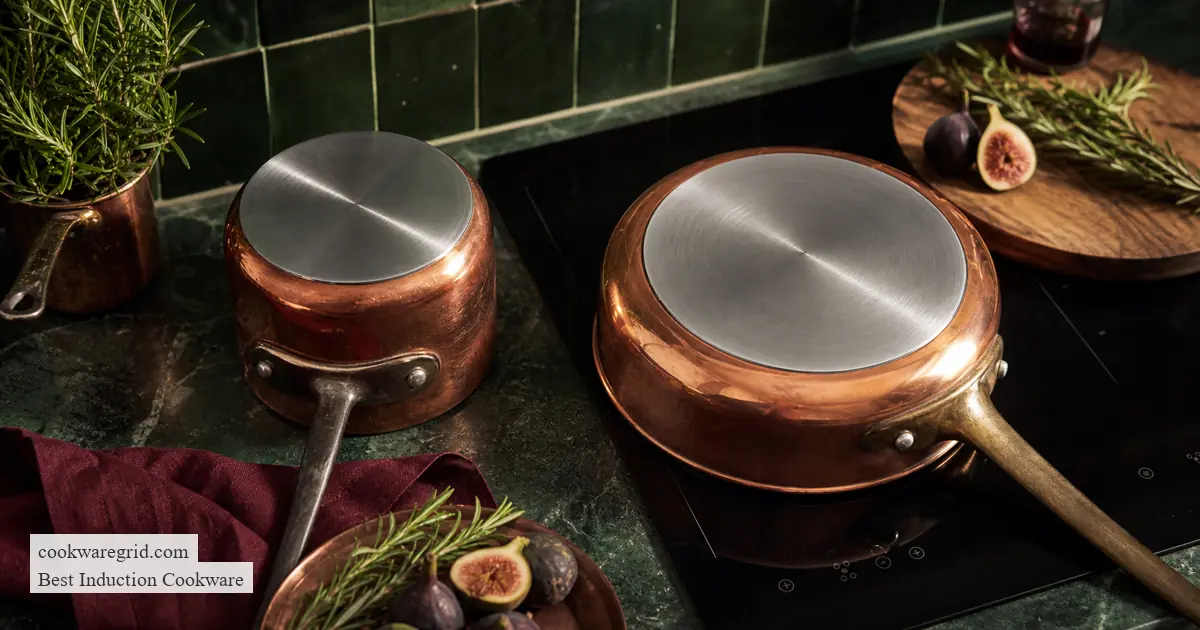
Short answer: pure copper will not activate induction. Induction-ready copper combines copper’s fast thermal response with a magnetic outer layer that the cooktop can detect.
Copper has outstanding thermal conductivity, so it responds quickly when power changes and spreads heat efficiently across a pan. That culinary advantage is separate from induction compatibility. The magnetic field under an induction surface needs a ferromagnetic component, and copper alone does not provide one.
The result is a hybrid construction problem: keep enough copper to preserve responsive heating, then add a magnetic layer without making the base bulky or uneven. This page focuses on that design. For a broader compatibility explanation, read what makes cookware induction compatible.
Magnetic response
Why Traditional Copper Pans Do Not Work on Induction
Induction does not heat cookware simply because the metal conducts electricity. It relies on effective coupling between the cooktop’s changing magnetic field and a compatible pan base. Copper is electrically and thermally conductive, but it is not ferromagnetic, so most consumer induction systems will not detect a traditional copper pan.
This is why a heavy, expensive copper saucepan may remain completely cold while a basic cast iron skillet heats immediately. Price and thermal conductivity do not substitute for magnetic permeability. The same limitation applies to bare aluminum and most glass or ceramic vessels.
Some specialized induction systems can interact with a wider range of metals, but they are not the normal household standard. For an ordinary induction hob, rely on the pan maker’s compatibility statement and a physical magnet test rather than assuming the copper body is enough.
Pan architecture
How Copper Cookware Becomes Induction Compatible
An induction-ready copper pan usually has magnetic stainless steel bonded to the exterior base. Some multi-layer designs use stainless steel on both the cooking surface and exterior with copper inside as the conductive core. Others preserve a visible copper body and add a discrete magnetic plate beneath it.
The best design is not simply the one with the most copper. A very thin magnetic layer may detect reliably but concentrate heat in the coil area. A very thick steel plate can dull some of copper’s quick response. Good cookware balances magnetic coupling, copper thickness, base flatness, and durable bonding.
A lined copper interior also matters for food contact. Stainless steel linings are durable and relatively low maintenance; traditional tin linings are responsive and naturally low-stick but have lower heat tolerance and eventually need retinning. The induction layer and food-contact lining perform different jobs.
- Magnetic stainless base receives induction energy.
- Copper body or core distributes that energy rapidly.
- Stainless or tin lining separates reactive copper from food.
- Flat bonding keeps the pan stable and supports even heating.
Compatibility test
How to Check Copper Cookware Before Using It
Turn the pan over and inspect the base. A contrasting silver-colored disc may indicate magnetic stainless steel, but appearance alone is not proof. Press a magnet against the center and several points near the perimeter. Strong attraction across a broad area is more promising than a weak pull limited to a small circle.
Next, compare the magnetic footprint with the cooktop zone. A small plate beneath a large sauté pan may trigger the burner but still leave a hot center. Add water before testing on moderate power, center the pan, and confirm stable detection. If the display flashes or cycles off, try a smaller zone before concluding that the pan is incompatible.
Do not heat an empty copper pan on boost to test it. Copper responds quickly, and a lined pan can exceed its recommended temperature before you have time to react. Our pan-detection troubleshooting guide covers zone size and weak magnetic bases in more detail.
Cooking performance
Is Induction-Ready Copper Worth It?
Copper can make sense for cooks who value immediate temperature correction in sauces, sugar work, and delicate preparations. Induction is already responsive, and a well-designed copper core can spread the concentrated heat smoothly. The combination can feel exceptionally controlled.
The tradeoffs are price, maintenance, and weight. Visible copper exteriors tarnish and need polishing if you want them bright. Stainless-lined pieces can be sticky until technique improves, while tin-lined cookware needs gentler heat. A bonded induction plate can also make the base heavier than traditional copper.
For general-purpose cooking, high-quality aluminum-core clad stainless often delivers excellent induction results for less money and with simpler care. Compare the options in our best stainless steel induction cookware guide and our explanation of tri-ply vs 5-ply construction.
Food contact
Copper Linings, Acidic Food, and Safe Use
Copper is reactive, so cookware intended for everyday cooking is normally lined with another metal. Health Canada advises against cooking or storing food in scratched or uncoated copper cookware and recommends replacing a damaged lining. Acidic foods are especially important because they can dissolve more of a reactive metal surface.
Induction does not change that chemistry. The cooking method supplies heat; the food-contact material, food acidity, temperature, and condition of the pan determine migration. Inspect stainless linings for deep damage and tin linings for exposed copper. Follow the maker’s heat limit and never scour a soft lining aggressively.
For a material-by-material discussion, see does induction cooking leach metals into food and is induction cookware safe.
FAQ
Does Copper Cookware Work on Induction? FAQ
Direct answers to the practical questions readers ask most often.
Will a copper-bottom pan work on induction?
Only if the bottom also contains a magnetic layer. A decorative or functional copper layer alone is not enough for a standard induction cooktop.
Can I make an old copper pan induction compatible?
An adapter plate may work if the cooktop manufacturer permits it, but it reduces responsiveness and efficiency. Permanently altering valuable copper cookware is not recommended.
How can I tell if copper cookware is induction ready?
Look for an induction compatibility statement, then test the base with a magnet. A strong pull across most of the base is a useful practical sign.
Is induction-ready copper better than clad stainless steel?
It can respond and spread heat exceptionally well, but it costs more and may need more care. Clad stainless is usually the more practical all-purpose choice.
Editorial references
Sources and Further Reading
CookwareGrid uses manufacturer documentation and primary public guidance to verify technical and safety claims. Product instructions for your exact cookware and cooktop take priority over general advice.
About Leamon Warner
Leamon Warner is a kitchen expert, researcher, and founder of CookwareGrid with more than 25 years of experience in the kitchen and home-goods industry. His background includes work with LG, Lamacom Group, and Fleur Metal, alongside cookware research, product testing, and conversations with industry experts. He created CookwareGrid to turn that experience into clear, practical advice for home cooks.